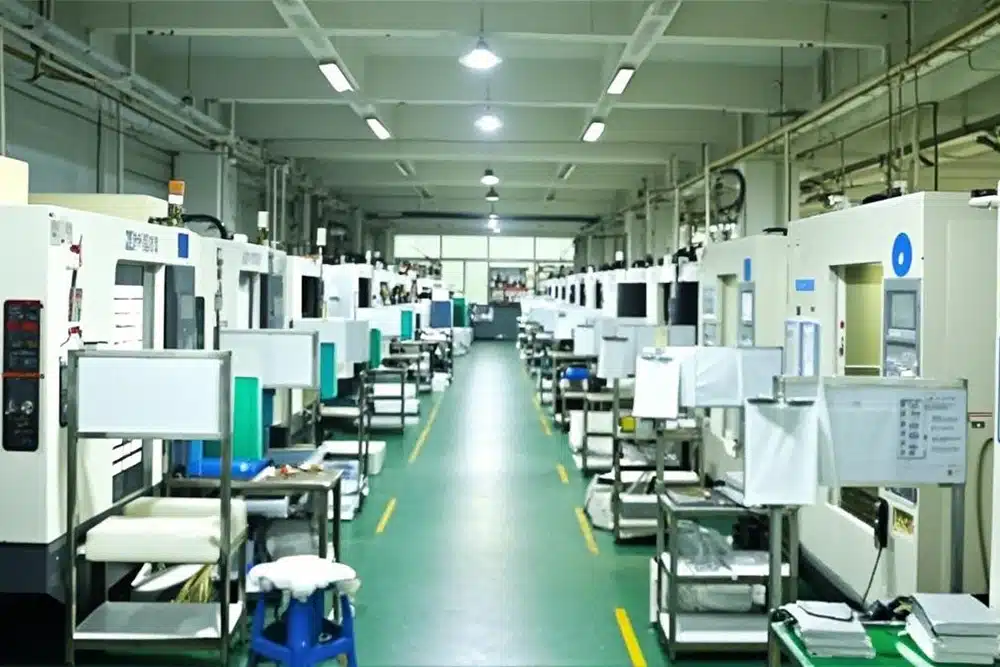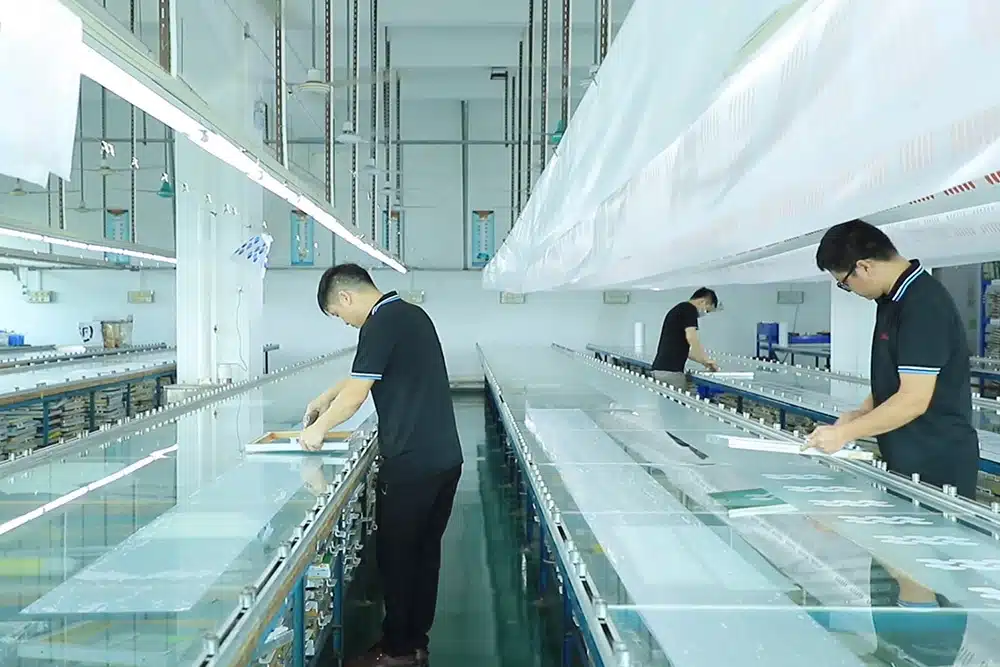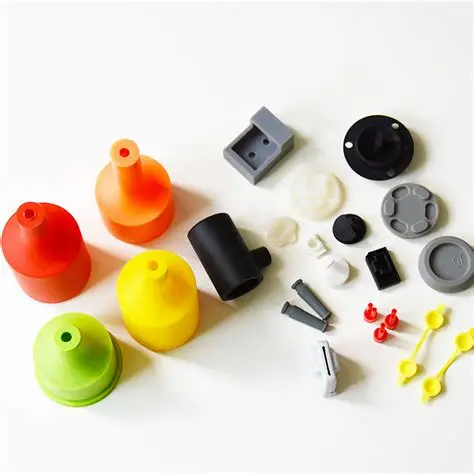

The two processes, compression molding and injection molding, have both been used to make custom silicone molds, but it depends on the geometry of the product, the type of silicone to be used, the amount of pieces to be made, the tooling cost, and the long-term supply requirements. The compression molding process involves filling an open mold cavity with a measured amount of silicone material, closing the press over the silicone, and applying pressure and heat to mold and cure the part. Unlike injection molding, silicone injection molding involves placing a special machine under a controlled pressure to inject silicone into a closed mold cavity, and it can be suitable for more automated and repeatable processes, if the design and quantity are compatible.
The reasons why many buyers think that injection molding is always better are that it sounds newer and greener, whereas others just go for cheaper upfront costs with compression molding. In reality neither is always superior. The ideal silicone molding process is not just the one with lowest unit price but the process which fits your project scope; such as part size, part thickness, part cavity layout, tolerance requirement, and forecast of repeat orders. For buyers developing baking, candy, soap, ice, beverage, or DIY products, OEM and ODM custom silicone molds manufacturing should begin with a thorough process review that considers product design, material, tooling, MOQ, cost, lead time, and quality requirements.
Compression Molding vs Injection Molding — Which Should You Choose?
Use compression molding when you need realistic tooling investments, design flexibility within moderate production volumes, larger parts or thicker parts, and efficient sampling prior to scaling up. Use injection molding for high-volume production, possible automation, and predictable process control. Any extra engineering and cost for co-injection or multi-color silicone molding are justifiable, when the design and brand worth justify it. Take all of the above factors into consideration, and then validate with physical samples before getting into mass production: tooling cost, MOQ, lead time, defect risk, tolerance capability, long-term repeat orders.
| Decision Factor | Compression Molding | Injection Molding | Best Fit |
| Many custom silicone molds, moderate-volume projects, larger or flexible products | Often more practical for many custom silicone products | Usually requires more complex tooling and equipment setup | Many custom silicone molds, moderate-volume projects, larger or flexible products |
| Tooling Cost | Often more practical for many custom silicone products | Usually requires more complex tooling and equipment setup | Practical tooling for custom projects |
| MOQ | Can be more flexible depending on product and material | Often better justified by larger or repeat orders | Match to your sales forecast |
| Lead Time | Tooling and samples may be more practical for many OEM projects | Tooling and process setup may require more planning | Depends on project timeline |
| Product Size | Suitable for many different product sizes and shapes | More dependent on equipment, mold design, and injection flow | Review size and flexibility early |
| Cavity Layout | Can support single or multi-cavity tools depending on design | Often optimized for higher output when volume supports it | Balance output needs with tooling cost |
| Production Efficiency | Good for many custom products but more labor/process dependent | Can be more automated and efficient for suitable designs | Volume and part design drive the choice |
| Design Complexity | Practical for many shapes, textures, and cavity designs | Suitable for certain complex parts, but tooling review is critical | Match to geometry and surface detail |
| Multi-Color Options | Possible in some projects but may require added process steps | Co-injection may support selected multi-color or multi-material designs | Use only when brand value justifies complexity |
| Buyer Focus | Balance tooling, sampling, cost, and functional performance | Balance automation, tooling investment, volume, and consistency | Full project scope, not unit price alone |
What Is Silicone Compression Molding?
Silicone compression molding is still one of the most popular methods available for creating custom silicone molding due to the superior flexibility of this method for producing a wide variety of part designs and volumes. Here, the operator pours an exact quantity of silicone compound into the open mold cavity, presses the mold closed and cures the silicone under heat and pressure to get the desired shape.
| Compression Molding Element | Buyer Meaning |
| Material Loading | Silicone is placed into the mold before pressing |
| Heated Mold | Heat helps cure and form the silicone product |
| Pressure Forming | Mold pressure shapes the product cavity and surface details |
| Tooling Design | Mold structure, cavity layout, parting line, and release affect quality |
| Trimming | Flash or excess material may need removal after molding |
| Product Flexibility | Suitable for many soft and flexible silicone products |
| Customization | Supports shape, color, logo, texture, and packaging options |
| Process Control | Curing time, temperature, pressure, and material amount must be managed |
| QC Requirements | Hardness, dimensions, surface, color, and function should be inspected |
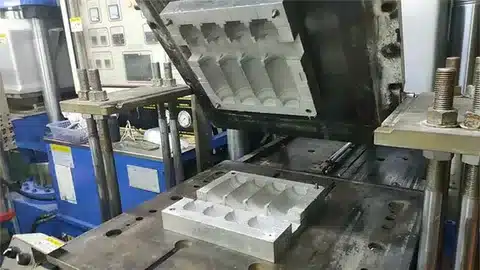
This is a good technique for thicker parts, larger molds, and parts that require multiple design changes in the sampling process. Good control of material weight, mold temperature and press parameters at experienced facilities guarantees the same results for each run.
What Is Silicone Injection Molding?
Silicone injection molding is a process that injects the material, typically a liquid silicone rubber (LSR) or a similar high consistency rubber, into a closed mold cavity, with precise pressure and temperature control. Once the tooling and process parameters are optimized, the closed system and automated feeding can provide a very repeatable cycle.
| Injection Molding Element | Buyer Meaning |
| Material Injection | Silicone is injected into the mold cavity under controlled conditions |
| Closed Mold System | Mold design must manage flow, venting, and cavity filling |
| Automation Potential | Can support efficient production for suitable projects |
| Tooling Complexity | Requires careful mold design, gating, and process planning |
| Material Flow | Product geometry must allow proper filling and curing |
| Volume Justification | Often more suitable when production quantity supports tooling investment |
| Precision Control | Can support consistent production if process is properly controlled |
| Process Setup | Requires more technical planning before mass production |
| Suitability Review | Not every silicone product is better with injection molding |
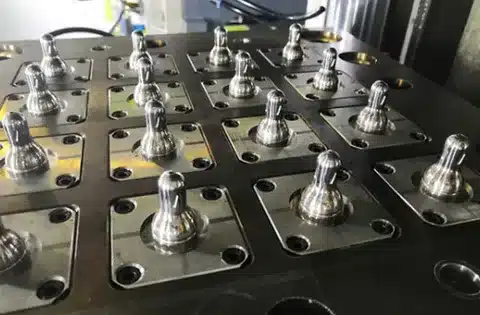
Not all custom silicone mold runs can be done through the injection molding process. The process is brilliant when part geometry allows for good flow, volume is sufficient to justify the cost of tools, and repeatability is essential.
Key Differences Between Compression Molding and Injection Molding
By being aware of the practical differences you are less likely to be choosing a process based on assumptions, with regard to project realities. Both approaches have differences in material handling, tooling requirements, production flow, cost structure and much more.
| Factor | Compression Molding | Injection Molding | Buyer Decision Tip |
| Material Feeding | Material is placed into mold cavity | Material is injected into closed mold | Choose based on product and process feasibility |
| Tooling Complexity | Often more practical for many custom products | Usually more complex due to gates, runners, and flow | Compare tooling scope carefully |
| Production Efficiency | Good for many custom and medium-volume projects | Can be more efficient for suitable high-volume projects | Volume matters |
| MOQ | May be more flexible | Often better for larger quantities | Match MOQ to sales plan |
| Unit Price | Depends on material weight, labor, cycle, trimming, QC | Depends on tooling, cycle time, material, automation, volume | Compare full cost, not only unit price |
| Sample Development | Often practical for OEM sampling | More setup work may be needed | Consider development timeline |
| Product Size | Suitable for many larger or flexible products | Equipment and flow path affect suitability | Review size early |
| Wall Thickness | Can handle many wall thickness designs with review | Requires flow and curing review | Avoid uneven wall problems |
| Flash / Trimming | May require trimming depending on mold design | Can reduce some trimming if tooling is optimized | QC still required |
| Automation | More manual or semi-automatic in many cases | More automated when properly set up | Automation must match order volume |
| Multi-Color Design | Possible but may require extra process steps | Co-injection may support selected designs | Use only when value justifies cost |
When Compression Molding Is a Better Fit
When part size, thickness or design flexibility is more important than high-speed automation, compression molding offers the best balance for moderate volume custom silicone mold projects.
| Project Situation | Why Compression Molding May Fit |
| Moderate-Volume Orders | Tooling and production planning can be practical |
| Larger Silicone Molds | Compression molding can handle many larger flexible designs |
| Thick-Wall Products | Material loading and cavity design can be reviewed for thicker parts |
| Baking Molds | Suitable for many flexible food-contact mold products |
| Soap Molds | Works well for flexible release and cavity designs |
| Ice Cube Trays | Supports flexible freezer-release products |
| DIY Craft Molds | Can support shape, texture, and flexible release |
| Promotional Products | Practical for custom colors, logos, and seasonal designs |
| Private-Label Projects | Supports branding, packaging, and sample approval |
| Cost-Sensitive Custom Tooling | Often practical where injection tooling is not justified |
When Injection Molding May Be a Better Fit
Injection molding becomes valuable when production increases and the part geometry allows for a steady flow of material through the machine and automated cycles.
| Project Situation | Why Injection Molding May Fit |
| High-Volume Production | Automation and cycle control may improve efficiency |
| Repeat Order Programs | Higher tooling cost can be justified over long-term volume |
| Smaller or Suitable Part Geometry | Injection flow may work well when design supports it |
| Automated Production Needs | Reduces manual material loading in suitable projects |
| Stable Process Control | Helps maintain consistency when tooling and parameters are optimized |
| Complex Parts With Feasible Flow | Gate, venting, and cavity filling can be designed carefully |
| Tight Production Planning | Suitable for projects needing controlled repeat manufacturing |
| Multi-Cavity High Output | Can support efficient production when volume justifies tooling |
| LSR-Suitable Projects | May be appropriate depending on material and application requirements |
Co-Injection and Multi-Color Silicone Molding
When two or more colors are used or when functional differences or areas of distinction are provided with real value to the finished product, silicone molding may be done in more than one color or in multiple colors, known as multi-color or co-injection silicone molding. These processes need more complicated tools and accuracy control of the process to avoid color bleed or poor bonding.
| Multi-Color / Co-Injection Factor | Buyer Consideration |
| Visual Differentiation | Multi-color designs can improve brand or retail appeal |
| Product Function | Some designs may need different material zones or hardness options |
| Tooling Complexity | Co-injection or multi-color molds require more engineering planning |
| Color Separation | Requires careful control to avoid color bleeding or poor appearance |
| MOQ | More complex process may require higher order volume |
| Cost | Tooling and production setup may increase total project cost |
| Lead Time | Sampling and adjustment may take longer |
| QC | Color placement, bonding, appearance, and function must be inspected |
| Business Value | Use only when the added value supports the extra complexity |
Product Design Factors That Affect Process Selection
Your product design must be thoroughly reviewed before making any decisions about the process. The geometry, surface details and wall thickness all have an impact on the best molding method and cost.
| Design Factor | Why It Affects Process Choice |
| Product Size | Larger parts may be more practical with compression molding in many cases |
| Wall Thickness | Uneven or thick sections require curing and flow review |
| Cavity Depth | Deep cavities affect release, filling, and tooling design |
| Cavity Number | Multi-cavity layouts affect tooling cost and production efficiency |
| Parting Line | Impacts flash, trimming, and appearance |
| Logo Detail | Embossed or debossed details need tooling review |
| Surface Texture | May affect release, filling, and cleaning |
| Tolerance Requirement | Higher precision requires stronger tooling and process control |
| Demolding Difficulty | Flexible products still need release direction and mold design review |
| Material Flow | Especially important for injection molding |
| Packaging Fit | Product dimensions should match packaging before tooling |
Cost, Tooling, MOQ and Lead Time Comparison
Just focusing on the unit price can be costly. They represent total project economics, which involves tooling, sampling, production efficiency and repeat order amortisation.
| Commercial Factor | Compression Molding | Injection Molding | Buyer Note |
| Tooling Cost | Often more practical for many custom products | Usually higher due to complex mold and injection system | Compare tooling scope, not only fee |
| Sample Cost | Often practical for design validation | May involve more process setup | Clarify sampling scope |
| MOQ | Can be more flexible depending on product | Often better for larger or repeat orders | Match process to sales forecast |
| Unit Price | Affected by material, labor, cycle, trimming, QC | Can improve with high-volume automated production | Higher tooling may pay off only at volume |
| Lead Time | Tooling and sample lead time may be practical | Tooling and setup may require more planning | Plan based on full project timeline |
| Production Efficiency | Good for many OEM/ODM projects | Strong for suitable high-volume projects | Efficiency depends on part design |
| QC Cost | Inspection still required for dimensions, hardness, color, appearance | Inspection still required despite automation | Do not skip QC |
| Packaging Cost | Depends on product size and sales channel | Same packaging planning still applies | Packaging should be compared separately |
| Repeat Orders | Good for steady custom production | Better justified when repeat volume is high | Forecast matters |
Quality Control Differences Buyers Should Understand
Both processes require close quality control, although the points of quality control are somewhat different depending on the way the material is put in and cures within the mold.
| QC Area | Compression Molding Focus | Injection Molding Focus |
| Material Control | Correct material weight and placement | Correct material supply and injection control |
| Curing Control | Temperature, pressure, and time consistency | Injection, curing, and mold temperature control |
| Flash Control | Parting line and trimming quality | Gate, venting, and parting line quality |
| Dimensional Check | Confirms size and cavity accuracy | Confirms repeatability and critical dimensions |
| Shore Hardness | Confirms material and curing consistency | Confirms material and process consistency |
| Surface Appearance | Checks bubbles, stains, deformation, and flash | Checks flow marks, short fill, bubbles, and surface defects |
| Color Consistency | Checks pigment mixing and batch consistency | Checks material mixing and process consistency |
| Logo Detail | Confirms molded or printed branding clarity | Confirms molded detail or secondary branding |
| Functional Test | Release, bending, baking, freezing, or craft use | Same functional testing based on application |
| Packaging Inspection | Confirms product and packaging match approved sample | Same packaging inspection required |
Application Comparison: Which Process Fits Which Silicone Mold Products?
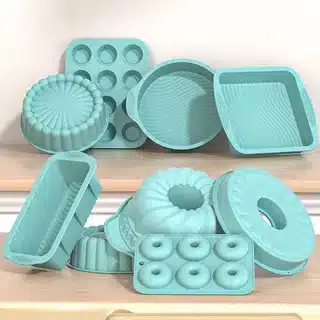
Each type of product naturally has a preference for one process or the other, based on a variety of factors such as volume, size, etc. and product design. This is especially relevant for custom silicone kitchenware items like baking molds, candy molds, and ice cube trays.
| Product Category | Compression Molding Fit | Injection Molding Fit |
| Baking Molds | Often suitable for flexible, larger, or custom-shaped molds | May fit high-volume, suitable designs |
| Candy Molds | Suitable for many custom cavity designs | May fit small, high-volume products if flow is suitable |
| Chocolate Molds | Suitable for custom shapes and flexible release | May fit high-volume precision designs depending on structure |
| Soap Molds | Often suitable for deep cavities and flexible release | Less common unless design and volume justify it |
| Ice Cube Trays | Suitable for flexible release and custom shapes | May fit high-volume tray designs where tooling supports it |
| Beverage Molds | Suitable for custom branded or seasonal designs | May fit repeat high-volume designs |
| Popsicle Molds | Suitable for flexible multi-part products | May fit selected high-volume designs |
| DIY Craft Molds | Suitable for texture, shape, and flexible release | Depends on material and production volume |
| Promotional Products | Practical for seasonal, branded, or moderate-volume projects | May fit large campaign quantities |
| Private-Label Sets | Good for custom packaging and product variation | Better when SKUs are stable and volume is high |
Common Mistakes When Choosing a Silicone Molding Process
Any sourcing team can catch a sourcing snag that can result in higher sourcing costs or delayed launches. Let’s look at the common pitfalls, and how to avoid them!
| Common Mistake | Better Approach |
| Choosing Only by Unit Price | Compare tooling, MOQ, lead time, QC, packaging, and repeat volume |
| Assuming Injection Is Always Better | Match process to design, volume, and material needs |
| Assuming Compression Is Low Quality | Evaluate tooling, process control, and inspection capability |
| Ignoring Product Geometry | Review wall thickness, cavity depth, parting line, and release |
| Ignoring Volume | Higher tooling investment only makes sense when volume supports it |
| Ignoring Tooling Cost | Compare total project cost, not just product price |
| No Physical Sample Testing | Approve real samples before mass production |
| Overusing Multi-Color Processes | Use only when visual or functional value is clear |
| Ignoring Material Flow | Critical for injection molding feasibility |
| Ignoring Flash Control | Review parting line, trimming, and QC requirements |
| Comparing Different Scopes | Make sure quotes include the same tooling, material, and packaging |
| No QC Standard | Define inspection items before production starts |
What Buyers Should Prepare Before Asking for Process Recommendation
Giving the entire information from the beginning enables a competent manufacturer to make a precise process recommendation and a realistic cost structure.
| Information to Prepare | Why It Helps Process Selection |
| Product Application | Defines performance, material, and user requirements |
| 3D CAD File | Helps evaluate geometry, tooling, and process feasibility |
| 2D Drawing | Confirms dimensions, tolerance, and technical requirements |
| Reference Sample / Photo | Helps clarify appearance, feel, and function |
| Product Dimensions | Affects mold size, machine suitability, and cost |
| Wall Thickness | Influences curing, filling, and product strength |
| Cavity Layout | Affects tooling, output, and production efficiency |
| Silicone Material | Determines processing method and performance requirements |
| Shore Hardness | Affects flow, demolding, flexibility, and user feel |
| Color Requirement | Helps plan pigment, color matching, and QC |
| Logo Requirement | Affects tooling, printing, or secondary processing |
| Surface Texture | Affects tooling, release, and cleaning |
| Tolerance Requirement | Helps evaluate process control level |
| Order Quantity | Determines whether tooling investment is justified |
| Annual Forecast | Helps compare long-term process value |
| Packaging Style | Affects final product dimensions and packing workflow |
| Testing Requirement | Helps plan sample approval and documentation |
How a Manufacturer Supports Process Selection and Production
A well-versed silicone mold maker takes a look at your CAD files, material specifications, and production objectives to suggest compression molding, injection molding or co-injection. They provide full design optimization and custom tooling, sampling to production and quality management.
| Manufacturer Capability | Why It Matters for Process Selection |
| Engineering Review | Helps match process to design, wall thickness, cavity layout, and tolerance |
| Material Selection Support | Confirms silicone grade, hardness, color, and performance requirements |
| In-House Tooling | Supports mold design, trial molding, and sample revisions |
| Compression Molding Capability | Supports many custom silicone mold product types |
| Co-Injection Capability | Supports selected multi-color or complex silicone designs where suitable |
| Sample Development | Allows process, material, color, and function to be tested before production |
| Process Control | Helps maintain curing, dimensions, surface, and hardness consistency |
| Quality Inspection | Checks appearance, flash, hardness, color, dimensions, and function |
| Branding Support | Supports molded logos, printing, engraving, and packaging presentation |
| Packaging Support | Helps prepare products for retail, ecommerce, wholesale, or private-label use |
Final Buyer Checklist: Compression Molding or Injection Molding?
Discuss with the project team and share with prospective manufacturers the following questions. The trend of the “yes” answers will indicate the more appropriate process.
| Checklist Question | If Yes, Compression Molding May Fit | If Yes, Injection Molding May Fit |
| Is the project moderate volume? | Often yes | Maybe, if volume grows |
| Is tooling budget limited? | Often more practical | Usually needs stronger tooling budget |
| Is the product large or flexible? | Often yes | Depends on equipment and flow feasibility |
| Is the product high-volume and stable? | Possible | Often yes |
| Is automation a major priority? | Not usually the main advantage | Often yes |
| Is the design still changing? | May be better for early validation | Wait until design is stable |
| Is multi-color or co-injection needed? | Possible with extra steps | May fit selected designs |
| Is unit cost more important than tooling cost? | Compare carefully | Better when volume supports tooling |
| Are samples needed before commitment? | Yes | Yes |
| Is production repeatability critical? | Requires process and QC control | Also requires process and QC control |
| Has the manufacturer reviewed CAD files? | Required | Required |
| Is packaging and QC scope confirmed? | Required | Required |
Conclusion — Choose the Process That Fits the Product and Volume
So the choice between compression molding vs injection molding for silicone molds boils down to the product design, the volume of production, the cost of the tool, and the business plan. Our OEM and ODM silicone mold manufacturing expertise ensures the selected process perfectly matches your project needs. For many custom silicone molds, particularly those larger, thicker and moderately complex, compression molding provides the practical flexibility and cost-efficient sampling. When high volume production and appropriate geometry are justified by the higher cost of the tooling, injection molding can provide efficiency and consistency benefits.
For applications where there is an added visual or functional benefit that justifies the added complexity, co-injection or multi-color silicone molding should be considered. Never assume any design details or production estimates, never discuss material and tolerance specs without an expert, never accept physical samples without checking, never approve quality specifications without an expert. If the selected process is an appropriate match for the project, you have a dependable and repeatable custom silicone mold production with the performance and commercial objectives.