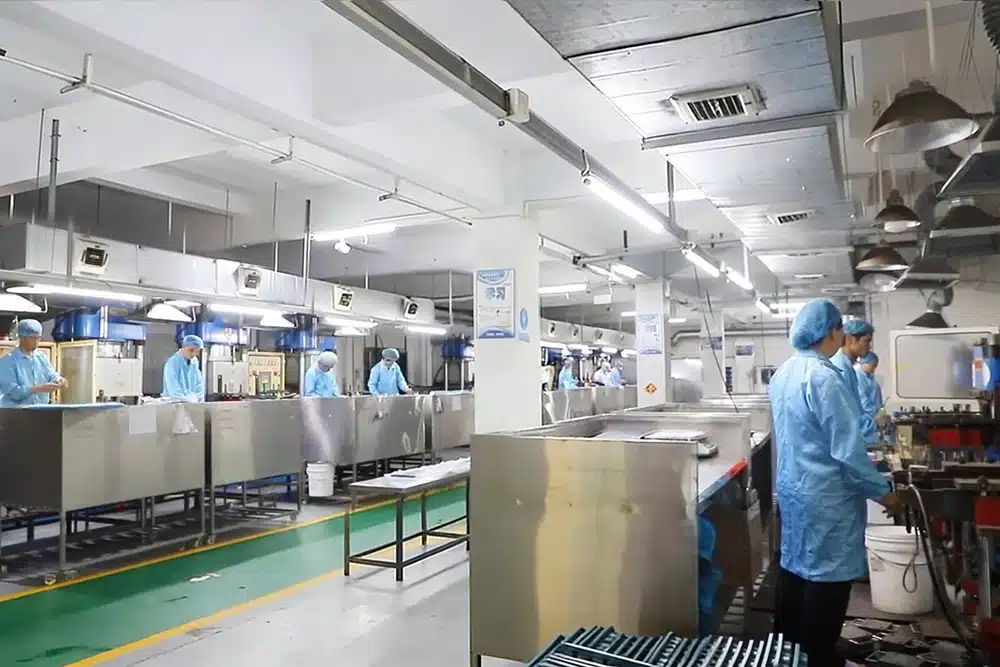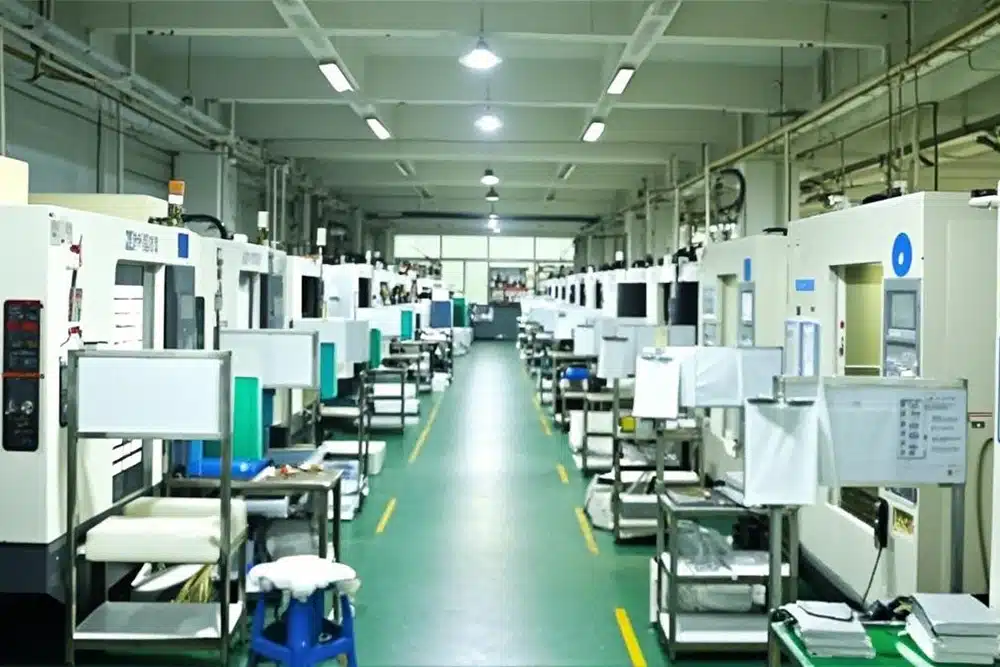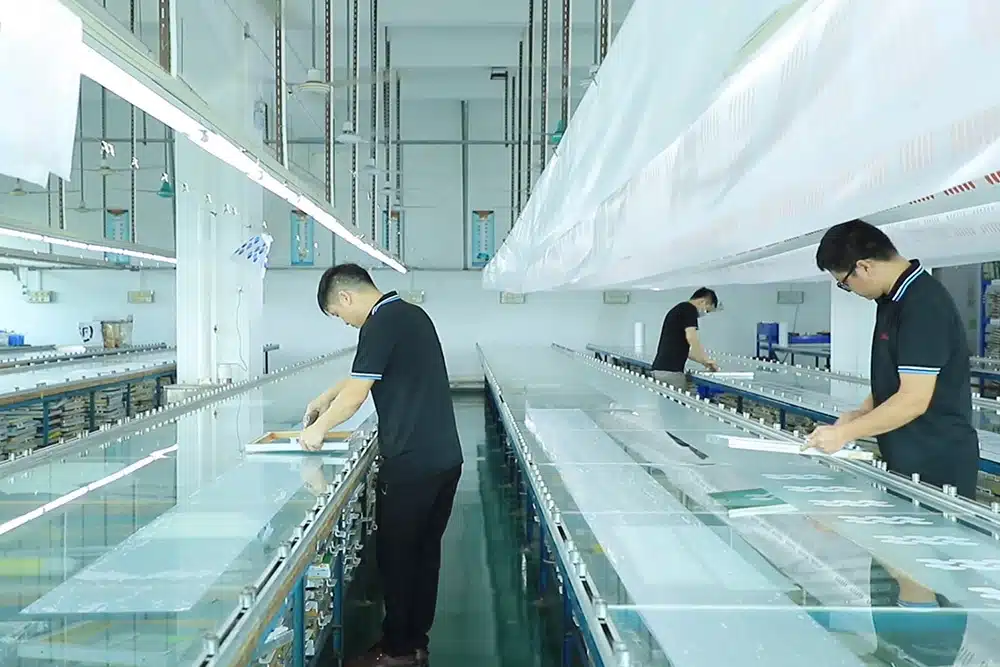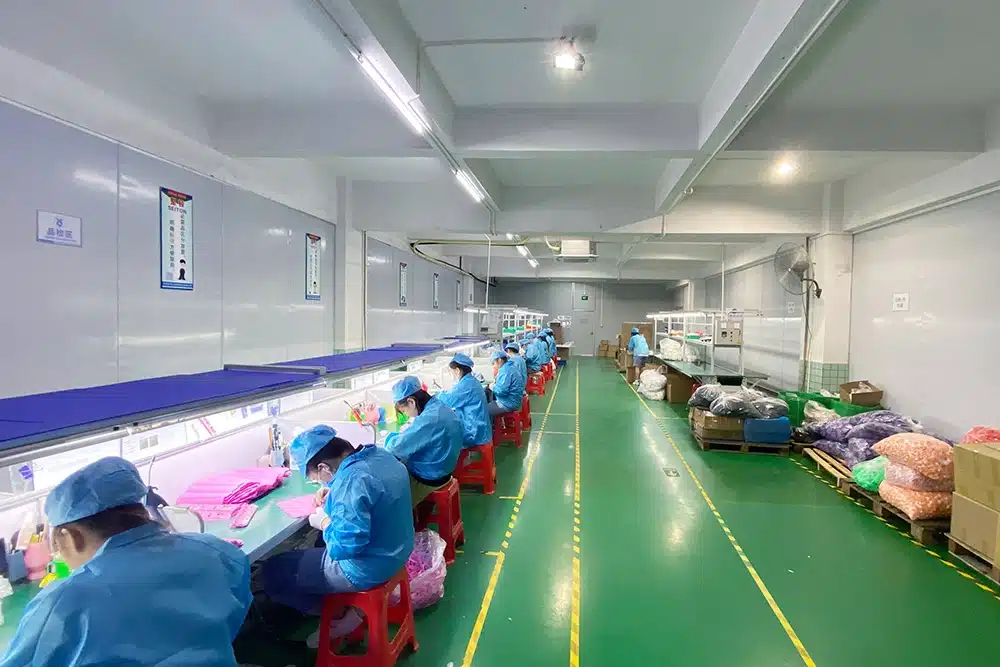

The fabrication and creation of custom silicone parts is not a one-step production process – it is a progressive engineering process where design, tooling, materials, and process control all affect the ultimate performance.
It is commonly believed that silicone part production starts at tooling. As a matter of fact, material planning, DFM review, and prototype validation are some of the previous phases that are usually required to achieve success. Custom silicone components are often known to be successful long before they are produced; even at the design planning, material selection and process engineering stage.
Overview of the Full Development-to-Production Process
An efficient custom silicone components manufacturing process adheres to a disciplined process that aligns engineering intent with manufacturing reality. The act of skipping or rushing stages will almost always have downstream issues in terms of cost, quality or timelines.
| Stage | Primary Objective | Key Output |
| Concept Development | Define requirements | Product concept |
| Engineering Design | Optimize geometry | CAD / DFM readiness |
| Material Selection | Match performance needs | Material specification |
| Prototyping | Validate function | Samples |
| Tooling Development | Enable production | Production mold |
| Manufacturing Setup | Stabilize process | Production readiness |
| Quality Validation | Verify consistency | QC approval |
| Mass Production | Scale output | Finished components |

This is a more organized method that eliminates risk and enhances repeatability among OEMs and product developers using custom silicone parts. Our structured approach to OEM & ODM silicone manufacturing aligns engineering intent with manufacturing reality across all stages.
Step 1 — Product Concept and Requirement Definition
The basis of every successful silicone project is clear requirement definition. In its absence, the most skilled team of engineers will have to endure revisions and unwanted costs.
No CAD work can be commenced without engineers and sourcing teams capturing functional, environmental, mechanical, regulatory and commercial requirements. One of the typical causes of downstream redesign and delayed launches is poor requirement definition.
| Requirement Category | Questions to Define Early |
| Functional Use | What must the part do? |
| Environment | Heat, chemicals, moisture, UV exposure? |
| Mechanical Demands | Compression set, flexibility, tear strength, wear resistance? |
| Compliance | FDA, LFGB, RoHS, REACH, UL, medical-grade? |
| Production Goals | Prototype quantity, expected annual volume, target cost? |
Recording such information early will enable the team to make effective choices regarding material, process (compression molding vs. LSR injection), and tooling strategy.
Step 2 — Engineering Design and DFM Review
After requirements have been locked, then the actual engineering is done. Proper design of custom molded silicone components is a trade-off between functionality, manufacturability and cost.
Seasoned teams give attention to uniformity of wall thickness, proper draft angles, tactical parting lines, and tolerances. Unrealistic geometry, or infeasible tolerances, push the cost of tooling and defect rates through the roof.
| Design Factor | Why It Matters |
| Wall Thickness | Affects molding consistency and cure time |
| Draft Angles | Enables reliable demolding |
| Tolerances | Impacts functional fit and cost |
| Geometry Complexity | Determines tooling feasibility |
| DFM Review | Directly influences cost and manufacturability |
An extensive Design for Manufacturability (DFM) audit at this point identifies problems which would otherwise necessitate costly mold alterations in the future. Here is where numerous projects are either made or lost a lot of efficiency.
In the case of complex projects, where the company needs proven ability, often pitfalls can be avoided by engaging the specialists in the field of custom silicone parts at the initial stage of the design.
Step 3 — Silicone Material Selection
The choice of material has a tremendous impact on performance and processability. Choosing a wrong compound is among the most quickest methods of project failure. Proper silicone material selection is therefore critical, as senior engineers must compare hardness, temperature resistance, chemical compatibility, and process fit with project requirements.
Senior engineers compare hardness (Shore A), temperature resistance, chemical compatibility, tear strength, compression set and type of process (HTV solid silicone vs. LSR liquid silicone) with the established requirements.
| Material Factor | Consideration | Project Impact |
| Hardness | Flex vs. rigidity | Performance |
| Heat Resistance | Operating environment | Stability |
| Chemical Resistance | Media exposure | Longevity |
| Appearance | Color/transparency | Product aesthetics |
| Process Fit | Compression / LSR / overmolding | Manufacturability |

Regulatory requirements (food-grade, medical-grade, flame retardant, etc.) should be also taken into consideration when choosing materials. Having a supplier who is able to formulate to specifications is of great benefit in applications which are demanding.
Step 4 — Prototype Development and Validation
Prototyping is not merely about visualizing the part, it is about testing the assumptions prior to investing in production tools.
The aim is to test fit, functionality, material behavior, and assembly under real conditions whether it is rapid tooling, 3D-printed molds, or soft tooling. Several design cycles are normal and anticipated during this process.
| Prototype Focus | Validation Goal |
| Fit Check | Assembly verification |
| Functional Testing | Performance proof |
| Material Validation | Property confirmation |
| Design Refinement | Issue correction |
Adequate prototype verification goes a long way in minimizing the risk in transitioning to hard tooling. In projects, which neglect or fail to do this step, unforeseen expensive costs often arise during production validation.
Step 5 — Tooling Design and Mold Development
One of the biggest investments of the custom silicone components manufacturing process is the tooling. The quality of the part, the cycle time, and the tool life all depend upon the excellent tooling design and mold development. The main factors are the cavity layout to achieve balanced filling, accurate placement of the parting line, venting strategy and choice of the tool steel depending on the volume to be achieved.
The main factors are the cavity layout to achieve balanced filling, accurate placement of the parting line, venting strategy and choice of the tool steel depending on the volume to be achieved. Mold flow analysis and design review meetings aid in avoiding flash, short shots and dimensional variation.
| Tooling Factor | Why It Matters |
| Mold Design | Part accuracy |
| Cavitation Strategy | Output efficiency |
| Parting Lines | Quality and flash control |
| Tool Material | Tool life |
| Mold Validation | Production readiness |

An efficient production mold will have a payback period in terms of regular quality and reduced costs per part in the life cycle of the product.
Step 6 — Manufacturing Process Setup
When the tooling has been approved, the emphasis is on process optimization. Constant repeatable parameters are necessary to achieve uniform silicone components. This is especially important in silicone compression molding, where optimal cure temperature, pressure, time, and demolding must be carefully set.
Optimal cure temperature, pressure, time, and demolding are set by engineers. In the case of LSR projects, the mixing ratios and injection profiles would be critical. Constant inspection of the early runs will be fine-tuning before full production.
| Production Variable | Impact |
| Cure Parameters | Part consistency |
| Cycle Time | Productivity |
| Temperature Control | Material behavior |
| Process Repeatability | Quality stability |
Scalable production and reduced batch-to-batch variation is enabled by stable processes.
Step 7 — Quality Control and Production Validation
Strong quality systems single out good suppliers and bad suppliers. Quality control and production validation should extend to material receiving, in-process inspection and final inspection. Dimensional verification, functional testing, visual inspection and material property verification ensures each batch meets specifications.
Dimensional verification, functional testing, visual inspection and material property verification verifies that each batch is within specifications. Statistical process control (SPC) assists in ensuring consistency over the long term.
| QC Stage | Purpose |
| Incoming Material Inspection | Material conformity |
| In-Process Checks | Process stability |
| Final Inspection | Specification compliance |
| Functional Testing | Performance validation |
| Batch Control | Repeatability assurance |
Common Challenges During Silicone Component Development
Even well-established teams face challenges. The most common problems are late design modification after tooling, mismatch of material with the operating conditions, excessive tolerances, and inadequate validation of prototyping.
| Challenge | Common Cause | Prevention |
| Tool redesign | Weak DFM review | Early engineering validation |
| Part defects | Poor process setup | Parameter optimization |
| Fit issues | Tolerance oversight | Prototype verification |
| Delays | Late requirement changes | Front-loaded planning |
The ability to anticipate such difficulties by carrying out the processes with discipline will save a lot of time and money.
How Early Engineering Decisions Affect Long-Term Production Success
The decisions made during the first three steps have a great impact on the overall product lifecycle.
| Early Decision | Long-Term Effect |
| Material Choice | Product durability and compliance |
| Design Geometry | Production efficiency and yield |
| Tooling Strategy | Cost stability and tool life |
| Process Planning | Repeatable quality and scalability |
These relationships can aid decision-making by OEM buyers and engineers in sourcing and developing better.
Conclusion — Successful Silicone Components Are Built Through Process Discipline
Effective custom silicone parts are seldom achieved by molding alone, but by a concerted effort in terms of decisions made throughout the entire process, beginning with the concept, and ending with the production. This starts with proper custom silicone molds and tooling strategy developed through disciplined early-stage planning.
Through a systematic silicone product development process, sourcing teams and engineers minimize risk, manage costs, and attain uniform and high performance on scale. It is process discipline that can determine the success of projects rather than manufacturing capability.