
When purchasing flexible molds for anything from kitchenware to industrial components, one of the most common questions is silicone molds vs rubber molds. On the manufacturing side, the two are not the same: silicone molds are made of silicone elastomer (which is based on silicon-oxygen backbone) while rubber molds are made of various types of natural rubber or synthetic rubber compounds that include natural rubber (NR), EPDM, NBR or neoprene.
This distinction is important because material chemistry can affect how the material smells, stands up to heat, and is safe to use in contact with food, is flexible, ages, and is durable in applications. When food grade or heat-resistant grades are specified and tested, silicone molds are often selected for baking, candy, chocolate, ice cube, beverage, kitchenware, baby, soap, private label consumer goods, and DIY projects. Rubber molds, on the other hand, are frequently used for non-food industrial, concrete, resin, plaster or craft work where abrasion or chemical resistance is a priority. The price and softness of silicone molds and rubber molds are not the only value to consider; their suitability is the major value to consider, as is the real use of their molds, their safety expectations, and their long-term product performance.
Quick Answer: Silicone Molds vs Rubber Molds — Which Should You Choose?
Consider your product’s intended environment of use before choosing silicone molds vs rubber molds; don’t look for softness or price. When looking for silicone molds, if the food contact potential, baking or oven use, freezer release, low odor, vibrant color options, and consumer-friendly experience are important, then silicone molds are the right choice. If the buyer wants to create baking products, candies, soap, ice, beverages, or make any DIY products, working with a professional silicone molds factory can help evaluate material, hardness, cavity design, testing needs, and production feasibility before mass production.
For an industrial or non-food application, or for those with specific chemical or wear resistance requirements, rubber molds might be a more suitable option; for concrete applications, resin applications, or abrasion-heavy applications, molds that are rubber may be a better choice. Be sure to check temperature exposure, chemical exposure, odor, Shore hardness, tear strength, product life, and target market regulations. Buyers should never assume that either material is inherently safe or suitable – physical samples and application specific testing should be approved before proceeding to bulk production.
| Comparison Factor | Silicone Molds | Rubber Molds |
| Material Family | Silicone elastomer based on silicon-oxygen structure | Natural or synthetic rubber compounds such as NR, EPDM, NBR, neoprene, and others |
| Food-Contact Potential | Suitable silicone grades can be used for food-contact products when properly specified and tested | Rubber is generally less common for food-contact mold products unless a specific approved compound is used |
| Heat Resistance | Often suitable for heat-related applications when the correct silicone is selected | Depends strongly on rubber type; many rubbers are not ideal for baking temperatures |
| Freezer Use | Often maintains flexibility in cold applications | Depends on rubber compound and low-temperature performance |
| Odor | Suitable silicone can have lower odor expectations for consumer goods | Some rubber compounds may have stronger material odor |
| Flexibility | Flexible and useful for release performance | Flexible, but performance varies by rubber type |
| Aging Resistance | Silicone often performs well against heat and aging | Rubber aging depends on compound, ozone, UV, heat, and chemicals |
| Color Options | Supports Pantone colors and translucent effects | Color options may be more limited depending on rubber compound |
| Common Uses | Baking, candy, chocolate, ice, beverage, kitchenware, soap, DIY, private label | Industrial molds, concrete, resin, craft, seals, gaskets, non-food technical uses |
| Buyer Focus | Material grade, food-contact needs, hardness, release, odor, testing, packaging | Rubber compound type, durability, chemical resistance, abrasion, industrial performance |
What Are Silicone Molds?
Precision-engineered, silicone molds are highly performance silicone elastomer moulds. They are remarkable for their soft-touch handle, outstanding release characteristics and adaptability in consumer and food products.
With proper formulations and testing, these molds offer consistent demolding, heat performance and freezer performance that many buyers require for commercial or private label products.
| Silicone Mold Feature | Buyer Meaning |
| Flexible Material | Helps with bending, pushing, and demolding |
| Low-Odor Options | Important for food, beverage, kitchenware, and retail products |
| Heat-Use Potential | Suitable for baking or warm-contact applications when properly specified |
| Freezer-Use Potential | Useful for ice trays, beverage molds, and frozen products |
| Shore Hardness Options | Allows control over softness, support, and release |
| Custom Color Options | Supports brand colors and seasonal product lines |
| Logo Customization | Supports embossed, debossed, printed, or packaging branding |
| Food-Contact Material Options | Important for products touching food, drinks, ice, or ingredients |
| Reusable Consumer Products | Suitable for many repeat-use molds when designed correctly |
What Are Rubber Molds?
Rubber molds are a variety of flexible molds that are made with various natural and synthetic rubber compounds. Rubber is a generic term for a range of materials, including NR, EPDM, NBR, neoprene, SBR and more, which each have a different performance profile.
The rubber molds, used in industrial or non-food applications, are typically chosen for their toughness, chemical resistance, or abrasion resistance, among other properties, rather than for food contact or use at high temperatures. The selection of the compounds is still important and the verification still has to be done.
| Rubber Mold Feature | Buyer Meaning |
| Broad Material Category | Rubber can mean many different natural or synthetic compounds |
| Industrial Flexibility | Useful where flexibility and toughness are needed |
| Abrasion Resistance | Some rubber compounds can perform well under wear conditions |
| Chemical Resistance | Depends heavily on rubber type such as NBR, EPDM, or neoprene |
| Odor Consideration | Some rubber compounds may have stronger odor than silicone |
| Heat Limitation | Heat resistance varies widely by rubber type |
| Non-Food Applications | Often used in concrete, resin, plaster, craft, or industrial molds |
| Compound-Specific Performance | Buyers must confirm exact material instead of asking for “rubber” generally |
| Testing Requirement | Suitability depends on application-specific testing and documentation |
Key Differences Between Silicone and Rubber Molds
Buyers need to know the technical distinction between silicone molds and rubber molds to prevent mismatching their specification and also unnecessary changes that can cost them. Materials vary in composition, response to loading and end-use environments.
| Factor | Silicone Molds | Rubber Molds | Buyer Decision Tip |
| Material Type | Silicone elastomer | Natural or synthetic rubber compound | Confirm exact material before quoting |
| Odor | Often lower odor when suitable silicone is selected | May have stronger odor depending on compound | Important for consumer and food-related products |
| Heat Resistance | Often better for baking and warm-use applications | Varies widely by rubber type | Test under real conditions |
| Cold Flexibility | Often suitable for freezer-release products | Depends on compound | Review low-temperature performance |
| Food-Contact Use | Food-grade silicone can be selected and tested where required | Less common unless specific approved rubber compound is used | Do not assume suitability |
| Release Performance | Good for flexible demolding | Can be good, but depends on rubber type and application | — |
| Aging Resistance | Good heat and aging resistance in many applications | Varies with ozone, UV, heat, and chemicals | Consider product lifespan |
| Chemical Resistance | Good for many consumer uses, but not universal | Some rubber types are strong for oils or chemicals | Match to exposure |
| Color Options | Strong color and translucent options | More limited depending on compound | Important for retail branding |
| Common Applications | Food, kitchenware, ice, beverage, soap, DIY, consumer goods | Industrial, concrete, resin, plaster, technical molds | Match material to market |
| Cost | Depends on silicone grade, tooling, and volume | Depends on rubber type and performance requirements | Compare total project value |
Material Safety and Food-Contact Considerations
The safety of the material in silicone molds versus rubber molds is determined by the formulation, the application and testing needed and not by the material itself. Good buyers ensure that products meet the relevant standards to the target market.
| Safety Consideration | Silicone Molds | Rubber Molds |
| Food-Contact Use | Use suitable silicone material and testing where required | Only use rubber compounds specifically suitable and verified for food-contact use |
| FDA / LFGB Needs | Depends on target market, importer, retailer, and product claims | Also depends on exact rubber compound and testing |
| Pigments / Colorants | Should match food-contact and application requirements where needed | Must be confirmed for the rubber compound and application |
| Odor | Should be reviewed for food, beverage, baby, beauty, and kitchenware products | Stronger material odor may affect consumer acceptance |
| Finished Product Testing | May be needed for actual molded products | May be required if rubber is used in regulated applications |
| Temperature Claims | Should be supported by material data or testing | Must be verified by rubber compound and use conditions |
| Retailer Requirements | Some retailers may require documentation | Same rule applies if selling to regulated channels |
| Buyer Responsibility | Confirm claims before packaging or marketing | Confirm exact material and test reports before use |
Temperature Resistance: Baking, Freezer and Outdoor Use
It is often the case that silicone molds or rubber molds need to be chosen depending on temperature requirements in order to ensure a reliable performance in repeated runs. The only effective way to ensure performance is with real use testing.
| Use Condition | Silicone Mold Review | Rubber Mold Review |
| Baking / Oven Use | Select suitable heat-resistant silicone and test samples | Many rubber compounds are not designed for baking temperatures |
| Hot Ingredient Contact | Review material, odor, and exposure time | Rubber type must be checked carefully |
| Freezer Use | Often useful for flexible ice or frozen product release | Low-temperature flexibility depends on compound |
| Temperature Cycling | Silicone often handles repeated hot/cold changes well when suitable | Rubber performance varies by compound and aging conditions |
| Outdoor UV Exposure | Silicone may perform well in some outdoor conditions | Some rubber compounds may crack or age under UV/ozone |
| Heat Aging | Silicone often has strong heat aging resistance | Rubber aging depends on compound and environment |
| Consumer Claims | Claims should be supported by data or testing | Same requirement applies |
| Sample Testing | Test real use conditions before mass production | Test real use conditions before mass production |

Application Comparison: Baking, Soap, Ice, DIY and Industrial Uses
Typically, the most important factor to consider when choosing between silicone molds and rubber molds is the application environment. By matching the mold with the stresses that the product will undergo on a day-to-day basis, the product will not fail prematurely and the user will not be unhappy.
| Application | Silicone Mold Consideration | Rubber Mold Consideration |
| Baking Molds | Often preferred due to heat-use potential, flexibility, and release | Usually not preferred unless material is specifically verified |
| Candy / Chocolate Molds | Good for food-contact projects with suitable material | Less common for food-contact consumer products |
| Ice Cube Trays | Useful for freezer flexibility and push-out release | Compound must be checked for cold flexibility and odor |
| Beverage Molds | Suitable for food-contact and freezer-use planning | Less common unless material is verified |
| Popsicle Molds | Flexible release and consumer-safe material planning matter | Rubber is generally less common for this category |
| Soap Molds | Silicone works well for flexible release and detailed cavities | Rubber may be used for some craft or non-food applications |
| Resin / Craft Molds | Silicone often supports detailed flexible release | Rubber may work depending on resin compatibility |
| Concrete Molds | Silicone can be used for detail and flexibility | Rubber may be selected for toughness and abrasion needs |
| Plaster Molds | Silicone supports fine detail and release | Rubber may be suitable for certain craft or industrial applications |
| Industrial Casting | Depends on heat, chemicals, and part requirements | Rubber may be useful for selected technical applications |
| Promotional Products | Silicone supports color, logo, packaging, and consumer appeal | Rubber may suit non-food or industrial themed products |
Flexibility, Release Performance and Tear Resistance
While flexibility may be important to a mold, it is not the only factor; mold release, tear strength, cavity geometry and wall thickness are other factors that will play a role in the performance of a mold over hundreds or thousands of cycles.
| Performance Factor | Silicone Molds | Rubber Molds |
| Shore Hardness | Can be selected to balance flexibility and support | Also available in different hardness levels depending on compound |
| Elastic Recovery | Often good for repeated demolding | Depends on rubber type and formulation |
| Deep Cavity Release | Flexible silicone often helps release detailed products | Rubber may work, but release behavior must be tested |
| Tear Resistance | Depends on silicone grade, wall thickness, and design | Some rubber compounds may offer strong tear resistance |
| Fine Details | Can support detailed cavities with proper tooling | Depends on compound and mold design |
| Repeated Use | Good when material and structure are properly designed | Depends on abrasion, chemicals, and aging environment |
| User Experience | Often suitable for consumer-friendly flexible products | More application-specific |
| Sample Testing | Essential before bulk production | Essential before bulk production |
Cost, Tooling, MOQ and Lead Time Comparison
The overall project expense of silicone vs rubber moulds is much more than the price of the mould material. The final economics are influenced by tooling investment, secondary process, testing, packaging and repeat order consistency.
| Commercial Factor | Silicone Molds | Rubber Molds | Buyer Note |
| Material Cost | Depends on silicone grade, hardness, color, and performance needs | Depends on rubber compound and application requirements | Compare exact material, not generic names |
| Tooling Cost | Depends on cavity layout, size, logo, and surface details | Depends on mold structure and rubber process | Tooling scope must be clear |
| Unit Price | Affected by material weight, process, labor, and QC | Affected by compound, process, and quantity | Lowest unit price may not be best value |
| MOQ | Affected by material, color, tooling, and packaging | Affected by compound purchase and production setup | Confirm MOQ before sampling |
| Color Customization | Strong for retail and brand colors | More limited depending on compound | Important for private-label products |
| Testing Cost | May be needed for food-contact or retail claims | May be needed for technical or safety claims | Include in total project cost |
| Packaging Cost | Important for consumer and private-label products | Depends on market and product type | Compare packaging scope |
| Lead Time | Includes design, tooling, sampling, production, QC, packing | Similar project stages may apply | Plan based on full timeline |
| Repeat Orders | Approved samples and records help consistency | Compound records are also important | Keep material and batch information |
Common Mistakes When Choosing Between Silicone and Rubber Molds
Even the most seasoned sourcing teams can fall into the same pitfalls when they compare silicone vs rubber molds. By avoiding these pitfalls, time, money and rework can be saved.
| Common Mistake | Better Approach |
| Treating Silicone and Rubber as the Same | Confirm exact material family and formulation |
| Choosing Only by Price | Compare material suitability, testing, tooling, QC, and application performance |
| Assuming All Silicone Is Food-Grade | Confirm material grade and testing requirements |
| Assuming All Rubber Is Unsuitable | Evaluate exact rubber compound and application |
| Ignoring Odor | Test physical samples, especially for consumer products |
| Ignoring Temperature | Review baking, freezer, outdoor, or heat aging conditions |
| Ignoring Chemical Exposure | Match material to oil, resin, soap, concrete, or cleaning conditions |
| Not Confirming Hardness | Define Shore hardness based on release and support needs |
| No Real-Use Testing | Test demolding, bending, heat, cold, or chemical exposure before bulk production |
| Ignoring Colorants | Review pigments for application and target market needs |
| Unsupported Claims | Use only claims supported by material data or testing |
| Comparing Incomplete Quotes | Confirm material type, tooling scope, MOQ, packaging, and QC |
What Buyers Should Prepare Before Choosing a Material
Specifications are clearly written, which leads to faster and correct material selection. Prior to calling any supplier, it is beneficial to have the following information prepared so that both parties can agree on the correct elastomer(s) to use for your project.
| Information to Prepare | Why It Helps Material Selection |
| Product Application | Determines whether silicone or rubber is more suitable |
| Food-Contact Status | Defines material and testing direction |
| Temperature Exposure | Helps assess baking, heat, freezer, or aging performance |
| Chemical Exposure | Important for resin, oils, soap, cleaning agents, or industrial use |
| Outdoor Exposure | Helps review UV, ozone, and weather resistance |
| Expected Lifespan | Helps select material durability level |
| Flexibility Requirement | Helps define material and Shore hardness |
| Tear Resistance Requirement | Important for deep cavities or repeated demolding |
| Shore Hardness | Balances softness, support, and release |
| Cavity Depth | Affects release performance and tear risk |
| Wall Thickness | Influences durability, cost, and flexibility |
| Color Requirement | Helps evaluate pigment and production feasibility |
| Logo Requirement | Affects tooling, printing, or packaging branding |
| Testing Needs | Helps avoid unsupported claims or wrong material selection |
| Packaging Style | Supports retail, ecommerce, or industrial delivery |
| Order Quantity | Helps estimate MOQ, tooling, and production planning |
| Target Market | Affects documentation, labeling, and compliance expectations |

How a Manufacturer Supports Material Selection and Mold Development
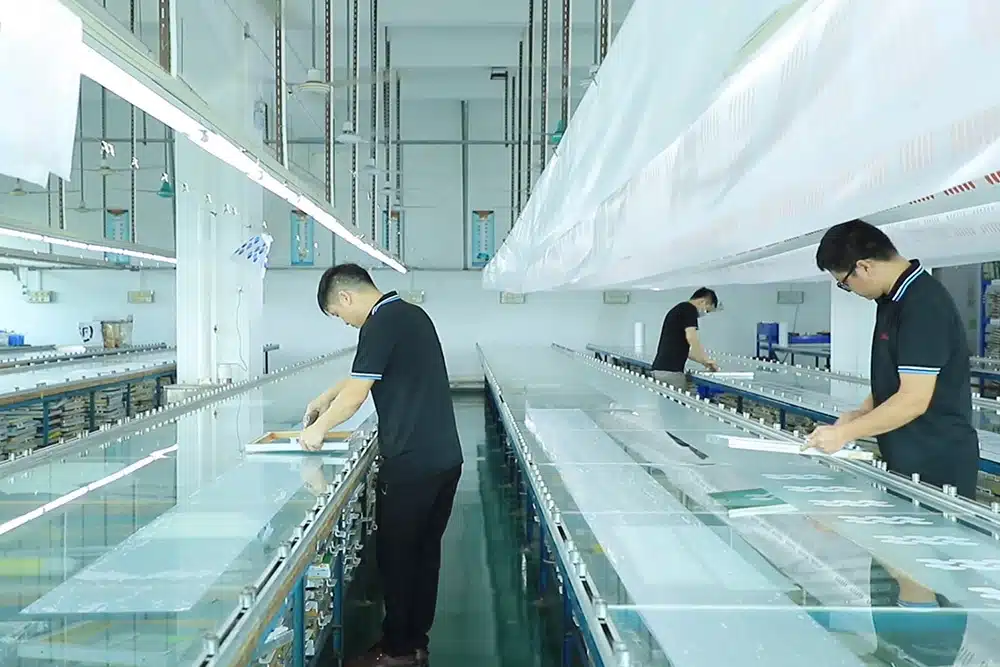
A qualified manufacturer isn’t satisfied with just quoting the first material option that’s requested, they examine your product drawings, usage demands and performance requirements to suggest the best material grade for your product. Our well-trained engineering staff offers end-to-end custom silicone mold solutions, from material selection and optimization, Shore hardness recommendations, wall thickness and cavity structure consultation, in-house mold design and tool manufacturing, prototype and sample production, compression molding, Pantone color matching, to raw material inspection, dust-free assembly and packaging, and quality control.
| Manufacturer Capability | Why It Matters for Material Selection |
| Application Review | Helps confirm whether silicone is suitable for the intended product |
| Material Selection Support | Matches silicone grade, hardness, color, and performance needs |
| Food-Contact Awareness | Helps plan material and testing for baking, candy, ice, or beverage products |
| Design Review | Checks wall thickness, cavity depth, release, and tear risk |
| In-House Tooling | Supports custom mold development, sample revisions, and logo details |
| Prototype Development | Allows buyers to test material performance before mass production |
| Process Control | Helps maintain molding, curing, hardness, appearance, and consistency |
| Quality Inspection | Checks dimensions, hardness, color, odor, appearance, and function |
| Branding Support | Supports logo, color, surface finishing, and private-label presentation |
| Packaging Support | Helps prepare consumer-ready or ecommerce-ready products |
Final Buyer Checklist: Silicone Mold or Rubber Mold?
This checklist will help you decide on silicone molds vs. rubber molds. Use your product requirements and testing plan to answer each of the questions.
| Checklist Question | If Yes, Silicone May Fit Better | If Yes, Rubber May Fit Better |
| Will the product contact food, beverages, ice, or ingredients? | Often yes, with suitable material and testing | Only if specific food-contact rubber is verified |
| Is baking or heat exposure required? | Often yes, with suitable heat-resistant silicone | Depends strongly on rubber compound |
| Is freezer release important? | Often yes | Depends on compound |
| Is low odor important for retail products? | Often yes | Must be carefully reviewed |
| Is color matching or translucent appearance important? | Often yes | Usually more limited |
| Is the application industrial or non-food? | Sometimes | Often possible depending on compound |
| Is abrasion resistance a key requirement? | Maybe | Some rubber compounds may fit better |
| Is chemical or oil resistance required? | Depends on silicone grade | Some rubber types may be more suitable |
| Is flexible demolding important? | Often yes | Possible depending on compound |
| Are food-contact claims needed? | Confirm silicone grade and testing | Confirm specific rubber compound and testing |
| Has real-use sample testing been completed? | Required | Required |
| Are material documents and QC standards clear? | Required | Required |

Conclusion — Choose Based on Material Suitability, Not Material Name
The difference between silicone molds and rubber molds is best understood by recognizing that they are not interchangeable terms, but rather the appropriate elastomer chemistry to meet the actual requirements of the product. When appropriate grades, testing, and design information are guaranteed, silicone molds often are the perfect choice for consumer baked goods, candy and chocolate, ice cube trays, beverage molds, kitchenware, soap, DIY, and private label applications. For limited applications such as industrial, concrete, resin, craft or non-food applications, rubber molding can still be a viable alternative when compound-specific abrasion resistance or chemical resistance is most important.
Those that clearly specify the application requirements, food contact requirements, temperature cycling, odor expectations, required hardness, release performance, and target-market regulations early on will get better results. Real-use testing and physical samples should always be used to validate the final selection. With a seasoned partner who is familiar with materials and production, you’re not just concept to mold… you’re concept to reliable, ready-to-market molds with more predictability and better performance.