
While silicone molds are generally viewed as superior, choosing between silicone molds and metal baking molds depends on the product goals, recipe requirements, user experience, and retail positioning—it’s not about which one is better overall. Flexibility, easy removal, lightweight and super customization possibilities are the main features of silicone baking molds, which are perfect for novelty shapes, seasonal collections, children’s sets, and private labeling kitchenware lines. Metal baking molds offer that hard, fast cooking and crisp browning of many baking recipes, particularly loaf pans, sheet pans, or any other bakeware that requires structure.
It is not just about silicone or metal, but the material that is suitable for the Baking recipe, Baking condition, User experience, Brand positioning, Manufacturing requirements. While oven safety and/or price are the only two parameters that many buyers consider when comparing silicone molds and metal molds, there are many other parameters involved in a baking product’s success in the real world of product development, such as the distribution of heat, the performance of the moulds, wall support, the shape of the cavity, cleaning, packaging, positioning in the shops, and sample testing.
Silicone Molds vs Metal Molds for Baking — Which Should You Choose?
When flexibility, ease of demolding, creative shape, color branding and easy handling are most important, silicone baking molds are the answer for your line. Use metal baking molds for strong structure, quick heat transfer, better browning and a traditional, sturdy feel. Cake molds, muffin molds, seasonal baking products and novelty bakeware are all types of bakeware that can benefit from a custom silicone mold for baking products. For brands developing cake molds, muffin molds, seasonal baking tools, or novelty bakeware, custom silicone molds for baking products should be designed around material selection, wall thickness, release performance, oven-use testing, and packaging requirements. Always test real recipes under actual baking conditions before committing to bulk production—price or appearance alone rarely tells the full story.
| Comparison Factor | Silicone Baking Molds | Metal Baking Molds |
| Flexibility | Flexible and easy to bend for release | Rigid and keeps shape firmly |
| Release Performance | Often easier to demold cakes, muffins, chocolate, and shaped items | May need greasing, lining, or coating |
| Heat Transfer | Slower heat transfer than metal in many cases | Faster heat conduction and stronger browning |
| Shape Complexity | Suitable for creative, detailed, and novelty shapes | Better for simpler or structured bakeware forms |
| Structure Support | May need support rim, tray, or balanced wall thickness | Strong self-supporting structure |
| Weight | Lightweight and easy to store | Heavier and more rigid |
| Color Options | Supports Pantone color matching and brand colors | Usually limited by metal finish or coating |
| Branding Options | Embossed, debossed, printed, or packaging branding | Stamping, printing, engraving, or packaging branding may apply |
| Cleaning | Flexible and often easy to wash, but deep cavities need review | Rigid surfaces can be easy, but corners/coatings need care |
| Best Uses | Novelty baking, muffins, cakes, gift sets, seasonal molds, flexible release | Bread pans, sheet pans, crisp-edge baking, structured bakeware |
What Are Silicone Baking Molds?
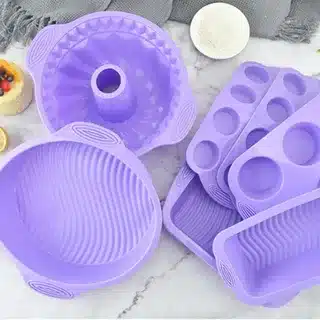
Silicone baking molds are food-grade flexible silicone components engineered to make the demoulding process easier and provide better functionality and esthetics for today’s baking lines. These are perfect for cakes, muffins, cupcakes, cookies, chocolate, candy, novelty and frozen desserts where easy release and presentation make all the difference in the world to sales.
| Silicone Baking Mold Feature | Buyer Meaning |
| Flexible Material | Helps release baked or shaped products more easily |
| Custom Shape Options | Supports novelty, seasonal, branded, and private-label products |
| Shore Hardness Options | Helps balance softness, support, and release |
| Food-Contact Material Options | Important for baking and kitchenware products |
| Heat-Use Review | Material and testing should match intended oven conditions |
| Color Customization | Supports brand colors, seasonal themes, and product collections |
| Logo Options | Supports molded or packaging-based branding |
| Lightweight Handling | Useful for retail, ecommerce, and home-use products |
| Support Structure Needs | Large or soft molds may need rim or tray support |
What Are Metal Baking Molds?
Metal baking molds are hard bakeware models usually made of aluminum, stainless steel, carbon steel, aluminized steel or coated steel, designed to endure and to function consistently in normal and professional baking. In cake, loaf, muffin, sheet, tart, and bread pans, they are essential for providing structure and uniform heating.
| Metal Baking Mold Feature | Buyer Meaning |
| Rigid Structure | Holds shape well during filling and baking |
| Heat Conductivity | Transfers heat faster than silicone in many baking applications |
| Browning Performance | Can support crisp edges or stronger browning |
| Strong Support | Useful for heavy batter, bread, loaf, or structured bakeware |
| Surface Coating | May improve release but requires durability review |
| Weight and Storage | Usually heavier and less flexible than silicone |
| Cleaning Care | Coatings or metal surfaces may need specific care instructions |
| Shape Limitation | Very detailed flexible-release shapes may be harder to demold |
Key Differences Between Silicone and Metal Baking Molds
There are benefits of knowing that silicone molds and metal molds have different uses, so that the pitfalls of product development with a price mismatch can be avoided. These are the largest variations in usage in a real environment after the molds are installed in kitchens and retail environments.
| Factor | Silicone Molds | Metal Molds | Buyer Decision Tip |
| Heat Transfer | Slower and gentler heat transfer | Faster heat conduction | Choose based on recipe and baking result |
| Browning | May brown less aggressively | Often better browning and crisp edges | Important for bread, tarts, and crusts |
| Flexibility | High flexibility | Low flexibility | Choose silicone for easy release |
| Shape Support | May need support rim or tray | Strong built-in support | Important for large or heavy products |
| Demolding | Easier for detailed and flexible release | May need greasing or coating | Test actual baked products |
| Detail Shapes | Good for novelty and seasonal shapes | Better for rigid, simpler forms | Match detail level to product purpose |
| Cleaning | Flexible, but deep cavities need care | Smooth metal can be easy; coating needs care | Provide care instructions |
| Storage | Can be lightweight and flexible | Requires more rigid storage space | Consider retail and home storage |
| Branding | Color, logo, shape, packaging options | Metal finish and packaging branding | Choose based on brand positioning |
| User Experience | Soft, colorful, easy handling | Traditional, sturdy, professional feel | Match target customer expectations |
Pros and Cons of Silicone Baking Molds
There’s no denying the benefits of silicone baking molds for creative and consumer friendly products, but they do need some design considerations and material selection to ensure they’ll perform well over repeat use.
| Silicone Baking Mold Pros | Silicone Baking Mold Cons |
| Flexible and easy to demold | Heat transfer is usually slower than metal |
| Supports creative and detailed shapes | May need support tray for large or filled molds |
| Lightweight and easy to handle | Large molds can feel too soft if poorly designed |
| Supports custom colors and branding | Browning and crisp edges may differ from metal |
| Useful for seasonal and novelty products | Deep cavities may need cleaning review |
| Good for private-label retail products | Material, hardness, and wall thickness must be controlled |
| Can support freezer and cold-use products too | Unsupported oven claims should be avoided |
Pros and Cons of Metal Baking Molds
Despite their practical disadvantages in terms of flexibility and care, metal baking molds are a fixture in many professional and traditional baking uses due to their strength and heat-resistant qualities.
| Metal Baking Mold Pros | Metal Baking Mold Cons |
| Strong and self-supporting | Less flexible for demolding |
| Faster heat transfer | May need greasing, lining, or coating |
| Supports browning and crisp edges | Can be heavier and less compact |
| Good for loaf pans, sheet pans, and structured baking | Coatings need care and durability review |
| Familiar to many bakers | Less suitable for deep flexible-release shapes |
| Durable when properly made | Limited soft-touch and color customization |
| Works well for many traditional recipes | May not fit novelty or promotional designs as easily |
Best Use Cases for Silicone Baking Molds
The silicone baking molds are most useful in situations where easy release, eye-catching presentation, and easy-to-retail weight are most important.
| Use Case | Why Silicone Works Well |
| Muffin and Cupcake Molds | Flexible release and colorful product presentation |
| Mini Cake Molds | Easy demolding and creative shape options |
| Chocolate and Candy Molds | Detailed cavities and flexible release |
| Seasonal Baking Molds | Holiday shapes, colors, and retail gift packaging |
| Children’s Baking Sets | Lightweight, colorful, and easy to handle |
| Novelty Shapes | Supports creative cavity layout and branded designs |
| Promotional Baking Gifts | Logo, packaging, and color customization support campaigns |
| Private-Label Baking Sets | Good for custom colors, packaging, and product bundles |
| Frozen Dessert Molds | Flexible release after freezing when material is suitable |
| Gift and Ecommerce Products | Lightweight packaging and brand customization options |

Best Use Cases for Metal Baking Molds
Metal baking molds are best for recipes that require a classic texture, even heating and structural integrity.
| Use Case | Why Metal May Work Better |
| Loaf and Bread Pans | Strong structure and good heat conduction |
| Sheet Pans | Rigid support and even handling |
| Tart Pans | Better crispness and edge definition |
| Pizza / Flat Baking | Faster heat transfer and firm surface |
| Structured Cake Pans | Supports heavy batter and shape stability |
| Recipes Needing Browning | Metal often supports stronger crust and browning |
| High-Volume Traditional Bakeware | Familiar performance for many bakers |
| Professional Baking Tools | Sturdy structure and traditional user expectation |
| Heavy Batter Products | Better support without a tray |
| Crisp-Edge Baked Goods | Stronger heat transfer supports texture goals |
Heat Performance and Baking Results
The results of baking are dependent upon the way each material reacts to the heat, the recipe used, the thickness of the mold, and the oven temperature, rather than general statements that one material is superior to the other.
| Baking Performance Factor | Silicone Mold Consideration | Metal Mold Consideration |
| Heat Transfer | Usually slower and gentler than metal | Usually faster conduction |
| Browning | May be lighter depending on recipe and design | Often stronger browning |
| Baking Time | May need recipe or timing adjustment | Often follows traditional bakeware expectations |
| Shape Support | Large silicone molds may need tray support | Rigid structure supports batter |
| Mold Thickness | Affects heat response and flexibility | Metal thickness affects heat distribution |
| Recipe Type | Works well for many cakes, muffins, candies, and novelty products | Strong for bread, tarts, crusts, and crisp edges |
| User Instructions | Buyers may need to explain support tray and handling | Care instructions may include coating protection |
| Sample Testing | Test real recipe and oven conditions before bulk approval | Also test coating, release, and heat result |
Release Performance, Cleaning and User Experience
The ease of release and cleanliness directly affects customer feedback, repeat sales and brand reputation in the competitive baking accessories market.
| User Experience Factor | Silicone Mold Consideration | Metal Mold Consideration |
| Demolding | Flexible release helps push out baked goods | May need greasing, lining, or coating |
| Deep Cavities | Silicone flexibility can help, but cleaning must be reviewed | Rigid deep cavities may be harder to release |
| Fine Details | Good for shaped designs if tooling is accurate | Detail may be sharp but release can be harder |
| Cleaning | Flexible surface helps, but complex cavities need care | Smooth metal may clean well; coatings need protection |
| Handling | Large silicone molds may need tray support when filled | Metal is easier to move when filled |
| Storage | Silicone can be flexible and lightweight | Metal is rigid and may take more space |
| Odor Review | Important for silicone baking products | Less relevant but coating and care still matter |
| Care Instructions | Should explain oven, cleaning, and handling limits | Should explain coating, washing, and storage care |
Cost, Tooling, MOQ and Packaging Considerations
The true cost comparison between silicone molds and metal molds in baking is not limited to unit cost; it also takes into account the investment in the molding tool, customization needs, packaging requirements, and efficiency of the production process.
| Cost Factor | Silicone Baking Molds | Metal Baking Molds | Buyer Note |
| Tooling Cost | Depends on cavity layout, size, logo, and mold complexity | Depends on metal forming, stamping, coating, or fabrication process | Compare full project scope |
| Unit Price | Affected by silicone weight, hardness, process, and QC | Affected by metal type, thickness, coating, and forming | Lowest unit price may not mean best value |
| MOQ | Affected by material, color, tooling, and packaging | Affected by material, production setup, and coating | MOQ should match sales plan |
| Color Customization | Strong Pantone and seasonal color options | Limited compared with silicone unless coated or painted | Consider brand positioning |
| Logo Customization | Embossed, debossed, printed, or packaging branding | Stamping, engraving, printing, or packaging branding | Logo method affects cost |
| Packaging | Flexible products may need shape support | Rigid products may pack differently | Test packaging fit |
| Shipping | Lightweight but may need protective packing | Heavier, rigid, and may affect shipping cost | Compare carton size and weight |
| Testing | Food-contact and oven-use claims may require review | Coating and food-contact claims may also require review | Do not compare without testing scope |

Material and Safety Considerations for Baking Products
With responsible material selection, silicone and metal baking molds can be used to deliver the performance and food contact properties that comply with relevant regulations, but not exceed.
| Safety / Compliance Factor | Silicone Mold Review | Metal Mold Review |
| Food-Contact Use | Select suitable food-contact silicone where required | Select suitable food-contact metal or coating where required |
| Heat Claims | Should be supported by material data or testing | Should be supported by metal/coating performance data |
| Pigments / Colorants | Review for food-contact and heat use where needed | Coatings or finishes should be reviewed where used |
| Odor After Heating | Important for silicone baking products | Usually less central, but coating odor should be reviewed |
| Coating Durability | Usually not applicable unless surface process is added | Important for non-stick or painted surfaces |
| FDA / LFGB Needs | Depends on target market, retailer, and buyer requirements | Also depends on target market and product construction |
| Dishwasher Claims | Should be tested or supported | Coatings and metal type must be reviewed |
| User Instructions | Helps avoid misuse and unsupported claims | Care instructions protect coating and product life |

Common Mistakes When Choosing Between Silicone and Metal Baking Molds
Even with proven sourcing teams, there are times when vital information is not captured that can cause downstream problems in the mold baking process.
| Common Mistake | Better Approach |
| Choosing Only by Price | Compare material, tooling, testing, packaging, user experience, and reviews |
| Ignoring Baking Result | Test real recipes and target oven conditions |
| Assuming Silicone Works Like Metal | Adjust expectations for heat transfer and browning |
| Assuming Metal Always Releases Better | Review coating, greasing, and product shape |
| Ignoring Silicone Support Needs | Use support rims, trays, or balanced wall thickness for larger molds |
| Ignoring Metal Coating Care | Provide clear washing and use instructions |
| No Physical Sample Testing | Approve real product samples before bulk production |
| Ignoring Food-Contact Requirements | Confirm material and testing needs early |
| Unsupported Retail Claims | Use only supported oven, dishwasher, or temperature claims |
| Ignoring Packaging Fit | Test product and packaging together |
| Comparing Incomplete Quotes | Check material, tooling, MOQ, packaging, testing, and QC scope |
What Buyers Should Prepare Before Choosing a Baking Mold Material
Creating the correct information early in the development process will simplify the decision making process and reduce the need for costly changes later in the process.
| Information to Prepare | Why It Helps Material Selection |
| Product Application | Defines whether flexibility or heat conduction matters more |
| Recipe / Use Case | Helps evaluate baking result and release needs |
| Oven Temperature Range | Supports material and testing review |
| Exposure Time | Affects heat-performance expectations |
| Food-Contact Status | Determines material and documentation direction |
| Browning Requirement | Helps decide whether metal may be better |
| Flexible Release Need | Helps decide whether silicone may be better |
| Product Dimensions | Affects tooling, structure, packaging, and cost |
| Cavity Depth | Affects release, cleaning, and manufacturability |
| Wall Thickness | Affects silicone support or metal heat behavior |
| Product Shape | Helps evaluate novelty, structure, and tooling |
| Logo / Branding | Affects tooling, printing, or packaging decisions |
| Color Requirement | Important for silicone private-label products |
| Packaging Style | Impacts retail presentation and shipping |
| Testing Requirement | Helps avoid late compliance or claim issues |
| Order Quantity | Supports MOQ, unit price, and production planning |
How a Manufacturer Supports Custom Silicone Baking Mold Projects
A silicone manufacturer with experience will consider your application at an early stage and provide you with suggestions for the best silicone grades and ensure that every aspect of your application is optimized, from wall thickness to final packaging, to ensure the silicone performs the same way each time and looks great at the retailer’s. Advanced product design and structural development, silicone material selection and optimization, Shore hardness recommendations, mold design and tool manufacturing, prototype and sample production, compression molding ability, Pantone color matching, surface finishing options, dust-free assembly, and thorough quality inspection, as well as full retail or ecommerce packaging solutions are provided by the experienced teams. This complete knowledge ensures that brands can launch from concept to mass production with confidence and stay true to their desired performance and brand goals.
| Manufacturer Capability | Why It Matters for Custom Silicone Baking Molds |
| Application Review | Confirms whether silicone fits the baking product goal |
| Material Selection Support | Helps choose suitable silicone grade for food-contact and heat-use needs |
| Hardness Recommendation | Balances flexibility, support, and release performance |
| Design Review | Checks wall thickness, cavity depth, support rim, and demolding |
| In-House Tooling | Supports custom shapes, logo details, and sample revisions |
| Sample Development | Allows buyers to test baking result, release, odor, color, and packaging fit |
| Process Control | Helps maintain stable curing, appearance, and hardness |
| Quality Inspection | Checks dimensions, hardness, color, appearance, and function |
| Branding Support | Supports logo, color, surface, and packaging customization |
| Packaging Support | Helps create retail-ready or ecommerce-ready baking products |
Final Buyer Checklist: Silicone or Metal for Baking?
Apply this handy checklist to help you quickly select your materials based on your product strategy and customer expectations.
| Checklist Question | If Yes, Silicone May Fit Better | If Yes, Metal May Fit Better |
| Do you need flexible release? | Yes | Usually no |
| Do you need strong browning or crisp edges? | Not usually the main strength | Yes |
| Is the product a novelty or seasonal shape? | Often yes | Sometimes, but release may be harder |
| Is colorful branding important? | Yes | Less common |
| Is rigid support more important than flexibility? | May need tray or support rim | Yes |
| Is lightweight retail packaging important? | Often yes | Depends on product |
| Is the product a loaf, sheet, tart, or crust-focused item? | Sometimes | Often yes |
| Is deep cavity demolding important? | Often yes | Only if release is easy |
| Will customers expect traditional bakeware feel? | Maybe not | Often yes |
| Has real baking sample testing been completed? | Required | Required |
| Are food-contact and temperature claims supported? | Must be confirmed | Must be confirmed |
| Does the material match brand positioning? | Confirm with target users | Confirm with target users |
Conclusion — Choose Based on Baking Result, Release and Product Strategy
When choosing silicone molds vs metal molds for baking, it isn’t a matter of which is better in all circumstances. Silicone is the better option for when flexibility, easy release, creative shapes, colored branding, seasonal products, novelty bakeware, gift sets, and private-label retail presentation are most important. When heat conduction, browning, crisp edges, loaf pans, sheet pans, and traditional baking performance are paramount, metal might be the right choice.
It is important for the buyer to clarify the desired baking effect, applications, product specifications, packaging, MOQ (Min Order Quantity), cost and the expectations of the customer, as the final product needs to be liked by the customer and reach the desired specifications. Before going into bulk production, it is always necessary to review the final material with actual samples and baking tests. With all of the details planned out, there are no revisions, the risk of error is minimized, and the baked molds will really help with the success of your brand in the current competitive kitchenware market.