
Silicone dispensing tolerance is the acceptable range of bead size, bead position, bead height, volume and appearance during the production process. It is dependent on material viscosity, dispensing parameters, nozzle selection, fixture accuracy, part geometry, curing conditions and inspection standards. OEM purchasers of rubber products and product engineers designing custom silicone parts need to be familiar with these factors because dispensed silicone can be used in a myriad of applications such as sealing, bonding, insulation, cushioning or grip.
Many customers think tolerance will be dependent on the dispensing machine, but the actual results will be dependent on the entire process. A good sample is not always a stable mass production if not coupled with correct material control, fixture design, and validated parameters. For products that require stable bead size, accurate placement, and repeatable sealing or bonding performance,high-precision silicone dispensing for custom parts silicone dispensing for custom parts) should be planned around material behavior, fixture design, dispensing parameters, and inspection standards.
What Does Silicone Dispensing Tolerance Mean?
Silicone Dispensing Tolerance is the measurable or agreed deviation between the dimensions, location and consistency of the dispensed silicone bead. It is not a universal fixed value, but needs to be determined by the material type, bead geometry, part design, functional purpose, production process and inspection standard.
Tolerance has several components that are interrelated:
| Tolerance Category | What It Means | Why It Matters |
| Bead Width | Variation in the left-to-right size of the dispensed line or bead | Affects appearance, sealing area, and material coverage |
| Bead Height | Variation in the vertical build-up of silicone material | Affects compression, cushioning, assembly fit, and sealing performance |
| Position Tolerance | How far the bead, dot, or line can shift from the intended path | Affects assembly fit, sealing path, and visual alignment |
| Volume Tolerance | Variation in the amount of silicone dispensed | Affects bonding strength, overflow risk, and functional consistency |
| Appearance Consistency | Visual uniformity of shape, edges, surface, and finish | Affects product quality perception and customer acceptance |
Sometimes it is not necessary to have tighter tolerances. A bead in a pet mat may be more variable than a sealing bead in an auto part. When defining the tolerances, it is important to get them related to the functionality of the product to reduce unnecessary costs without compromising performance.
Why Bead Size, Position and Consistency Matter
The size, placement and uniformity of beads have direct impact on functional performance and perceived quality with custom silicone products. Even if the base molded part is flawless, it may cause field failures, assembly problems, and/or customer complaints due to inconsistent dispensing.
| Product Requirement | Why Tolerance Matters |
| Sealing | A bead that is too small, broken, or misaligned may reduce sealing performance |
| Bonding | Too little material may weaken adhesion; too much may cause overflow or interference |
| Assembly Fit | Excess bead height or misplaced silicone can affect part assembly |
| Insulation | Missing or shifted silicone may leave areas unprotected |
| Cushioning | Uneven height can create inconsistent contact or compression |
| Grip | Irregular dots or lines may affect user feel and anti-slip performance |
| Appearance | Uneven edges, width variation, or misalignment can reduce perceived quality |
| Mass Production | Consistent tolerance helps keep approved samples aligned with bulk production |
In industries like personal care, automotive, and consumer electronics, even small deviations can impact waterproofing, dust protection, or user experience.
Key Factors That Affect Silicone Dispensing Tolerance
Silicone dispensing tolerance is not solely due to any one element, but is actually a combination of factors. All of them are evaluated by the experienced manufacturers during the process development.
| Factor | How It Affects Tolerance | Possible Risk If Not Controlled |
| Material Viscosity | Influences flow rate, bead shape, and edge stability | Uneven beads, sagging, or unstable volume |
| Nozzle Size | Determines bead width and material output | Bead too wide, too narrow, or inconsistent |
| Dispensing Pressure | Controls material flow volume | Overflow, bubbles, gaps, or unstable output |
| Movement Speed | Affects line continuity and bead thickness | Broken lines, thick-thin variation, or poor edges |
| Fixture Accuracy | Controls part position during dispensing | Bead misalignment and batch variation |
| Part Geometry | Affects access, path stability, and material spread | Difficult-to-control corners, grooves, or vertical areas |
| Surface Condition | Influences adhesion and bead stability | Peeling, spreading, or contamination defects |
| Curing Control | Stabilizes final bead shape and performance | Sticky surface, deformation, weak bonding, or shrinkage |
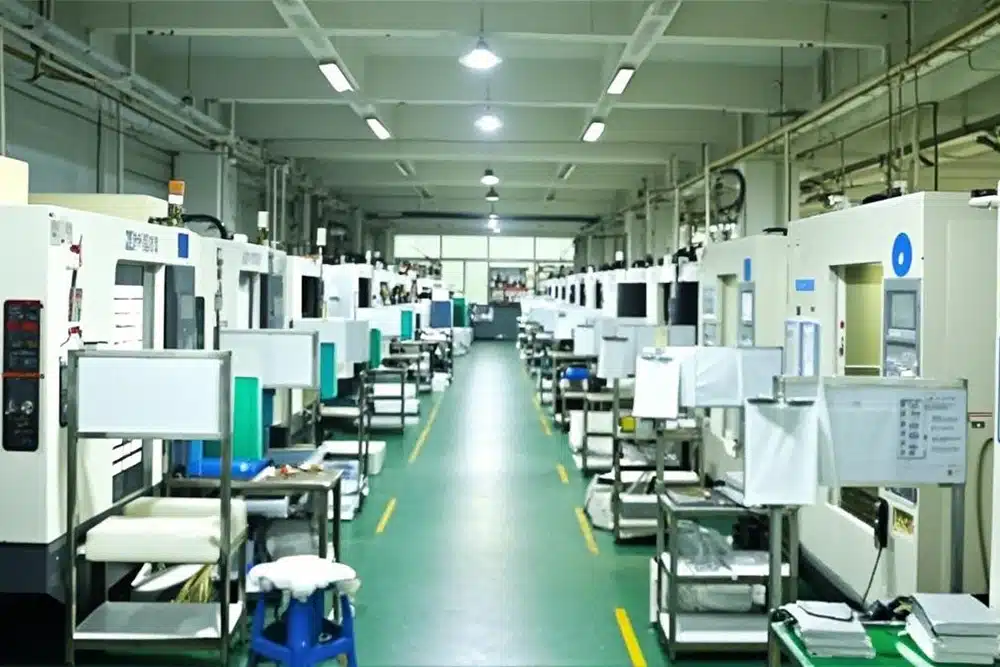
Here at Dongguan HT Silicone & Rubber Co., Ltd. we pay careful attention to these factors since our clients are in the automotive, personal care, home goods and pet supply industries and require repeatability in production runs.
How Material Viscosity Influences Bead Size and Shape
One of the most important factors in silicone dispensing tolerance is the material viscosity. It affects the flow and shape retention of silicone and its interaction with the substrate.
High-viscosity materials hold their form and are more likely to cause broken lines but will need more pressure. Low viscosity silicone liquid flows easily, but has the potential to spread or sag. Actual viscosity during production will be affected by temperature, storage conditions, pot life and mixing.
| Material Condition | Possible Effect on Dispensing | Control Method |
| Too High Viscosity | Difficult flow, broken lines, uneven output | Adjust material selection, pressure, nozzle size, or process setup |
| Too Low Viscosity | Spreading, sagging, overflow, poor edge control | Select suitable grade or adjust bead design and curing conditions |
| Temperature Variation | Changes material flow behavior | Control storage and production environment |
| Poor Material Handling | Air bubbles, inconsistent flow, contamination | Use proper handling, degassing, and material preparation |
Controlled selections and preparations aid in controlling the silicone bead size and shape.
How Fixture Design and Part Positioning Affect Position Tolerance
State-of-the-art dispensing equipment cannot make up for a poor fixture design. Flexible silicone components must be fixed in a repeatable and undisturbed position while being dispensed.
| Fixture / Positioning Issue | Possible Result | Prevention Method |
| Loose Fixture | Part shifts during dispensing | Design a stable jig with proper locating points |
| Poor Repeatability | Bead position varies between parts | Use consistent loading and positioning references |
| Flexible Part Deformation | Silicone bead is applied to a distorted shape | Support the part properly during dispensing |
| Curved or Irregular Surface | Bead path becomes unstable | Review access angle and fixture support |
Position tolerance problems will be avoided if fixtures are validated during sampling.
Manual, Semi-Automatic and Automated Dispensing Tolerance
There are various production methods with varying degrees of silicone dispensing uniformity.
| Production Method | Tolerance Control Strength | Suitable Use |
| Manual Dispensing | Flexible but more operator-dependent | Early samples, low-volume trials, simple areas |
| Semi-Automatic Dispensing | Better control of pressure, volume, or timing | Small to medium batches with moderate consistency needs |
| Automated Dispensing | Better repeatability for path, speed, volume, and position | Mass production, complex paths, tighter appearance or functional requirements |
It is selected based on volume, complexity, and their desired tolerance.
How Manufacturers Control Silicone Dispensing Tolerance
It is the complete, validated process that results in effective control, not just machine settings.
| Control Method | What It Controls | Why It Helps |
| Design Review | Bead path, access area, groove design, functional requirement | Confirms whether tolerance target is realistic |
| Material Testing | Viscosity, adhesion, curing behavior, flow stability | Reduces material-related variation |
| Nozzle Selection | Bead width and material output | Supports consistent bead geometry |
| Parameter Validation | Pressure, speed, distance, volume, and timing | Stabilizes dispensing result |
| Fixture Design | Part position and repeatability | Reduces bead misalignment |
| Trial Run | Sample consistency under real conditions | Finds variation before mass production |
| Curing Control | Final bead shape, adhesion, and stability | Prevents deformation, weak bonding, or sticky surfaces |
How to Define Realistic Silicone Dispensing Tolerance
Tolerance should be based upon the specific need of the product and not the most stringent specification.
| Question to Ask | Why It Matters |
| Is the bead functional or decorative? | Functional beads may need stricter control |
| Does the bead affect sealing or bonding? | Tolerance directly affects product reliability |
| Is the bead visible to end users? | Appearance tolerance may need clearer standards |
| Does bead height affect assembly fit? | Excess material may cause interference |
| What production volume is expected? | Higher volume may require more controlled fixtures or automation |
Quality Inspection for Bead Size, Position and Consistency
Clear documentation makes it easier for manufacturers to make accurate quotations and make a process feasible.
| Inspection Method | What It Checks | Best Used For |
| Visual Inspection | Overflow, gaps, bubbles, uneven shape, contamination | General appearance and surface quality |
| Bead Width Measurement | Width consistency along the dispensing path | Visible beads, sealing paths, decorative lines |
| Position Check | Alignment with target path or groove | Narrow grooves, bonding areas, sealing features |
| Adhesion Test | Bonding strength to base material | Adhesive dispensing and assembled parts |
What OEM Buyers Should Prepare Before Requesting Tolerance Control
Clear documentation helps manufacturers provide accurate quotations and feasible processes.
| Information to Prepare | Why It Helps |
| 3D CAD File | Helps engineers review geometry, access area, and fixture needs |
| Dispensing Path | Clarifies where silicone must be applied |
| Bead Width / Height Requirement | Helps evaluate feasibility and process setup |
| Functional Purpose | Confirms whether tolerance affects sealing, bonding, insulation, grip, or appearance |
How to Choose a Manufacturer for Silicone Dispensing Tolerance Control
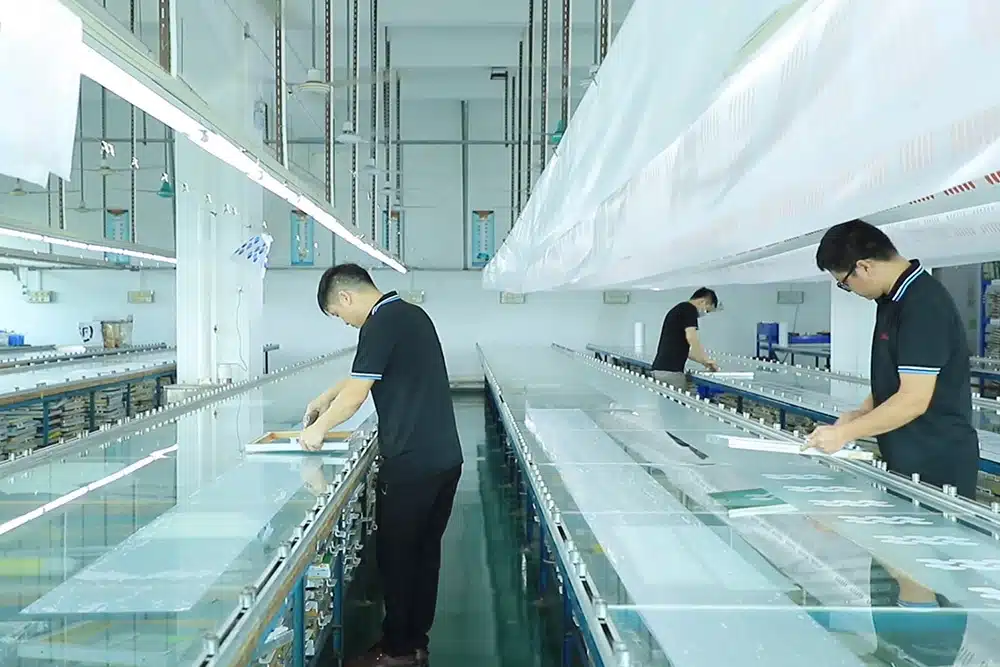
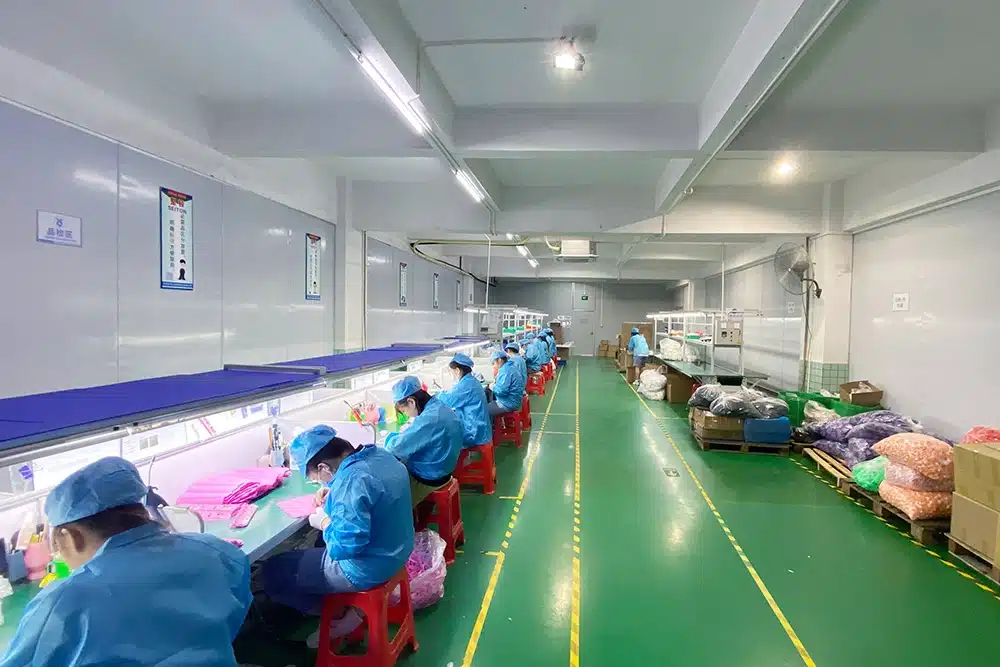
Seek out partners who offer a broad range of capabilities such as material selection, fixture design, in-house molding, controlled dispensing and quality systems. The dust-free production environment and experience of various industries help to guarantee the consistency of sampling to mass production.
| Supplier Capability | Why It Matters |
| Material Selection Support | Helps match viscosity, adhesion, curing, and product performance |
| Fixture and Jig Design | Improves bead position accuracy and repeatability |
| In-House Molding Capability | Helps align molded part geometry with secondary dispensing needs |
Common Misunderstandings About Silicone Dispensing Tolerance
- It is not always possible, or cost-effective, to have tight tolerances.
- Stable mass production does not mean that the first sample is good.
- Silicone components are flexible and can become distorted when positioned, thus altering the bead placement.
- Consistency for the purposes of the visual and functional tolerance is not the same.
Conclusion — Silicone Dispensing Tolerance Depends on the Whole Process
The tolerance of silicone dispensing influences the size, position, consistency, appearance, sealing, bonding, assembly and the longevity of the bead. Appropriate material selection, good fixture design, confirmed dispensing parameters, controlled curing, and proper inspection standards are all crucial to the stable results.
Establishing realistic tolerances from the beginning by determining it according to the function of the product helps minimize rework, uncertainty, and defects. In close collaboration with a seasoned silicone dispensing manufacturer, OEM buyers can achieve reliable quality that meets both the technical requirements and commercial goals.