
The errors in the silicone material cause functional, mechanical and aesthetic failures that can ruin even the most well thought-out OEM and ODM project. The root causes are often not confined to a particular datasheet spec, but are usually related to erroneous grade, mismatched wall thickness or geometry, improper curing profile, environmental incompatibility, or poor adhesion in overmolding products.
Practically, these failures in the selection of silicone materials are translated into the real business pain: product recall, mounting customer complaint, warranty claim eroding margins, and spiraling production cost. The common belief among many engineers is that when a silicone compound is found to possess the values of the published datasheet, it is justified to assume that this compound will be reliable in performance in the real world. In practice, however, it is the interplay between the material, the part design, the manufacturing process and the actual operating environment that determines success or failure.
The lessons of the real-life failure are that the material selection, testing, and attention to design are necessary to avoid costly failures. An analysis of real-life silicone failures will indicate the critical nature of the correct choice of material in determining the performance, durability and reliability of the product in both OEM and ODM projects.
To further explore the systematic evaluation techniques, see the guide to evaluation of silicone by HT Silicone.
Case Study 1: Automotive Seal Failure
Premature seal failure in automotive sealing was a result of an improperly chosen grade of silicone.
A Tier-1 automotive supplier designed a high-volume seal to a component in the engine compartment. The team decided to use a standard 50 Shore A silicone based on its cost and overall temperature rating. The seals started to develop severe compression set and cracking, when subjected to changes in temperatures between -40 C and 150 C after six months in the field.
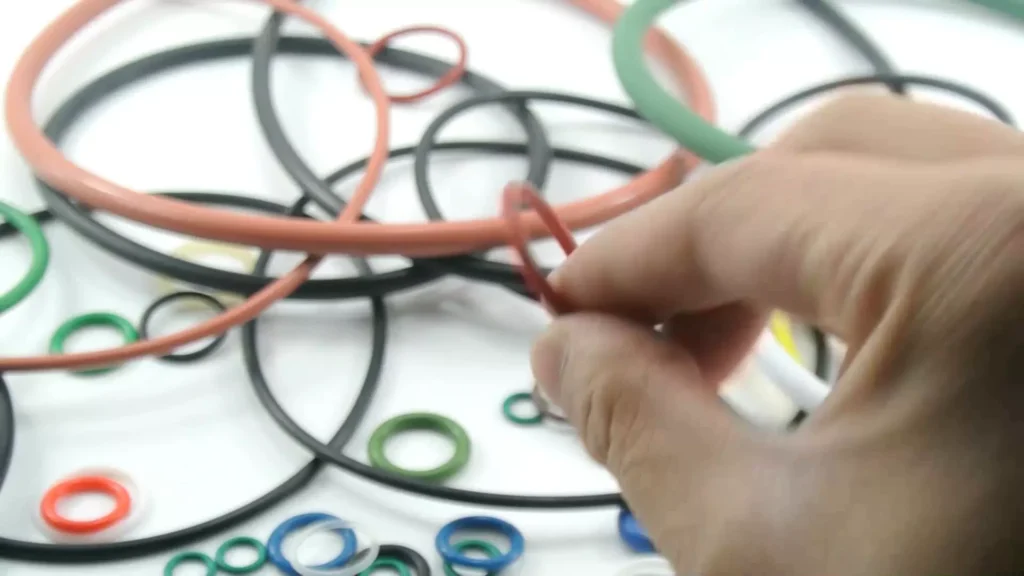
Failure Mode and Contributing Factors
Excessive compression set coupled with low temperature cracking was the main failure mode. Wall thickness was non-uniform over the geometry of the part, thus forming stress concentrations, and the selected hardness was too high to meet the dynamic sealing requirements. Team members had not followed a complete temperature-cycling validation process and had instead just used the numbers in the datasheets as they were.
Consequences
The leaks caused warranty claims in the seven figures, a total production halt, and a strain on the relationship of the supplier and the OEM.
Lessons Learned
Select the silicone grade and hardness to the exact operating conditions and always do accelerated thermal cycling and compression-set testing of actual prototypes.
| Issue | Cause | Lesson Learned |
| Seal cracks | Wrong hardness, wall thickness | Test material under real temperature cycles |
| Compression set | Material not suited for stress | Select low compression set silicone |
| Warranty failures | Inadequate validation | Prototype and long-term performance testing |
Case Study 2: Consumer Wearable Device
Inappropriate silicone selection caused deformation of the product and a decrease in its durability.
One of the consumer electronics brands released an item in the form of a fitness tracker, which has a soft silicone sleeve meant to create a sense of comfort and flexibility. Three months after the release, users noted that the sleeve was no longer elastic, was stretched permanently, and could no longer fit securely.

Failure Mode and Contributing Factors
The failure mode was permanent deformation following continuous flexing, and daily exposure to UV. The material used was of a high-hardness grade that gave good tear strength on paper but did not contain enough UV stabilizers and elastic recovery to use outside. The wall thickness was also homogenous but the geometry formed high strain points when the wrist moves. There were no actual use accelerated aging tests that had been done.
Consequences
The company experienced a tidal of returns, negative reviews, and an expensive redesign that added four months to the next generation of the product.
Lessons Learned
Make sure to take into account environmental issues like UV exposure and choose a flexible and UV-resistant silicone grade. Test the durability under the conditions as would be found in the real world as opposed to depending on laboratory data alone.
| Issue | Cause | Lesson Learned |
| Deformation | Material grade too stiff | Select flexible, UV-stable silicone |
| Reduced fit | Environmental exposure | Evaluate durability under expected conditions |
| Returns | Lack of testing | Perform real-use and accelerated testing |
Case Study 3: Medical Device Component
The inappropriate choice of silicone influenced the sterilization resistance and the life of the products.
One of the manufacturers of medical devices came up with a reusable, silicone gasket designed to fit in the back of an autoclavable surgical device. With just 20 sterilization cycles, components discolored, cracked on the surface, and lost their elasticity, making them useless.
Failure Mode and Contributing Factors
The silicone was a general purpose industrial grade, and not a grade designed to undergo repeated high-temperature steam sterilization. The silicone became brittle, discolored. The curing profile did not match the part thickness either and left behind some residual stresses that hastened degradation.
Consequences
Non-compliance by the regulatory body necessitated a complete scrap of the batch, postponed market introduction and necessitated a costly process of requalification of the material.
Lessons Learned
Confirm that the silicone grade is specifically rated to the desired sterilization process and exposure to chemicals. Tie the cure cycle to the material grade and the actual part geometry.
| Issue | Cause | Lesson Learned |
| Discoloration | Not sterilization-compatible | Use medical-grade silicone for high-temp autoclave |
| Brittleness | Improper curing | Align cure cycle with grade and process |
| Scrap / compliance | Material mismatch | Test all materials under expected sterilization |
Common Factors Leading to Silicone Material Failures
Failures tend to have common causes that can be counter-measured.
Throughout the three case studies, and dozens of other projects that I have read, there are a few patterns which recur in a similarly predictable manner.

Key Contributing Factors
- Choosing silicone, without regard to wall thickness or geometry.
- Neglect of temperature cycling, compression set or exposure to the environment.
- Weak adhesion in cases of overmolding or co-molding.
- Poor curing profile or mold design.
- Ignoring additive compatibility or surface finish.
- Using datasheets only without testing in actual use.
These problems make what otherwise would have been dependable custom silicone products seem like expensive silicone product failures.
| Factor | Impact | Preventive Action |
| Wall thickness / geometry | Cracking, voids | Optimize design, test prototypes |
| Environmental exposure | Aging, UV degradation | Select weather- or UV-resistant grade |
| Adhesion issues | Delamination | Test overmolding and co-molding compatibility |
| Curing mismatch | Incomplete cure | Adjust temperature and cycle |
| Surface finish | Poor performance | Validate additive and coating compatibility |
Checklist for Avoiding Silicone Material Selection Failures
A checklist system is used to avoid expensive silicone failures in OEM/ODM projects.
All the material that you want to produce should be run through the following questions with your cross-functional team before they are given a green light.
| Question | Purpose |
| Is silicone grade suitable for operating environment? | Avoid cracks, deformation, or aging |
| Are wall thickness and geometry compatible with material? | Prevent voids or shrinkage |
| Has adhesion or overmolding compatibility been tested? | Ensure integrity of co-molded parts |
| Is curing profile aligned with part and material? | Avoid incomplete cure |
| Are additives and surface finishes compatible? | Reduce risk of defects |
| Has accelerated or real-use testing been performed? | Validate durability and compliance |
Conclusion — Lessons Learned from Real-World Failures
Silicone material failures can be mostly avoided through proper material selection, design consideration and testing.
Experiments of failure in the real world prove that cracks, delamination, deformation, and functional failure can be prevented through proper selection of silicone material, design and process evaluation. The sourcing teams and engineers should incorporate lessons learned, prototype testing, and environmental review in material decisions to produce high-quality, reliable silicone products.
By using each new project as a chance to put these hard-learned lessons into practice–instead of replicating the same material selection errors–manufacturers can drastically cut down on defect rates, warranty costs, and the overall risk of the program. The distinction between an effective introduction and an expensive recall is often reduced to nothing more than the right questions asked at the right time before the first tool is cut.