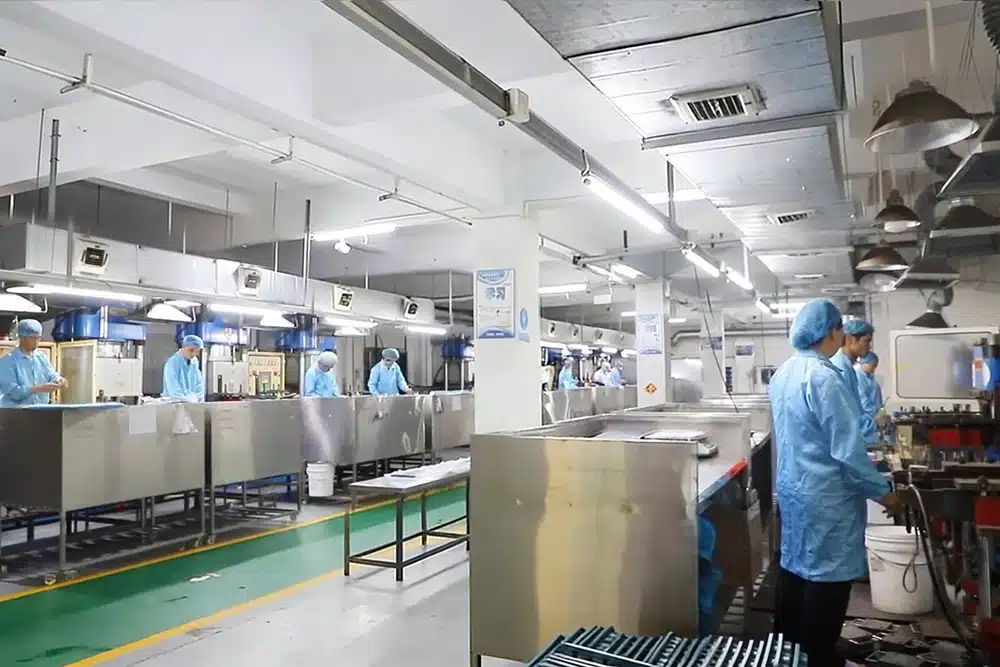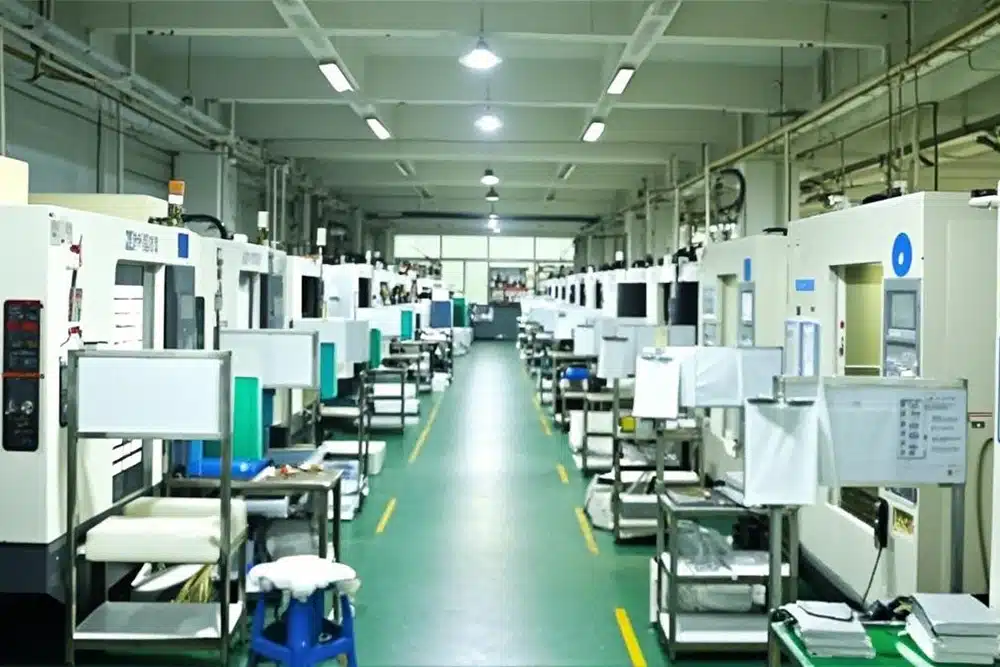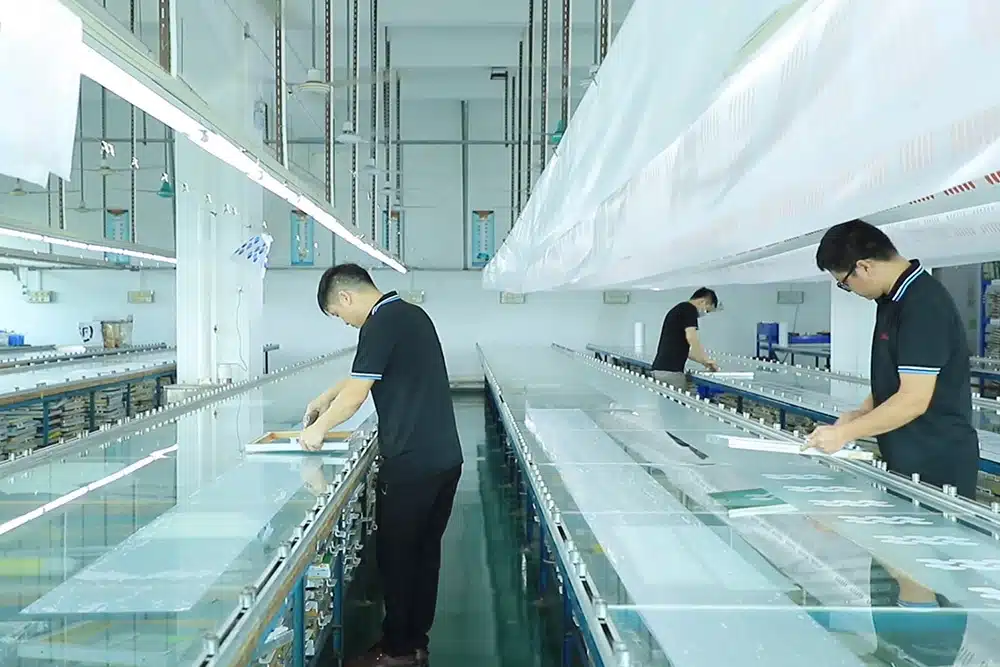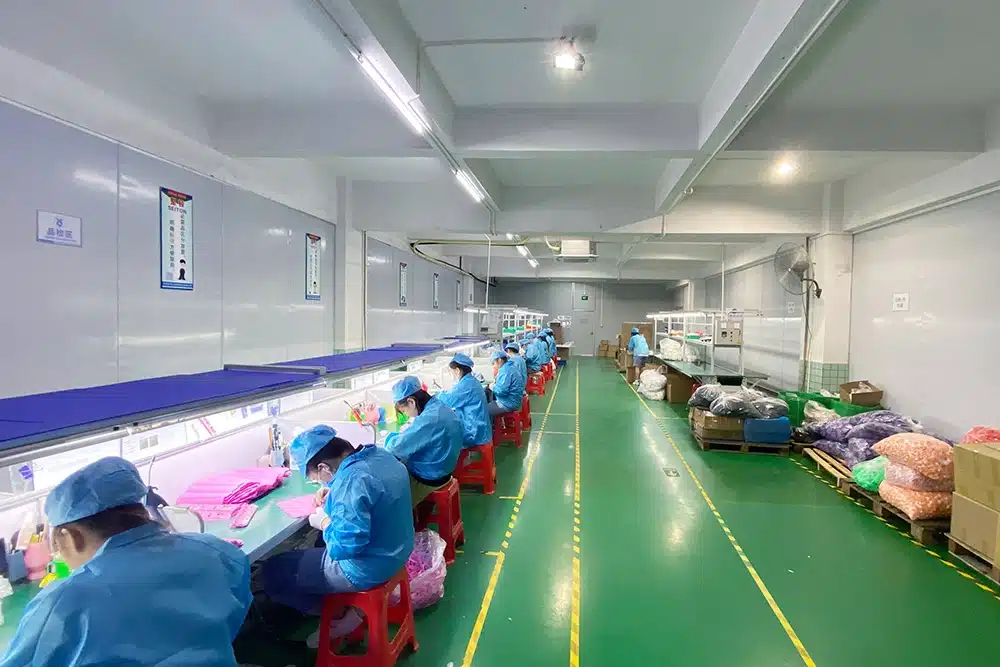

Silicone quality control in OEM projects prevents defective parts by detecting risks early, tracing issues to their origins, and taking corrective measures to prevent them from becoming major issues in high-volume production or affecting the end customer. Through real-world silicone product quality case studies, buyers can see exactly how experienced manufacturers catch issues like bubbles, color variation, dimensional inconsistencies, under-curing, contamination, and packaging deformation before they impact final shipments.
Silicone product quality case studies are so useful because they demonstrate how problems in custom silicone product manufacturing are seldom random. They’re usually associated with material, mold, process, handling, packaging and so on. The importance of silicone product quality control isn’t simply in identifying “bad” silicone parts after the fact, but in stopping the same issues from happening in subsequent batches. Some buyers think quality problems occur randomly, but in reality, comprehensive silicone quality control process such as incoming inspection, process monitoring, and traceability turns potential crises into corrective actions.
Why Case Studies Matter in Silicone Product Quality Control
Case studies educate OEM buyers and quality managers on how silicone quality control works in the real world, where issues can be multi-step processes.
| Case Study Value | What Buyers Can Learn |
| Defect identification | How common silicone problems appear during production |
| Root-cause analysis | Whether defects come from material, mold, process, handling, or packaging |
| Corrective action | How the manufacturer fixes the immediate problem |
| Preventive action | How the same defect is avoided in future batches |
| Traceability | How records help identify affected material or production lots |
| Supplier evaluation | Whether the factory has real QC discipline beyond final inspection |
| Repeat-order control | How quality history supports long-term OEM projects |
These lessons enable buyers to better assess suppliers and their own projects to reduce risk in custom silicone product manufacturing.
Case Study 1: Preventing Bubbles in a Custom Silicone Kitchenware Project
In an OEM kitchenware project, the early identification of bubbles or voids in a custom silicone baking mold stopped a potential problem from spreading and impacting food contact safety and aesthetics.
| Case Item | Details |
| Product Type | Custom silicone kitchenware product |
| Quality Issue | Bubbles or voids on visible or functional surfaces |
| Possible Root Cause | Trapped air, insufficient venting, unstable molding pressure, or material preparation issue |
| QC Action | First-piece inspection, mold venting review, molding parameter adjustment, sample comparison |
| Prevention Result | Defect risk reduced before full production continued |
| Buyer Takeaway | Complex silicone parts need early sample review and in-process defect monitoring |

Through first-piece review of the mold venting and process parameters, the problem was quickly solved. This shows how preventive silicone molding defects inspection via in-process QC is critical for complex parts.
Case Study 2: Solving Color Variation in a Branded Silicone Consumer Product
Branded custom silicone product for consumers experienced issues with the color not matching the sample approved and initial production, potentially affecting brand reputation.
| Case Item | Details |
| Product Type | Branded custom silicone consumer product |
| Quality Issue | Color inconsistency between samples and mass production |
| Possible Root Cause | Pigment mixing variation, material batch difference, or unclear color reference |
| QC Action | Approved sample comparison, pigment batch control, material inspection, production color checks |
| Prevention Result | More consistent color across production batches |
| Buyer Takeaway | Color requirements should be confirmed before production and checked during molding |
Thorough pigment batch control and regular checks of the color against the standard assured consistency. This case study on the quality of a silicone product highlights the need for approved color standards and material inspection in OEM silicone projects.
Case Study 3: Preventing Dimensional Problems in Silicone Sleeves or Covers
In one project, custom silicone sleeves for electronic parts risked not fitting properly.
| Case Item | Details |
| Product Type | Custom silicone sleeve, cap, or protective cover |
| Quality Issue | Poor fit, loose/tight assembly, dimensional variation, or warping |
| Possible Root Cause | Shrinkage, wall thickness variation, curing condition, or unclear tolerance |
| QC Action | DFM review, sample measurement, fixture check, in-process dimensional inspection |
| Prevention Result | Fit improved and dimensional risk reduced before shipment |
| Buyer Takeaway | Silicone flexibility does not remove the need for precise dimensional control |

Through DFM analysis and in-line measurements with custom fixtures, the dimensions were locked down, showing that flexible products must also undergo scrutiny in the silicone product inspection process. Silicone flexibility does not remove the need for precise dimensional control
Case Study 4: Identifying Under-Curing in a Flexible Silicone Part
When manufacturing flexible silicone straps for a consumer product, initial production samples exhibited under-curing, which impacted their elasticity and strength.
| Case Item | Details |
| Product Type | Flexible custom silicone part |
| Quality Issue | Sticky surface, weak recovery, odor, or poor curing performance |
| Possible Root Cause | Insufficient curing time, unstable temperature, material ratio issue, or thick section |
| QC Action | Curing parameter review, sample testing, in-process monitoring, batch record check |
| Prevention Result | More stable curing and reduced defective parts |
| Buyer Takeaway | Curing control should be verified during production, not only after final inspection |

The issue was resolved by changing curing times and temperatures according to batch record. This case study illustrates how tracking the silicone QC process during production leads to product reliability over time.
Case Study 5: Reducing Contamination in Food-Grade or Skin-Contact Silicone Products
A project for a food-grade silicone kitchen product faced potential problems with surface contamination that would affect hygiene.
| Case Item | Details |
| Product Type | Food-grade, baby, personal care, or skin-contact silicone product |
| Quality Issue | Dust, fibers, hair, particles, oil marks, or surface contamination |
| Possible Root Cause | Poor handling, uncontrolled packing area, dirty trays, or long exposure time |
| QC Action | Dust-free assembly, gloves, clean trays, final appearance check, packaging control |
| Prevention Result | Cleaner finished products and fewer appearance complaints |
| Buyer Takeaway | Clean packaging is part of silicone product quality control |
Improving cleanroom assembly and training measures greatly reduced dust. This step in the silicone manufacturing process quality control is equally important as the molding for skincare or food items.
Case Study 6: Preventing Packaging Deformation in Silicone Mats or Flexible Products
Flexible silicone mats in an OEM order exhibited deformation in packing trials due to wrong stacking
| Case Item | Details |
| Product Type | Silicone mat, sleeve, soft cover, or flexible product |
| Quality Issue | Deformation, compression marks, bending, or poor presentation |
| Possible Root Cause | Excessive stacking, tight packing, weak carton, or unsuitable packing method |
| QC Action | Packaging trial, inner packing adjustment, carton review, final packing inspection |
| Prevention Result | Lower risk of deformation during storage and transportation |
| Buyer Takeaway | Packaging should be validated before shipment, not treated as an afterthought |
Packaging testing and inner packaging modifications prevented damage. This shows us that defect prevention in silicons includes the last steps.
What These Silicone Quality Case Studies Have in Common
From our examples, it’s clear that defects in custom silicone products are trackable and avoidable through silicone product quality control
| Common Lesson | Practical Meaning for OEM Buyers |
| Defects are usually traceable | Material, mold, process, handling, or packaging records help locate the cause |
| Early QC reduces loss | First-piece and in-process checks prevent full-batch problems |
| Approved samples matter | They provide a clear reference for color, appearance, hardness, and function |
| Traceability supports investigation | Batch records help identify affected products faster |
| Packaging affects quality | Poor packing can damage otherwise acceptable silicone products |
| Corrective action matters | A good supplier solves the root cause, not only sorts defective parts |
| Buyer requirements must be clear | Drawings, samples, tolerance, and packaging specs improve quality control |
How OEM Buyers Can Use Case Studies to Evaluate Silicone Suppliers
When OEM buyers choose a supplier for silicone projects, they should ask more than what equipment the supplier has: They should ask how the supplier deals with quality issues.
| Buyer Question | What a Qualified Supplier Should Demonstrate |
| Can you explain common defect causes? | Practical experience with silicone material, mold, curing, and handling risks |
| Do you perform first-piece inspection? | Early confirmation before mass production continues |
| Do you record in-process QC results? | Production monitoring and defect trend control |
| Can you trace product batches? | Material, production, inspection, packaging, and shipment records |
| Do you document corrective actions? | Root-cause analysis and prevention of repeated defects |
| Do you validate packaging? | Packing method designed to prevent deformation or contamination |
| Do you use approved samples? | Consistent inspection reference for production and final inspection |
| Do you focus on prevention? | Process improvement instead of only sorting bad parts |
How to Prepare Your OEM Project to Avoid Similar Defects
OEM buyers can minimize risks of silicone parts by sharing all relevant information in the beginning.
| Buyer Preparation | Why It Helps Prevent Defects |
| 3D CAD file | Supports DFM review and mold planning |
| 2D drawing | Defines dimensions, tolerances, and inspection criteria |
| Material hardness requirement | Helps select suitable silicone and test performance |
| Color reference | Reduces color mismatch risk |
| Functional requirement | Clarifies sealing, stretching, grip, flexibility, or fit needs |
| Product application | Helps supplier evaluate heat, safety, durability, and cleanliness needs |
| Packaging requirement | Prevents deformation, contamination, and shipment damage |
| Approved sample | Creates a clear standard for production and final inspection, especially across the path from prototype to PP sample to mass production |
| Target market requirement | Helps identify required documents or tests when applicable |
Conclusion — Quality Case Studies Show Why Prevention Matters
The case studies on silicone product quality show that defective silicone parts are seldom accidents. Defects such as bubbles, appearance, dimensions, under-cured resin, contamination and packaging distortion usually have root causes that can be eliminated by appropriate quality control for silicone products throughout the product development and manufacturing process.
By ensuring quality from raw material to in-process testing, final part inspection, traceability and packaging, QC is more about prevention than cure, which is the foundation of consistent quality in custom silicone product manufacturing.. For companies engaged in custom silicone product production, selecting a supplier that focuses on root-cause determination and corrective measures will result in better attainment of quality and fewer “surprises” in OEM projects.
These case studies that demonstrate how quality control avoids defective silicon parts can help customers make informed decisions and get their projects right from the design phase through to delivery.