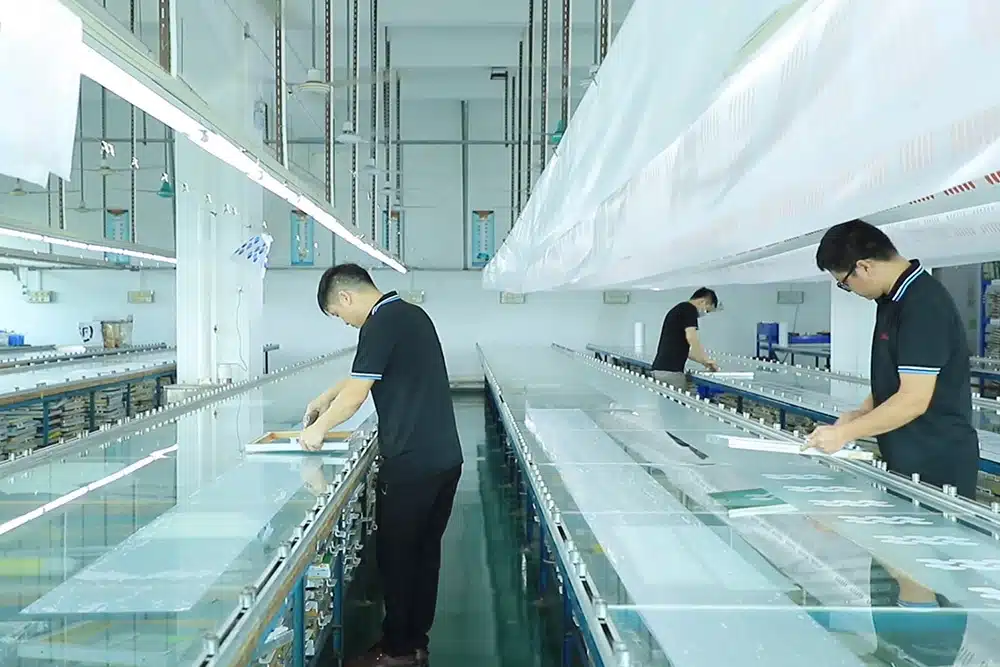

Quality control of silicone kitchenware: This is a systematic process to check raw materials, sample standards, consistency, dimensions, hardness, odor, color, surface quality, logo accuracy, functional performance and packaging readiness. It is used in a variety of items such as silicone spatulas, baking mats, lids, molds, trivets, food covers, and full kitchenware sets.
When purchasing custom silicone kitchenware, quality control can prevent issues such as defects, which may result in customer complaints, returns, or damage to the brand. While many people think a final “check” is enough, there are many problems that can arise from the previous steps, such as incorrect hardness, poor fit, off odors or color variation. The quality control of silicone kitchenware needs to begin with the material verification, and extend to each production step, providing food-contact suitability, reliable performance and consistent appearance.
What Does Quality Control for Silicone Kitchenware Include?
Quality control on silicone kitchenware extends beyond one quality review in the end of the line and involves many layers of inspection. It links material checks, sample approval, in-process monitoring, finishing, packaging and final shipment validation. The different products call for different priorities, for example, baking molds are optimized for ease of release, and lids are optimized for sealing ability. Kitchenware made from silicone is used in food contact areas and requires tighter controls of material and handling.
A thorough QC system will always compare mass production to approved samples and detailed specifications including measurable and appearance parameters.
| QC Area | What Should Be Checked |
| Material | Silicone type, hardness, color, odor, traceability, and food-contact suitability |
| Sample Standard | Approved sample, color sample, logo sample, packaging sample, and inspection criteria |
| Dimensions | Size, thickness, fit, cavity depth, handle length, sealing area, or functional tolerance |
| Appearance | Flash, bubbles, stains, deformation, marks, color variation, and surface finish |
| Function | Flexibility, grip, sealing, easy release, heat protection, rebound, or product fit |
| Branding | Logo clarity, position, depth, adhesion, printing quality, and consistency |
| Packaging | Labels, barcode, inserts, retail box, carton marks, and packing method |
| Final Inspection | Quantity, appearance, function, packaging, and shipment readiness |
Material verification, sample approval, process inspection, packaging inspection, and shipment control should all be part of a single workflow for quality-oriented silicone kitchenware production, for brands and importers creating food contact products.
Why Quality Control Matters for Food-Contact Silicone Kitchenware
The quality control of silicone kitchenware plays a key role in safety, performance, and commercial success, as they come into contact with food, heat, oil, water, and are repeatedly washed.
If the QC is poor, the product may fail to meet the expectations of the buyer, causing the failure of the product and resulting in additional costs for the buyer due to the returns caused by the failure.
| Quality Concern | Why It Matters for Buyers |
| Food-Contact Use | Kitchenware may directly or indirectly contact food |
| Heat Exposure | Utensils, mats, molds, and trivets may face cooking or baking conditions |
| Odor | Unusual smell can cause customer complaints and product returns |
| Fit and Function | Lids, covers, molds, and utensils must work as intended |
| Appearance | Retail and ecommerce products need consistent customer-facing quality |
| Color Consistency | Important for brand presentation and repeat orders |
| Packaging Accuracy | Errors can affect retail, marketplace, and warehouse handling |
| Batch Consistency | Helps maintain stable quality across repeat production |
Incoming Material Inspection
Incoming material is the initial step in silicone kitchenware quality control. Any problems identified at this stage help to avoid expensive problems later in production.
Before moulding, manufacturers should make sure that the silicone compound fits their application.
| Material Inspection Item | Why It Matters |
| Silicone Material Type | Confirms the material matches the intended kitchenware application |
| Food-Contact Suitability | Important for products used around food, cooking, baking, or storage |
| Shore A Hardness | Affects flexibility, grip, sealing, and user feel |
| Color Batch | Helps maintain color consistency during production |
| Pigment Preparation | Supports brand color matching and stable appearance |
| Odor Check | Helps identify material or processing concerns early |
| Material Traceability | Supports issue investigation and repeat order consistency |
| Storage and Handling | Reduces contamination, dust, or mix-up risk before molding |
Sample Approval as the Quality Reference
For silicone kitchenware, the benchmark for mass production is set in sample approval. A sample once approved becomes the standard sample and is compared to all future production.
| Sample Approval Item | What Buyers Should Confirm |
| Product Size | Matches drawing, sample, or approved specification |
| Shape and Structure | Works for cooking, baking, storage, sealing, gripping, or protection |
| Hardness and Feel | Matches expected flexibility and user experience |
| Color | Matches Pantone or approved physical sample |
| Logo | Correct position, size, clarity, and method |
| Surface Finish | Matches matte, glossy, textured, coated, or soft-touch requirement |
| Function | Performs properly in the intended use case |
| Packaging | Fits product and matches approved artwork or label requirements |
| Approval Record | Provides a reference for mass production inspection |
Dimensional and Fit Inspection
Dimensional and fit inspection ensures silicone kitchenware performs as expected in real-world use. Silicone is flexible, but this doesn’t mean that precise size control isn’t necessary—particularly for things such as lids and molds which need to be matched precisely with other kitchen products.
| Product Type | Key Dimensional / Fit Checks |
| Silicone Utensils | Length, head width, handle size, edge thickness, balance |
| Silicone Lids | Diameter, stretch range, sealing edge, fit with containers |
| Food Covers | Thickness, flexibility, rebound, fit range |
| Baking Molds | Cavity size, wall thickness, depth, demolding area |
| Baking Mats | Length, width, thickness, flatness, printed guide position |
| Trivets | Thickness, surface pattern, anti-slip contact area |
| Ice Cube Trays | Cavity size, lid fit, easy-release area |
| Kitchenware Sets | Size consistency and packaging fit across multiple pieces |
Hardness, Flexibility and Functional Tests
Hardness, flexibility and functional tests confirm silicone kitchenware’s performance throughout the day. Shore A hardness testing is of particular significance since it affects grip, sealing and user comfort.
| Test Item | What It Helps Verify |
| Shore A Hardness | Whether silicone softness or firmness matches specification |
| Flexibility Check | Whether the product bends properly without feeling weak |
| Rebound Test | Whether lids, covers, or flexible parts return to shape |
| Grip Test | Whether handles, tongs, or textured areas provide practical handling |
| Sealing Test | Whether lids or covers fit as intended |
| Easy-Release Test | Whether molds or trays release food or ice smoothly |
| Heat-Protection Check | Whether trivets or pot holders support the intended use |
| Functional Comparison | Whether production matches the approved sample |
Appearance Inspection: Surface, Color and Defects
Appearance inspection involves the appearance quality that is immediately seen by the consumer. Retail and ecommerce demands a consistent surface finish and defect free products.
| Appearance Defect | Possible Cause or Concern |
| Flash | Mold fit, trimming control, or process setting issue |
| Bubbles | Material mixing, venting, or molding condition concern |
| Stains | Handling, material contamination, or packaging issue |
| Deformation | Demolding, curing, cooling, or packing pressure issue |
| Color Variation | Pigment preparation or batch control issue |
| Uneven Surface | Mold surface, curing, or process stability issue |
| Dust / Particles | Handling or packaging environment concern |
| Logo Defect | Mold detail, printing, engraving, or finishing issue |
| Rough Edges | Trimming or mold parting line control problem |
Logo, Printing and Surface Finish Inspection
Logo, printing, and surface finish inspection protects brand value. Even small inconsistencies in branding can undermine premium positioning.
| Branding / Finish Item | What Should Be Checked |
| Embossed Logo | Height, clarity, edge definition, and consistency |
| Debossed Logo | Depth, visibility, cleaning ease, and accuracy |
| Printed Logo | Position, color, adhesion, sharpness, and durability |
| Laser Marking | Clarity, contrast, position, and repeatability |
| Logo Placement | Whether it matches approved sample and does not affect function |
| Matte / Glossy Finish | Surface consistency across the batch |
| Soft-Touch Surface | Feel, appearance, adhesion, and defect control |
| Textured Area | Pattern consistency, grip effect, and cleaning practicality |
Odor, Cleanliness and Packaging Inspection
For food-contact silicone kitchenware, the inspection of odor, cleanliness and packing is very important. Customers want products to arrive fresh, clean and presented.
| Inspection Item | What Buyers Should Check |
| Odor | Whether the product has unusual or unacceptable smell |
| Cleanliness | Dust, particles, stains, or handling marks |
| Individual Packing | Correct product, color, and quantity per package |
| Retail Box | Artwork, barcode, label, and box condition |
| Insert Card | Correct instruction, care information, or brand content |
| Carton Mark | SKU, quantity, destination, and shipment information |
| Carton Packing | Product protection during storage and transport |
| Packaging Accuracy | Whether packaging matches buyer-approved requirements |
Product-Specific Quality Control Checklist
Specific quality control modifies basic concepts to the particular needs of the various categories of kitchenware.
| Product Type | Key QC Focus |
| Silicone Spatulas | Edge flexibility, heat-use suitability, handle comfort, logo position |
| Cooking Utensils | Hardness, balance, grip, surface finish, trimming quality |
| Baking Mats | Flatness, thickness, printed guide accuracy, surface cleanliness |
| Baking Molds | Cavity size, easy release, tear strength, wall thickness |
| Silicone Lids | Fit, sealing, stretch, rebound, odor control |
| Food Covers | Thin-wall durability, flexibility, food-contact surface |
| Trivets & Pot Holders | Thickness, anti-slip texture, heat-protection function |
| Ice Cube Trays | Cavity consistency, lid fit, easy release, freezer flexibility |
| Kitchenware Sets | Color consistency, product combination, packaging fit |
In-Process QC vs Final Inspection
In-process QC and final inspection are complementary functions. Final inspection alone has the potential to be too late in the process to prevent defect
| Inspection Stage | Main Purpose | Examples |
| Incoming Material Inspection | Confirm material before production starts | Silicone type, hardness, color, odor, traceability |
| Mold Trial Inspection | Confirm tooling and sample quality | Shape, parting line, fit, surface, logo |
| In-Process QC | Catch defects during production | Flash, bubbles, deformation, color variation, trimming |
| Finishing Inspection | Check branding and surface treatment | Printing, engraving, coating, texture, logo clarity |
| Packaging Inspection | Confirm packaging accuracy | Labels, barcode, inserts, carton marks |
| Final Inspection | Confirm shipment readiness | Quantity, appearance, function, packaging, records |
Common Silicone Kitchenware Quality Problems and Prevention
By knowing the issues that arise with silicone kitchenware, buyers can take steps to prevent them from happening.
| Quality Problem | Prevention Method |
| Color Variation | Use approved color sample and controlled pigment preparation |
| Flash | Improve mold fit, molding parameters, and trimming control |
| Bubbles | Control material mixing, venting, curing, and process conditions |
| Odor | Verify material selection, curing, handling, and packaging |
| Wrong Hardness | Check material batch and Shore A hardness before production |
| Poor Fit | Confirm dimensions, shrinkage, mold accuracy, and approved sample |
| Deformation | Control demolding, curing, cooling, and packing pressure |
| Unclear Logo | Review mold detail, printing setup, or laser marking process |
| Surface Contamination | Improve handling, cleaning, and packaging environment |
| Packaging Errors | Use packaging checklist and pre-shipment verification |
What Buyers Should Ask a Manufacturer About QC
Smart buyers check out a silicone kitchenware manufacturer’s manufacturing quality control before purchasing it to be used in production. When answers to questions are clear, it’s an indication of the supplier’s actual skills.
| Question to Ask | Why It Matters |
| How do you verify silicone materials? | Confirms material control before production |
| Do you test Shore hardness? | Helps maintain correct flexibility and feel |
| How do you control color consistency? | Important for brand presentation and repeat orders |
| What is your sample approval process? | Ensures production follows approved standards |
| What in-process QC do you perform? | Helps catch defects before full batch completion |
| How do you inspect dimensions? | Important for lids, molds, utensils, and sets |
| How do you inspect logos and finishes? | Protects brand appearance and customer experience |
| How do you check packaging? | Reduces retail, ecommerce, and logistics errors |
| Do you keep batch records? | Supports traceability and repeat order consistency |
Buyer Checklist Before Approving Mass Production
A comprehensive set of questions to ask the buyer prior to approving mass production will eliminate surprises and bring expectations into line.
| Approval Item | Buyer Confirmation |
| Product Sample | Shape, function, size, and user feel approved |
| Color Sample | Pantone or physical color sample approved |
| Logo Sample | Logo position, size, clarity, and method approved |
| Packaging Sample | Box, insert, label, barcode, and carton details approved |
| Material Requirement | Silicone suitability and hardness confirmed |
| Critical Dimensions | Key sizes and fit areas defined |
| Functional Tests | Flexibility, sealing, easy release, grip, or heat-protection checks defined |
| Appearance Standard | Acceptable and unacceptable defects clarified |
| QC Criteria | Inspection method and acceptance standard confirmed |
| Documentation Need | Testing, material records, or inspection reports discussed |
Conclusion — Quality Control Should Start Before Mass Production
The best results in quality control for silicone kitchenware can be achieved when it starts before mass production and continues through material inspection, sample approval, molding, finishing, packaging, and the final inspection.
When purchasing silicone kitchen items that come in contact with food, customers should also consider the suitability of the material, hardness, fit, smell, color uniformity, functionality, packaging precision, and batch traceability, in addition to visual inspection. A good silicone kitchenware manufacturer needs to explicitly tell the QC process and be able to accommodate reasonable requirements from the buyer.
The good QC process of silicone kitchenware is not a process of just rejecting but also a process of prevention. If material requirements, approved samples, production checks, packaging specifications and final inspection requirements are verified at an early stage, then buyers can minimize defects, rework and improve the quality of repeat orders.