
Speed versus Cost is not the appropriate term to choose between the rapid tools and production molds of the custom silicone seals, it is a decision that must be made at a project stage and must reflect the objectives of the validation, dimensional requirements, economics of the tooling and long term production plans.
The appropriate tooling selection used in prototyping of custom silicone seals is determined by whether the project requires quick concept testing or output that is representative of the production, which can justify a successful transition into mass production. Very fast tools tend to be more useful in early stages of design validation, whereas production molds are more appropriate when the project requires consistent size, realistic behavior of processes and mass production. There are a lot of teams which suppose that any prototype is good enough to proceed with a seal project. Actually, the usefulness of a prototype is determined by the similarity of the tool, process and output to the particular questions that the team is attempting to answer.
Why Prototype Tooling Strategy Matters More Than Many Teams Expect
Considerable tooling strategy will indicate directly what a prototype can be confidently established to demonstrate – and what it cannot. The validation value is not equal across all prototype seals. It frequently boils down to the ability of the tooling to suit the geometry of the part, the tolerance needs, the ability to seal as required and the ultimate production targets.
The wrong choice of tools can often result in misleading samples, redesigning the design multiple times, or a complex shift into mass production. It is a mistake to think of prototype planning as a fast process-step to be done prior to actual tooling. Rather, it must be considered to be a part of the entire manufacturing plan at the onset. Our silicone mold manufacturing capabilities are designed to support both rapid iteration and production-ready tooling strategies.
| Tooling Decision Factor | Why It Matters |
| Prototype goal | Determines whether speed or production realism matters more |
| Part geometry | Influences whether rapid tooling can represent the final part well |
| Tolerance sensitivity | Affects how much the prototype must match production conditions |
| Budget and timeline | Changes the practicality of each tooling route |
| Expected production scale | Influences whether early production-style validation is worthwhile |
| Risk of redesign | Affects whether faster iteration is more valuable than precision |
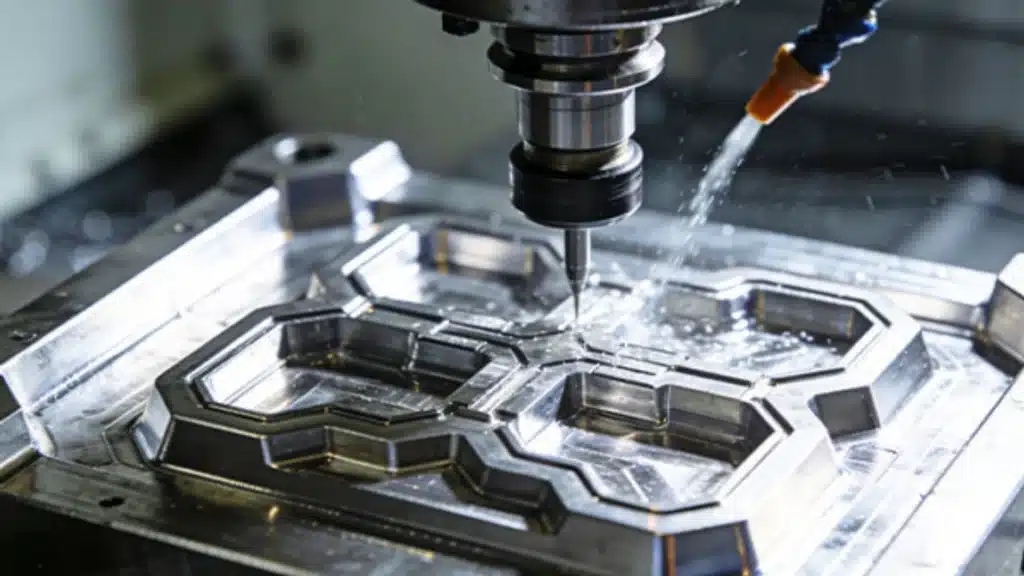
Start by Defining What the Prototype Is Supposed to Validate
Teams are to define the specific purpose of the prototype before choosing any tooling route. Is it confirmation of the goal concept, basic fit checking, review of the compression set, assembly testing, or near-production validation? These decisions directly influence how we approach every custom silicone seals project from the very beginning. The tooling decision must be based on the answer, rather than vice versa.
The conditions required to generate meaningful results are more production representative and some validation questions can be answered effectively using rapid tools. Teams that select tools prior to identifying the scope of validation usually squander time and money on samples that do not provide the correct answers. A well-defined prototype goal tends to minimize development time and minimize unneeded revision cycles.
| Prototype Goal | Best Tooling Direction to Consider |
| Basic shape and concept validation | Rapid tools may be sufficient |
| Preliminary fit check | Rapid tools may work depending on tolerance sensitivity |
| Sealing-performance review | May require more production-representative tooling |
| Tight tolerance confirmation | Production mold route is often more relevant |
| Pre-launch process validation | Production molds are usually more appropriate |
| Design-iteration speed | Rapid tools often provide better flexibility |
When Rapid Tools Make the Most Sense
Quick silicone seals are made of aluminum or of less rigid materials, to be used at smaller volumes and shorter lead-time. They are bright in the early projects when the design is not developed yet and the group requires the immediate response on the overall ideas.
These tools will be used to minimize initial commitment and shorten the learning cycles. They are especially useful when you are only interested in proving out overall geometry, assembly direction, or initial functional assumptions, but not the ultimate process behavior. Rapid tools can provide practical benefits to teams that are interested in quicker iteration, but not yet interested in production confirmation at high costs.
| Rapid Tool Advantage | Practical Project Value |
| Lower upfront commitment | Helps early-stage development flexibility |
| Faster iteration potential | Speeds up learning and design feedback |
| Useful for evolving designs | Supports concept-stage changes |
| Lower risk before design freeze | Avoids overinvesting too early |
| Better for early validation questions | Helps narrow the design before full tooling |
At this stage of development, many teams benefit from our prototype-to-production silicone seal service, which allows flexible exploration before committing to hardened production tooling.
When Production Molds Make the Most Sense
Silicone seal production molds are constructed of hardened steel or high-grade materials designed to be used over the short term with high repeatability and increased volumes. They are the more powerful alternative when the design has grown up and the project needs to have constant size, lifelike molding action, and the fact of mass-production preparedness. Our silicone compression molding process is optimized precisely for this level of production realism and repeatability.
Not only are these molds validating the part per se but also indicate how the seal will act in the real world of production. Production molds have the potential to lower the total project risk, though with a greater initial investment, when the design is stable and the next milestone is scale-up. They are particularly useful in tolerance-sensitive or high-repeatability applications used in automotive, medical, and industrial sealing.
| Production Mold Advantage | Practical Project Value |
| More production-representative output | Supports better scale-up decisions |
| Better dimensional consistency potential | Helps validate tighter requirements |
| Closer to final process behavior | Improves confidence before launch |
| Stronger repeatability review | Supports OEM production planning |
| Better fit for mature designs | Reduces the gap between sampling and production |

Rapid Tools vs. Production Molds: The Most Important Comparison Points
Teams ought to analyze fast tools and production moulds on the basis of project-specific parameters, and not general assumptions. All of them should be considered as cost, speed, design flexibility, dimensional realism, and production readiness. There is no universal best way, with the correct decision being solely based on what the team has to learn at that point in time.
| Comparison Point | Rapid Tools | Production Molds |
| Upfront tooling cost | Usually lower | Usually higher |
| Development speed | Often faster | Often slower to start |
| Design-change flexibility | Usually better in early stages | Usually lower once tooling is committed |
| Dimensional realism | May be sufficient for early validation | Usually closer to mass production |
| Production readiness | More limited | Stronger |
| Best fit | Early learning and iteration | Mature design and scale-up validation |
Comparison is contextual. The most important thing is to align the tooling strategy with the level of maturity of the design and the particular validation goals of the project.
How Tooling Choice Affects Cost, Lead Time, and Scale-Up Risk
The improper tooling selection may add total project cost even though it may seem less expensive. Quick tools can be economical and time-saving when used in initial stages of design, and will cause additional revision phases further into the design. Production molds on the other hand are more upfront commitment but can greatly decrease scale-up risk when the design stabilizes.
Rational teams consider the entire project cost landscape (i.e., probable revision cycles, confidence in validation and when to launch) as opposed to just the initial tooling investment. A thought-out prototype plan would consider short-term learning requirements and long-term manufacturing objectives.
| Project Impact Area | Rapid Tools | Production Molds |
| Early-stage spending | Lower initial cost | Higher initial commitment |
| Revision cost | Better for frequent changes | More expensive if major changes occur |
| Time to first sample | Often faster | Often slower |
| Scale-up confidence | More limited | Stronger |
| Risk of retooling later | Higher if design is assumed production-ready too early | Lower if design maturity is already high |
Dimensional Accuracy and Validation Value Are Not Always the Same Thing
A prototype component might appear correct but still not be up to the final validation standards. There are seals that are good enough to learn early concepts, but that applications that are sensitive to tolerance usually demand production-representative tooling much sooner in the process.
The purpose of engineering teams should be to decouple concept validation and production validation. The success of any sample should never be out of context of the tool that created it. Rigorous quality control for custom silicone products processes help ensure that validation data is meaningful and production-relevant at every stage. One might question, prior to making any decision that involves the launch, just what the prototype actually will demonstrate when subjected to real operating conditions.
| Validation Question | Tooling Sensitivity |
| Does the part generally fit the assembly? | Often moderate |
| Does the seal geometry concept work? | Often moderate |
| Does the part meet critical tolerance consistently? | Often high |
| Does the seal behave like a production part? | Often high |
| Is the part ready for mass production release? | Very high |
Common Mistakes When Choosing Between Rapid Tools and Production Molds
There are a number of common errors that are found in silicone seal projects. These may be the choice of fast tools just because they are fast, the commitment to production molds before the design is solid, or the use of early rapid-tool samples as evidence of production being ready.
There are other pitfalls such as not paying attention to tolerance and compression sensitivity, not establishing clear validation goals, or making decisions based on tooling price rather than on the overall project contribution. Working with an experienced OEM and ODM silicone manufacturing partner helps teams avoid these costly missteps through early technical input.The early involvement of supplier technical contribution and the way prototype and production are perceived as one process and not two are some of the ways to eliminate these problems.
| Common Mistake | Likely Result |
| Speed-only rapid tooling decision | Weak validation value |
| Early production-mold commitment | Expensive revisions if design changes |
| No prototype objective defined | Confusing or wasted sample rounds |
| Prototype mistaken for production proof | Scale-up risk |
| Cost-only tooling decision | Hidden timeline or quality problems |
| No supplier technical input | Wrong tooling path for the project |
A Practical Checklist for Choosing the Right Prototype Tooling Path
An organized checklist will provide a sense of sanity and minimize the risk in the decision between fast tools and production molds. These structured decisions are central to how we deliver reliable custom silicone parts across industries. These are some of the areas that engineering, sourcing and manufacturing teams must agree before committing resources to any prototype tooling.
The examination of prototype objectives and overall production goals tends to result in superior decision-making and easier transitions.
| Checklist Item | Why It Should Be Confirmed |
| Prototype goal clearly defined | Determines what the sample must actually prove |
| Design maturity assessed | Helps decide whether fast iteration or production realism matters more |
| Tolerance sensitivity reviewed | Influences need for production-style tooling |
| Budget and lead-time target set | Supports practical tooling choice |
| Expected design changes identified | Helps avoid overcommitting too early |
| Production timeline understood | Affects whether scale-up readiness is urgent |
| Supplier tooling feedback collected | Reduces wrong-path decisions |
| Criteria for moving to production molds defined | Improves prototype-to-production transition |
Conclusion — The Best Prototype Tooling Choice Depends on What the Project Needs Next
The appropriate tooling trail to follow in prototyping a custom silicone seal varies with what the project requires to study next. In many cases, rapid tools may be the most appropriate to use during initial design development, whereas production molds may be more useful when the design is mature and the objective is to ensure actual production is ready. The strategy of a good prototype strategy is to find a match between the tool and the validation task, rather than to take the fastest or the cheapest tool by default.
Through the coordination of tooling choices with prototype intent, design readiness, dimensional sensitivity, schedule and scale-up preparedness, groups can minimize risk, control expenses and enhance the transfer of prototype testing to stable and high-volume manufacturing of silicone seal. This approach is especially critical for automotive silicone parts where performance and repeatability are non-negotiable