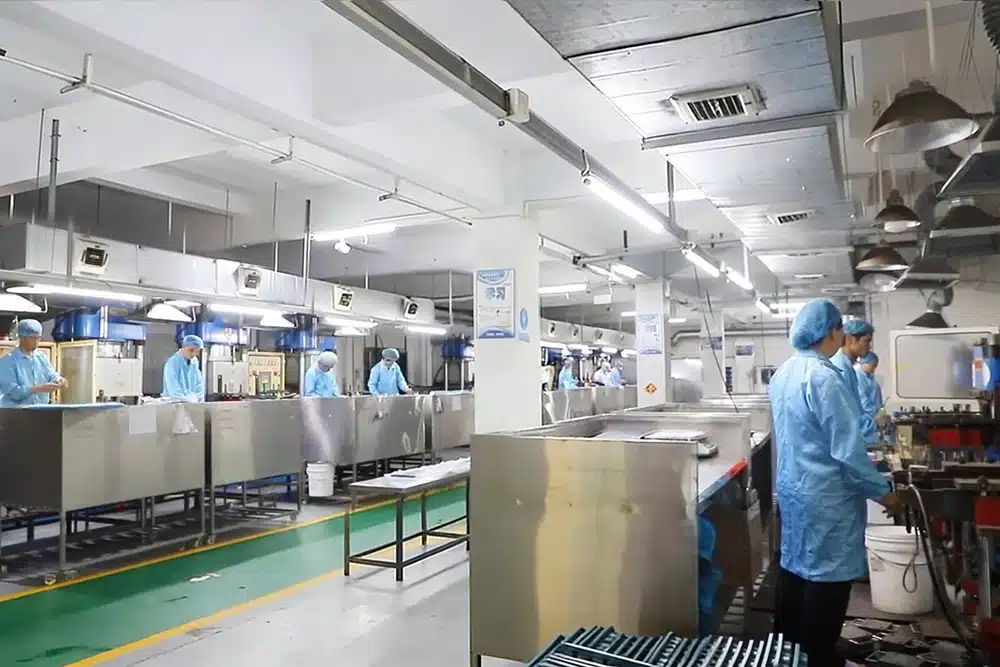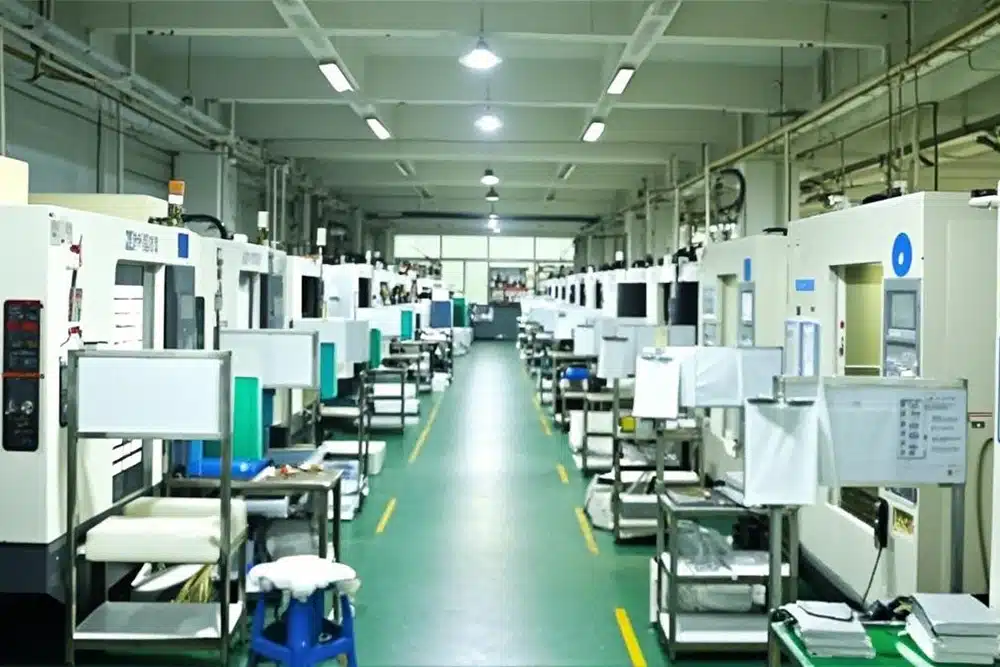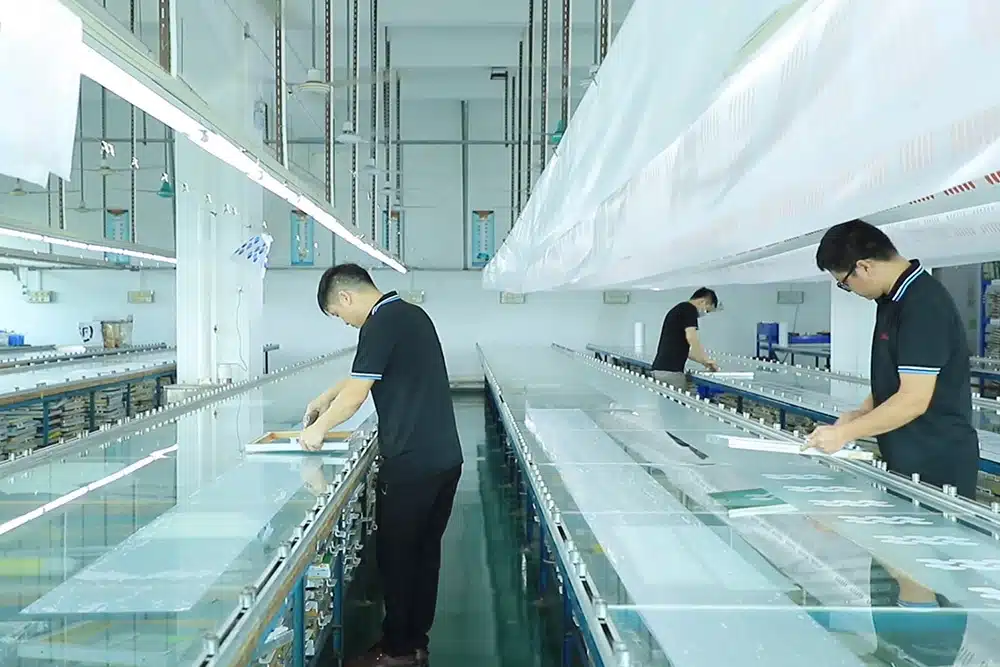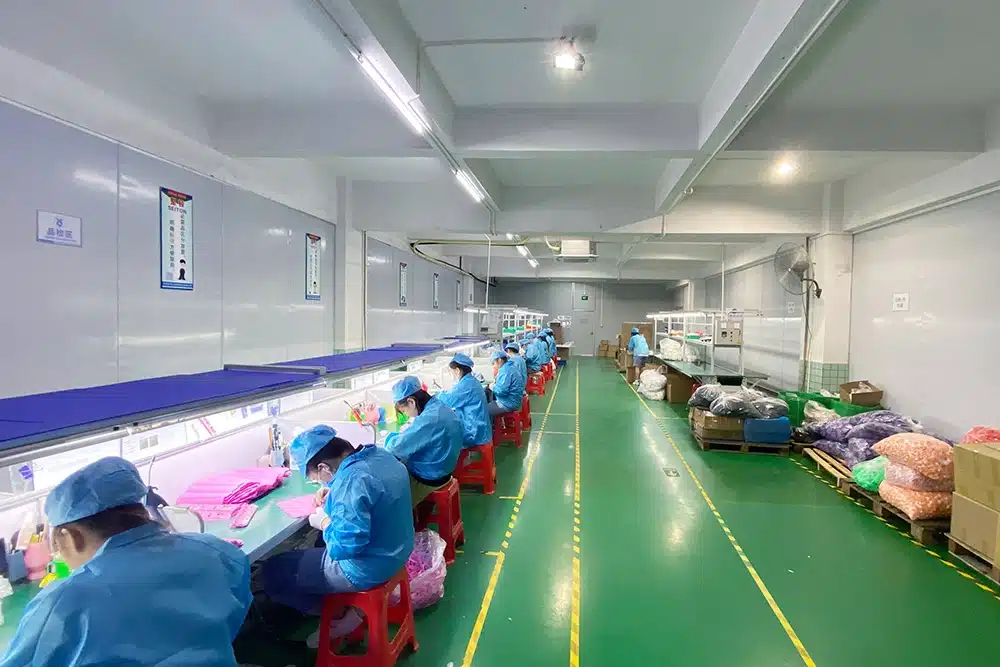

Silicone overmolding and co-molding techniques can make silicone mats incorporate inserts, rigid parts, functional areas, or multi-material applications, but they require material compatibility, insert treatment, mold structure, bonding strength, and precise production control to achieve successful outcomes. Silicone overmolding refers to encapsulating or attaching silicone to another material or insert, while co-molding generally refers to combining different colors, hardnesses or materials of silicone in one process. Silicone mats with inserts typically include plastic inserts, metal plates, magnets, fabric inserts, rigid spacers, logo plates, or reinforcing features. These methods provide enhanced strength, slip resistance, branding, mounting, magnetism, or improved assembly compatibility – qualities that standard silicone mats don’t have.
Silicone overmolding mats are not the same as silicone mats with additional parts; they involve engineering considerations of silicone material, insert material, mold design, bonding design, and process control. Some customers expect that any insert can be added to any silicone mat design and tooling without modifying tooling and material planning, but in practice, the size, tolerance, surface treatment, location accuracy, shrinkage, and bonding strength of the insert must be considered and planned at the beginning of the project. When OEM projects need additional structure, magnets, multi-material design, or insert parts, silicone overmolding mats can provide more functional flexibility than standard single-material silicone mats.
What Are Silicone Overmolding and Co-Molding?
Overmolding and co-molding are special processes that extend beyond compression molding of silicone. Knowing the differences enables buyers to get the best process for their custom silicone mats, preventing rework and redesign later.
| Process Type | What It Means | Common Use in Silicone Mats |
| Silicone Overmolding | Silicone is molded around or onto another part or material | Mats with plastic, metal, magnet, or rigid inserts |
| Insert Molding | A pre-made insert is placed into the mold before silicone molding | Reinforced mats, magnetic mats, logo plates, grip zones |
| Co-Molding | Two or more materials, colors, or hardness levels are molded together | Multi-color mats, soft-touch areas, functional zones |
| Multi-Color Molding | Different silicone colors are integrated in one product | Branded mats, decorative designs, visual separation |
| Standard Silicone Molding | Silicone is molded as a single material without inserts | Basic baking mats, pet mats, bar mats, table mats |
These techniques are different from those used to produce compression molded silicone mats because they require careful control of the flow of material, insert placement, and curing to form a composite part rather than individual parts that are assembled later.
Why Use Inserts in Silicone Mats?
Inserts are necessary in applications where pure silicone is insufficient to provide all of the structural, functional or marketing requirements. A pure silicone mat is very flexible and heat-resistant, but many commercial and consumer products need more rigidity, attachment features or branding that can only be achieved with a hybrid solution.
| Insert Purpose | Practical Benefit | Example Application |
| Structural Support | Helps the mat keep shape under load | Thick work mats, industrial pads |
| Magnetic Attachment | Allows the mat to attach to metal surfaces | Tool mats, refrigerator mats, workspace mats |
| Branding Plate | Creates a premium logo feature | Retail kitchen mats, promotional mats |
| Anti-Slip Reinforcement | Improves grip and stability | Countertop mats, pet feeding mats |
| Assembly Function | Helps the mat connect with another product | Appliance accessories, protective pads |
| Heat Protection | Adds stability in hot-use environments | Kitchen mats, cookware accessories |
With the right insert, manufacturers can turn a mat into a product that can multitask and hold up to the rigors of the kitchen.
Common Insert Materials Used in Silicone Mats
The insert material offers different advantages and processing controls, which in turn affects tooling and bonding, and ultimately product performance.
| Insert Material | Key Advantage | Manufacturing Consideration |
| Plastic Inserts | Lightweight structure and design flexibility | Must withstand molding temperature and pressure |
| Metal Inserts | Strength, weight, and premium feel | Surface treatment may be needed for bonding |
| Magnets | Enables attachment to metal surfaces | Magnet position and temperature resistance must be controlled |
| Fabric / Mesh | Adds reinforcement or texture | Needs stable placement during molding |
| Rigid Frame | Helps maintain shape | Requires accurate mold and insert tolerance |
| Logo Plate | Enhances branding and appearance | Must be securely integrated to prevent loosening |

Choosing the right material ensures it won’t cause problems later in the process.
How the Silicone Overmolding Process Works
Overmolding is a step-by-step process, not just inserting an insert into silicone. Each step is carefully calculated to guarantee proper bonding, size and finish.
| Process Step | What Happens | Why It Matters |
| Design Review | Engineers evaluate insert size, silicone coverage, wall thickness, and function | Reduces tooling changes and bonding risks |
| Insert Selection | Plastic, metal, magnet, or other insert material is confirmed | Ensures compatibility with silicone and molding conditions |
| Surface Preparation | Insert may be cleaned, treated, or primed | Improves bonding and surface stability |
| Mold Design | Tooling is designed to hold the insert accurately | Prevents shifting, flashing, or misalignment |
| Insert Placement | Insert is positioned inside the mold | Controls final product accuracy |
| Silicone Molding | Silicone flows around or bonds to the insert | Creates integrated structure |
| Curing | Silicone is vulcanized under controlled conditions | Affects strength, elasticity, and durability |
| Finishing | Flash is trimmed and surface is checked | Improves appearance and usability |
| Inspection | Bonding, alignment, dimensions, and appearance are verified | Ensures product consistency |
This order helps ensure quality from prototyping to production.
Key Design Factors for Silicone Mats with Inserts
The key to successful insert design is product design prior to tooling. Details in geometry and tolerances can result in product failure and delays.
| Design Factor | Why It Matters | Buyer Tip |
| Insert Size | Affects placement accuracy and silicone coverage | Provide exact insert dimensions and tolerances |
| Silicone Wall Thickness | Influences bonding, durability, and flexibility | Avoid overly thin coverage around inserts |
| Mechanical Locking | Helps secure inserts without relying only on adhesion | Use grooves, holes, or undercuts where appropriate |
| Edge Sealing | Prevents gaps, dirt buildup, or loosening | Design smooth transitions around inserts |
| Shrinkage | Silicone may shrink differently than insert material | Let the manufacturer review DFM before tooling |
| Parting Line | Affects appearance and flash location | Avoid placing logos or critical surfaces on flash-prone areas |
Initial design-for-manufacturing (DFM) advice from experts avoids costly design iterations.
Bonding, Mechanical Locking, and Surface Treatment
Chemical bonding, mechanical locking, or a mix of both can be used for insert retention, depending on the mechanical requirements of the application.
| Retention Method | How It Works | Best For | Key Risk |
| Chemical Bonding | Silicone bonds to the insert surface through treatment or primer | Metal or selected plastic inserts | Poor treatment may cause peeling |
| Mechanical Locking | Silicone physically wraps around holes, grooves, or undercuts | Inserts exposed to pulling or bending | Poor design may still allow loosening |
| Full Encapsulation | Silicone fully covers the insert | Magnets, plates, reinforcement parts | Requires enough silicone coverage |
| Hybrid Bonding | Combines bonding and mechanical lock | Higher-demand functional mats | Needs careful design and testing |
Sometimes surface cleaning, texturing, or plasma treatment is the key to good adhesion, or a product failure. Prototypes need to be tested in actual use before moving to high volume production.
Overmolding vs Co-Molding vs Standard Silicone Molding
The type of molding comes at different costs, complexities and is suited for different applications, so selecting the right type of molding is key to not over-engineering or under-engineering.
| Method | Best For | Advantages | Limitations |
| Standard Silicone Molding | Basic single-material mats | Lower tooling complexity, stable production | Limited structural or insert functions |
| Silicone Overmolding | Mats with plastic, metal, magnets, or rigid inserts | Adds function, strength, or attachment features | Requires insert compatibility and accurate placement |
| Co-Molding | Multi-color, multi-hardness, or multi-material designs | Better visual and functional integration | Higher process complexity |
| Manual Assembly | Attaching inserts after molding | Flexible for low-volume trials | May be less durable than molded-in inserts |
This knowledge allows purchasing decision-makers to consider cost and time constraints with performance needs.
Common Applications of Silicone Mats with Inserts
Silicone mats with inserts are typically used when the product requires better performance, structure, branding or installation options that are not possible with a product made from a single material.
| Application | Insert Type | Functional Benefit |
| Kitchen Work Mat | Rigid or reinforced insert | Improves stability and shape retention |
| Magnetic Tool Mat | Magnet insert | Holds tools or attaches to metal surfaces |
| Pet Feeding Mat | Anti-slip or rigid insert | Improves floor stability and cleaning |
| Bar Mat | Logo plate or multi-color insert | Enhances branding and product appearance |
| Appliance Protection Mat | Heat-resistant or structural insert | Protects surfaces and improves support |
| Industrial Workstation Mat | Metal or reinforced layer | Adds durability for repeated use |
| Promotional Mat | Branded insert | Creates stronger visual identity |

The above examples show how the insert transforms a simple mat into a new product.
Common Manufacturing Challenges and How to Avoid Them
Overmolded products are not without their challenges, even for experienced teams, but most problems can be avoided.
| Challenge | Possible Cause | Prevention Method |
| Insert Shifting | Poor mold positioning or loose insert tolerance | Use accurate insert fixtures and mold design |
| Poor Bonding | Incompatible material or weak surface treatment | Test bonding method during sampling |
| Flash Around Insert | Mold gap or insert tolerance variation | Control insert dimensions and tooling accuracy |
| Insert Deformation | Insert cannot handle molding temperature | Select heat-resistant insert materials |
| Uneven Silicone Coverage | Poor flow design or wall thickness imbalance | Review material flow and DFM before tooling |
| Peeling or Loosening | No mechanical lock or weak adhesion | Use mechanical locking, primer, or full encapsulation |
| High Defect Rate | Complex design without trial validation | Run prototypes and sample approval before mass production |
Considering these risks upfront ensures timely delivery and quality.
What Buyers Should Prepare Before Starting an Overmolding Project
Being well-prepared allows suppliers to better estimate feasibility, costs, tooling and risks, thus reducing development time and unanticipated issues.
| Information to Prepare | Why It Helps |
| 3D CAD File | Allows engineers to evaluate geometry and insert placement |
| 2D Drawing | Defines dimensions, tolerances, and technical notes |
| Insert Material | Helps confirm molding compatibility and bonding method |
| Insert Tolerance | Reduces misalignment and flash risk |
| Silicone Hardness | Affects flexibility, grip, and insert retention |
| Application Environment | Helps assess heat, moisture, oil, or cleaning exposure |
| Mechanical Requirements | Clarifies load, bending, or pulling needs |
| Color / Branding Requirement | Supports multi-color or logo planning |
| Estimated Quantity | Helps evaluate tooling and unit cost |
| Testing Requirement | Defines acceptance criteria for bonding and durability |
Full details at the initial quote stage allow for quicker, more accurate feedback.
How to Choose a Manufacturer for Silicone Overmolding Mats
Silicone overmolded mats need greater engineering and manufacturing capability than simple silicone mats, so customers should look beyond price to assess suppliers.
| Supplier Capability | Why It Matters |
| Material Selection Support | Ensures silicone and insert materials are compatible |
| Mold Design Capability | Controls insert positioning, silicone flow, and flash |
| Overmolding Experience | Reduces bonding, alignment, and production risks |
| Co-Molding Capability | Supports multi-color or multi-material silicone mat designs |
| Sample Development | Allows buyers to verify function before mass production |
| In-House Tooling | Improves communication and tooling adjustment efficiency |
| Quality Control | Ensures bonding, dimensions, appearance, and consistency |
| Assembly & Packaging | Supports complete OEM/ODM delivery requirements |
Working with a manufacturer with insert integration experience will ensure consistent results.
Conclusion — Inserts Can Make Silicone Mats More Functional When Designed Correctly
Silicone mats can be made more functional, robust and distinctive with silicone overmolding and co-molding if the proper engineering measures are taken. Use of inserts can provide toughness, magnetic hold, high-end look, slip resistance or assembly, but insert material, insert surface preparation, mold design, flow properties of the silicone, bonding, curing and quality control are all critical. Customers can get the best results by consulting the manufacturer early in the design process. Silicone mats with inserts can provide additional value compared to single material mats, but with more engineering effort. The key to success is to define the product, choose the right insert material, design the mold, and test the product before going into volume production.