
Medical-grade silicone plays a vital role in healthcare because of its flexibility, durability, and ability to interact safely with the human body. From catheters and oxygen masks to pacemaker coatings and long-term implants, these parts must undergo thorough validation to meet strict safety and performance standards. Manufacturers and engineers responsible for medical devices know that proper validation protects patients, ensures regulatory compliance, and prevents costly failures down the line.
This guide explains the key processes involved in validating medical silicone parts, focusing on ISO 10993 biocompatibility testing, sterilization validation (including autoclaving, gamma irradiation, and ethylene oxide), and aging tests. At HT Silicone, we support medical device partners with in-house capabilities and proven protocols to help bring safe, reliable products to market. Understanding these requirements early helps streamline development and build confidence in your supply chain.
Why Medical Devices Require Rigorous Biocompatibility, Sterilization, and Aging Validation
Medical devices contact the body in ways that demand the highest levels of safety. Silicone components must not trigger adverse reactions, must survive sterilization without losing performance, and must remain stable over their intended lifespan. Validation addresses three core areas: biocompatibility to prevent toxicity or immune responses, sterilization compatibility to eliminate microbes safely, and aging to confirm long-term integrity.
These tests form part of a broader quality management approach that includes material selection, cleanroom production, and detailed documentation. Skipping or rushing them can lead to regulatory rejection, product recalls, or patient safety issues.
How Biocompatibility Testing Verifies Silicone Is Non-Toxic, Non-Carcinogenic, and Does Not Cause Inflammation
Biocompatibility testing ensures silicone does not harm living tissue. The ISO 10993 series provides the internationally recognized framework, with test selection based on the device’s contact type (surface, external communicating, or implant) and duration (limited, prolonged, or permanent).
For medical silicone parts, common evaluations check for cytotoxicity, sensitization, irritation, and hemocompatibility. Results help confirm the material is non-toxic, non-carcinogenic, and unlikely to cause inflammation or immune responses.
Why Sterilization Validation Confirms Product Can Withstand Sterilization Without Losing Integrity, Function, or Form
Sterilization validation proves that parts can be made free of viable microorganisms while retaining their physical and chemical properties. Different methods suit different devices, but each requires specific testing to verify compatibility.
How Long-Term Stability Testing Confirms Silicone Maintains Integrity Over Time Without Releasing Harmful Substances
Aging tests simulate years of real-world use in accelerated timeframes. They verify that silicone will not degrade, crack, or leach harmful substances, which is especially critical for implants and reusable equipment.
Validation Test #1 – ISO 10993 Biocompatibility Testing (Cytotoxicity, Sensitization, Hemolysis)
ISO 10993 biocompatibility testing serves as the foundation for medical silicone validation. It is a risk-based process that evaluates biological responses according to the device’s intended use.
Key tests include:
- Cytotoxicity (ISO 10993-5): Assesses whether extracts from the material inhibit cell growth or cause toxicity.
- Sensitization and Irritation (ISO 10993-10/23): Checks for allergic or inflammatory skin reactions.
- Hemolysis (often referencing ASTM F756): Measures red blood cell damage for blood-contacting devices, typically requiring less than 5% hemolysis.
These evaluations use in-vitro and in-vivo methods tailored to the device’s risk profile.
How Cytotoxicity Testing Ensures Silicone Doesn’t Hinder Cell Growth Meeting ISO 10993-5 Standards
Cytotoxicity testing exposes cell cultures to material extracts and monitors for adverse effects. Passing results confirm the silicone supports safe contact without damaging cells, a baseline requirement for nearly all medical applications.
Why Sensitization/Irritation Testing Verifies Silicone Doesn’t Cause Allergic Reactions for Skin-Contact Devices
This testing evaluates delayed hypersensitivity and local irritation. It is essential for devices like oxygen masks or diagnostic equipment that touch skin or mucous membranes, helping prevent allergic responses in sensitive patients.
How Hemolysis Testing Ensures Less Than 5% Red Blood Cell Rupture When Silicone Contacts Blood ASTM F756
For blood-path devices such as catheters, hemolysis testing confirms minimal damage to red blood cells. Low hemolysis rates indicate the material will not trigger clotting issues or other blood-related complications.
Validation Test #2 – Sterilization Validation (Autoclaving, Gamma Irradiation, Ethylene Oxide)
Sterilization validation confirms chosen methods achieve the required sterility assurance level (typically 10^-6) without compromising the silicone’s properties.
Common methods include autoclaving (steam), gamma irradiation, ethylene oxide (EtO), and electron beam. Validation involves cycle development, biological indicators, and post-sterilization performance checks.
How Autoclaving Uses High-Pressure Steam to Kill Microbes in Medical Silicone Parts
Autoclaving exposes parts to saturated steam under pressure (typically 121–134°C). Silicone generally tolerates this well, but validation confirms no excessive softening, cracking, or loss of mechanical strength occurs.
Why Gamma Irradiation Uses Radioactive Radiation to Kill Microbes Without Leaving Chemical Residues
Gamma irradiation penetrates packaging and provides a dry, residue-free process. It is fast and effective but requires testing for potential changes in cross-linking or mechanical properties in silicone.
How Ethylene Oxide and Electron Beam Provide Alternative Sterilization Methods for Silicone Parts
EtO uses gas for heat-sensitive items, followed by aeration to remove residuals. Electron beam offers a high-speed alternative similar to gamma. Each method needs tailored validation to ensure compatibility with your specific silicone formulation.
Validation Test #3 – Aging Tests (Accelerated Aging, Long-Term Stability Testing)
Aging studies predict how silicone will perform over months or years. Accelerated aging uses elevated temperatures (often based on the Arrhenius equation or Q10 rule) to compress time.
How Accelerated Aging Tests Simulate Long-Term Wear Ensuring Silicone Remains Durable and Safe for Decades
These tests expose samples to controlled heat and humidity, then evaluate mechanical properties, appearance, and biocompatibility afterward. They help establish shelf life and service life for devices like implants.
Why Long-Term Stability Testing Confirms Silicone Maintains Integrity Over Time Without Releasing Harmful Substances
Real-time or extended aging checks for degradation, leaching, or loss of elasticity. This is crucial for permanent implants where material changes could affect safety or performance.
How Mechanical Tests Ensure Silicone Parts Handle Stress and Repeated Use Without Breaking or Wearing Out Easily
Tensile, tear, and compression testing after aging confirms the material retains necessary flexibility and strength for repeated use in catheters, masks, or dynamic applications.
Validation Steps – Material Selection, Cleanroom Production, Quality Control, and Documentation
Successful validation combines material expertise with controlled manufacturing and traceability.
How Material Selection Uses Only Best Medical-Grade Materials Tested for Purity and Safety
We start with platinum-cured medical-grade silicones that already demonstrate strong biocompatibility profiles. Incoming materials undergo purity and certification checks.
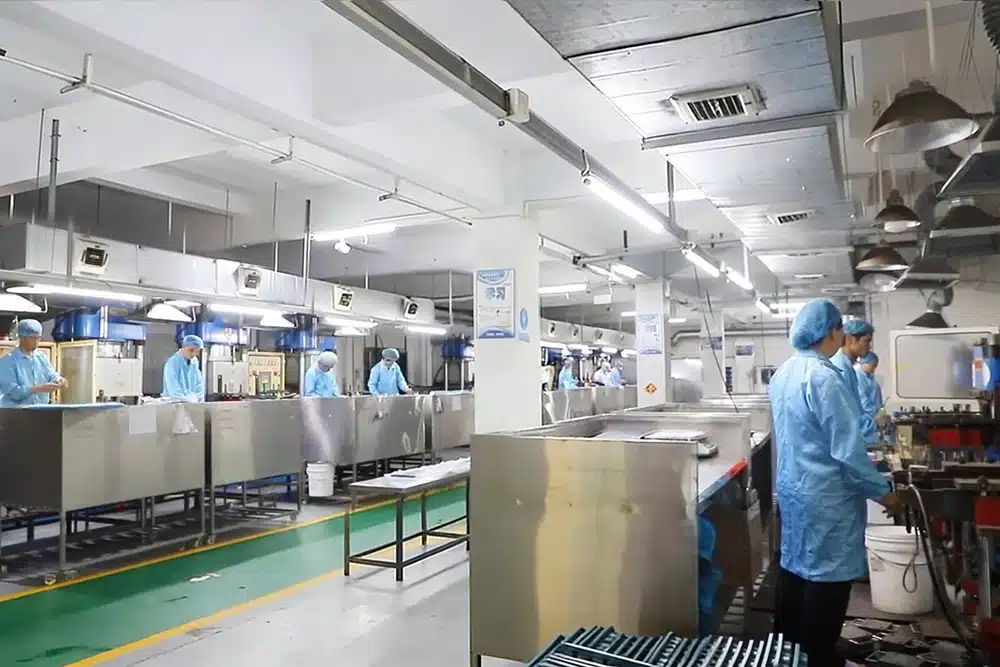
Why ISO Class 7 Cleanroom Standards Minimize Contamination During Medical Silicone Part Production
Cleanroom molding and assembly reduce particulate risks, supporting consistent quality for sensitive medical applications.
How Quality Control Tests Every Batch Including Raw Materials and Finished Products Ensuring “If It’s Not Perfect, It’s Not Leaving the Factory”
Dimensional checks, visual inspection, mechanical testing, and biocompatibility verification occur throughout. Full traceability via batch records is standard.
Why Documentation and Reporting Keep Detailed Records Making Audits and Inspections Easy for Regulatory Approval
Comprehensive IQ/OQ/PQ protocols, test reports, and certificates of analysis facilitate audits and regulatory submissions.
Regulatory Compliance – FDA Guidelines, ISO 10993, ISO 13485, and USP Class VI Certification
Compliance requires alignment with multiple frameworks.
How FDA Guidelines Are Mandatory and HT Silicone Ensures All Products Meet FDA Requirements for US Market
FDA expects robust biological evaluation and sterilization validation data.
Why ISO 10993 Is the Gold Standard for Biological Evaluation and Products Must Comply Fully
This standard guides risk-based testing and is widely accepted globally.
How ISO 13485 Medical Device Quality Management and USP Class VI Certification Ensure Regulatory Compliance
ISO 13485 covers our quality system, while USP Class VI provides additional material-level assurance for biocompatibility.
Typical Applications – Breast Implants, Pacemaker Coatings, Catheters, Oxygen Masks, Respiratory Equipment
Validated silicone parts serve critical roles across devices.
Breast Implants and Pacemaker Coatings Requiring Long-Term Stability Testing for 10+ Year Durability
Silicone excels here due to its flexibility and insulation properties, but long-term aging data is essential.
Catheters, Oxygen Masks and Respiratory Equipment Requiring Biocompatibility and Sterilization Validation
These applications demand proven non-reactivity and reliable performance after sterilization.
Summary – Biocompatibility Testing, Sterilization Validation, Aging Tests, and Regulatory Compliance as Core Validation Requirements
Validating medical silicone parts successfully requires systematic attention to ISO 10993 biocompatibility, sterilization compatibility, accelerated and real-time aging, and full regulatory alignment. By following these steps, medical device teams can deliver safe, effective products that meet or exceed expectations.
At Dongguan HT Silicone & Rubber Co., Ltd., our experienced team and controlled processes support partners throughout this journey. If you are developing or sourcing medical silicone components, share your project details with us so we can help ensure smooth validation and production.