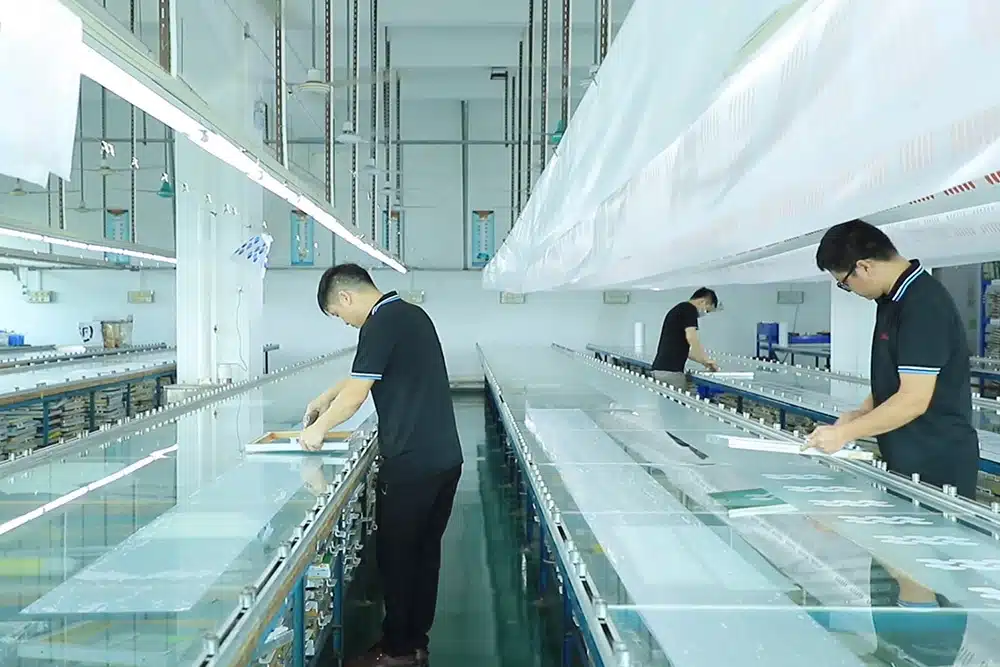

When buying silicone kitchenware for branding, the process of customizing products must be done in conjunction with customers, as each of the following factors can impact the manufacturing process, the tooling required, lead time, and the appearance of the finished product: Product Shape, Silicone Material, Color, Logo Method, Surface Texture, Packaging, Minimum Order Quantity, Product Quality.
Creating branded silicone kitchenware isn’t just about selecting a colour and incorporating a logo. This is the process of matching product function, food-grade material performance, mold engineering, branding methods and packaging to ensure products are effective in actual kitchens and enhance your brand. While many of the buyers are expecting the customization to be primarily aesthetic, important points to consider early in a successful project include structure, Shore hardness, wall thickness, logo placement, color stability, and sample approval.
What Can Be Customized in Silicone Kitchenware?
The first step towards successful, custom silicone kitchenware is an understanding that changes can happen at the product, material, branding and packaging levels. Existing or new moulds may be used and the complexity can be tailored, with each option required to enable the product to perform its intended purpose whilst allowing for ease of cleaning, safety against contact with food and comfort for the user.
For buyers who want to customize silicone kitchenware for your brand, make sure to consider the product’s purpose, material, color, branding and packaging before you start sampling.
| Customization Area | What Can Be Adjusted |
| Product Shape | Spatula head, utensil handle, baking mold cavity, lid shape, trivet pattern |
| Size & Thickness | Length, width, height, wall thickness, edge thickness, cavity depth |
| Material | Food-grade silicone, hardness, flexibility, heat resistance, tear strength |
| Color | Pantone color, single color, multi-color design, translucent effect |
| Logo | Embossed, debossed, silk screen printed, laser marked, or placed on packaging |
| Surface Texture | Matte, glossy, soft-touch, anti-slip, patterned, or textured grip |
| Packaging | Retail box, paper card, polybag, gift box, insert card, barcode, carton label |
| Product Set | Single item, utensil set, baking set, promotional set, or private label bundle |
Step 1: Define the Product Type and Use Case
The best silicone kitchenware customization always starts with the understanding of how it will be used and not just with aesthetics.
Think about what it will be used for in cooking, baking, storage, serving, heat protection or promotions. Consider the target audience, sales outlets (retail, wholesale, e-commerce, or private label), and particular applications (such as dishwasher, oven, freezer).
| Product Use Case | Customization Focus |
| Cooking Utensils | Handle comfort, heat resistance, flexibility, logo position |
| Baking Tools | Easy release, cavity shape, heat resistance, thickness |
| Silicone Lids | Fit, stretchability, sealing, size range, flexibility |
| Trivets & Pot Holders | Heat resistance, thickness, texture, anti-slip design |
| Food Covers | Flexibility, stretch, tear strength, food-contact surface |
| Ice Trays | Cavity shape, release performance, lid design, packaging |
| Kitchenware Sets | Color coordination, product combination, retail presentation |
| Promotional Products | Logo visibility, cost control, packaging, brand impact |
Step 2: Customize Product Shape, Size and Structure
User experience, mould design, usage of materials, and overall feasibility of production are directly affected by the shape and structure decisions in custom silicone kitchenware projects.
By carefully considering the dimensions, wall thickness, edges, grip areas, and flexible areas, the final product can be made to perform as intended while remaining manufacturable.
| Design Element | Why It Matters |
| Product Size | Affects material usage, packaging fit, shipping cost, and user experience |
| Wall Thickness | Influences flexibility, durability, cooling, and production consistency |
| Edge Design | Important for cleaning, comfort, safety, and appearance |
| Grip Area | Improves handling and anti-slip performance |
| Flexible Zone | Helps spatulas, covers, and molds work properly |
| Reinforced Area | Adds strength where the product may bend or bear load |
| Cavity Shape | Affects easy release, appearance, and mold complexity |
| Hanging Hole | Useful for storage, retail display, and customer convenience |
| Product Weight | Affects unit cost and perceived product quality |
| Mold Feasibility | Determines whether the design can be produced consistently |
Step 3: Choose the Right Silicone Material and Hardness
Selecting the right material and hardness is the key to good quality silicone food safe kitchenware. These selections need to align with the practical needs of food contact, thermal resistance, versatility and longevity of the product.
However, a softer product is not always the better choice – geometry and thickness are also very important when considering how the product feels and performs.
| Material Factor | Why It Matters for Customization |
| Food-Grade Suitability | Important for kitchenware used around food, cooking, baking, or storage |
| Heat Resistance | Relevant for spatulas, baking tools, trivets, molds, and pot holders |
| Shore Hardness | Affects softness, grip, sealing, flexibility, and user feel |
| Tear Strength | Important for lids, food covers, molds, and thin flexible edges |
| Odor Control | Helps reduce customer complaints after retail sale |
| Rebound Performance | Supports flexible parts returning to shape after use |
| Color Stability | Helps maintain brand color consistency across batches |
| Cleaning Durability | Supports repeated washing and daily kitchen use |
| Material Traceability | Helps maintain consistency and support quality investigation |
Step 4: Plan Brand Colors and Pantone Matching
However, colour adjustment for silicone kitchenware is difficult to manage as the colour can affect the base products, curing process, and production conditions.
Using Pantone swatches and Photoshop swatches ensures consistency and consistency with your brand.
| Color Requirement | What Buyers Should Provide or Confirm |
| Pantone Number | Helps define a standard color reference |
| Physical Color Sample | Useful when exact visual matching is important |
| Single-Color Design | Easier to control and usually simpler for production |
| Multi-Color Design | Requires clearer color separation and process planning |
| Translucent Effect | Needs material and pigment evaluation |
| Color Approval Sample | Should be confirmed before mass production |
| Product Set Color Plan | Helps maintain consistency across multiple products |
| Repeat Order Standard | Approved sample should be kept as reference for future batches |
Step 5: Choose the Right Logo Method
The logo method should be in line with the product surface, brand style, durability requirements and the entire production plan of custom logo silicone kitchenware.
This is important to make early, particularly for molded products, to avoid making changes to the tools later.
| Logo Method | Best Used For | Key Consideration |
| Embossed Logo | Durable raised logo directly on the product | Requires mold planning and simple logo design |
| Debossed Logo | Subtle recessed logo for a clean brand look | Must be deep enough to show clearly but easy to clean |
| Silk Screen Printing | Surface graphics, icons, or instructions | Needs adhesion and wear-resistance review |
| Laser Marking | Permanent marking on suitable silicone surfaces | Best for certain finishes and logo styles |
| Packaging Logo | Strong retail or ecommerce brand presentation | Does not affect product mold but affects packaging cost |
| Hang Tag or Label | Flexible branding for retail display | Requires packaging coordination |
Step 6: Select Surface Texture and Finish
Branded silicone kitchenware has a profound effect on appearance and usability, so surface texture should be carefully considered.
The finish is right on the balance of appearance, grip, cleanability and perceived value. .
| Surface Option | Practical Benefit | What to Watch |
| Matte Finish | Modern appearance and soft visual effect | Requires consistent surface control |
| Glossy Finish | Smooth and bright appearance | May show marks more easily |
| Soft-Touch Finish | Premium tactile feel | May add process steps and QC requirements |
| Anti-Slip Texture | Improves grip for handles, mats, and trivets | Should not make cleaning difficult |
| Patterned Surface | Adds visual identity and functional texture | Requires mold planning |
| Smooth Food-Contact Surface | Easier cleaning and food release | Must balance function and appearance |
| Coated Finish | Can improve feel or appearance in some designs | Needs adhesion and durability review |
Step 7: Customize Packaging for Retail, Wholesale or Ecommerce
When designing silicone kitchenware packaging, packaging is an important consideration that needs to be thought about along with the product.
The packaging protects the product during transport, makes the product easier to unbox, and helps in getting the product on the shelves.
| Packaging Type | Suitable Use | Key Consideration |
| Bulk Packaging | Wholesale or distributor orders | Lower cost but limited brand presentation |
| Individual Polybag | Basic protection and simple packing | Suitable for simple retail or ecommerce handling |
| Paper Card | Hanging display and light branding | Requires product fixing method |
| Retail Box | Shelf-ready brand presentation | Needs artwork, structure, barcode, and proof approval |
| Gift Box | Premium sets or seasonal products | Higher presentation value and packaging cost |
| Ecommerce Packaging | Online sales and shipping protection | Should balance product protection and unboxing experience |
| Insert Card | Instructions, care tips, brand story, or warranty | Requires clear content and print proof |
| Carton Marking | Warehouse, shipping, and inventory handling | Important for logistics accuracy |
How Customization Affects Cost, MOQ and Lead Time
Each and every customization decision of OEM silicone kitchenware impacts on the price, MOQ and delivery schedules.
New shapes usually demand new tooling; and complex packaging or coloring involves additional processes.
| Customization Factor | Effect on Cost / MOQ / Lead Time |
| New Product Shape | Usually requires new mold development and longer lead time |
| Larger Product Size | Increases silicone usage and may affect mold size |
| Molded Logo | Needs tooling planning and may affect mold cost |
| Printed Logo | Adds printing process and quality control needs |
| Custom Color | Requires color matching and approval samples |
| Multi-Color Design | May increase process complexity and production time |
| Special Surface Finish | Adds processing and inspection requirements |
| Retail Packaging | Adds artwork proofing, printing, and packaging lead time |
| Testing Requirement | May add cost and extend project schedule |
| Lower Quantity | May increase unit cost or affect MOQ feasibility |
Sample Approval Before Mass Production
Sample approval is the most crucial stage in any private label silicone kitchenware process.
Physical samples allow you to see how all customization choices will play out into a real product before investing in a mass production.
| Sample Approval Item | What Buyers Should Check |
| Product Size | Matches drawing, sample, or approved specification |
| Shape & Structure | Works as intended for cooking, baking, storage, or protection |
| Hardness & Feel | Matches expected flexibility, grip, and user experience |
| Color | Matches Pantone or approved color sample |
| Logo | Correct size, position, clarity, and method |
| Surface Finish | Matches matte, glossy, textured, or soft-touch requirement |
| Function | Performs properly in the intended use case |
| Packaging | Fits the product and matches approved artwork |
| Label & Barcode | Correct information for retail or ecommerce use |
Quality Control for Customized Silicone Kitchenware
Quality control is essential throughout the entire process, from raw material inspection to final product packaging, when manufacturing customized products.
Regular dimensional, hardness and colour checks, logo quality and surface finish quality control ensure consistency of the brand throughout production batches.
| QC Area | What Should Be Checked |
| Material | Silicone type, hardness, color, odor, and traceability |
| Dimensions | Size, thickness, cavity depth, handle length, or functional fit |
| Hardness | Whether flexibility and user feel match approved sample |
| Color | Consistency with approved Pantone or color sample |
| Logo | Position, clarity, depth, adhesion, or durability |
| Surface Finish | Texture, gloss level, coating, marks, or uneven appearance |
| Function | Grip, sealing, easy release, heat protection, or flexibility |
| Packaging | Artwork, labels, inserts, barcode, carton marks, and packing method |
| Final Inspection | Overall appearance, quantity, packaging, and shipment readiness |
What Buyers Should Prepare Before Customizing Silicone Kitchenware
Accurate project information allows manufacturers to give accurate technical advice, quotation and production planning for your custom silicone kitchen utensils.
| Information to Prepare | Why It Helps |
| Product Type | Helps define application and production method |
| Size or Drawing | Allows accurate mold and material evaluation |
| 3D File | Supports tooling and manufacturability review |
| Existing Sample or Reference Product | Provides reference for shape, feel, and function |
| Material Requirement | Helps choose suitable food-grade silicone |
| Shore Hardness Requirement | Affects flexibility, grip, sealing, and user feel |
| Color Reference | Supports Pantone matching and color approval |
| Logo File | Helps evaluate logo size, placement, and method |
| Preferred Logo Method | Determines process and mold requirements |
| Surface Texture or Finish | Determines texture, finish, and mold or process needs |
| Packaging Requirement | Affects total cost, timeline, and retail readiness |
| Estimated Quantity | Helps calculate MOQ, tooling plan, and unit cost |
| Target Market | Helps consider buyer-side food-contact expectations |
| Timeline | Helps plan sampling, revisions, production, and shipping |
Common Mistakes When Customizing Silicone Kitchenware
Sometimes even the most experienced buyers make a decision that causes issues during production or after the product launch.
| Common Mistake | Better Approach |
| Focusing only on appearance | Review function, material, moldability, and user experience |
| Confirming color only by screen | Use Pantone reference or physical color sample |
| Delaying logo decisions | Confirm logo method, size, and placement before tooling |
| Ignoring hardness | Choose Shore A hardness based on product use |
| Overcomplicated texture | Balance appearance, grip, and cleaning requirements |
| Forgetting packaging | Plan packaging before sample approval |
| Skipping sample review | Approve physical samples before mass production |
| Assuming all molds are flexible | Check whether existing molds support requested customization |
| Choosing only by price | Compare material, tooling, customization, packaging, and QC details |
How to Choose a Manufacturer for Branded Silicone Kitchenware
Choosing the proper silicone kitchenware manufacturer is crucial for anyone seeking to achieve a customisation that is complex.
Find partners with good experience in food-grade materials, mold development and colour matching, and packaging support, and who can provide repeat orders.
| Manufacturer Capability | Why It Matters |
| Kitchenware Product Experience | Helps avoid common design and customization problems |
| Material Selection Support | Ensures suitable silicone for food-contact and performance needs |
| Mold Development | Supports custom shapes, logos, textures, and product structure |
| Molding Capability | Affects output stability and batch consistency |
| Color Matching | Supports brand color consistency |
| Logo Process Options | Provides suitable branding methods for different designs |
| Surface Finishing | Supports appearance, touch, and product value |
| Packaging Support | Helps products become retail, wholesale, or ecommerce ready |
| Quality Control | Reduces defects, variation, and customer complaints |
| Export Experience | Supports communication, documentation, and delivery coordination |
Conclusion — Brand Customization Should Be Planned as a Manufacturing Process
In addition to ensuring product design, material selection, color matching, logo application, surface finish, packaging, sample approval and quality inspection, customizing silicone kitchenware also requires careful coordination.
Rather than simply adding a “customisation” feature, treating customization as a full manufacturing process leads to more consistent, functional and commercially viable products and minimises development risk. Early and systematic consideration of shape, material, branding and packaging needs can help brand owners, private label sellers and wholesalers develop kitchenware ranges that perform to customer expectations as well as desired performance goals and establish greater brand recognition.