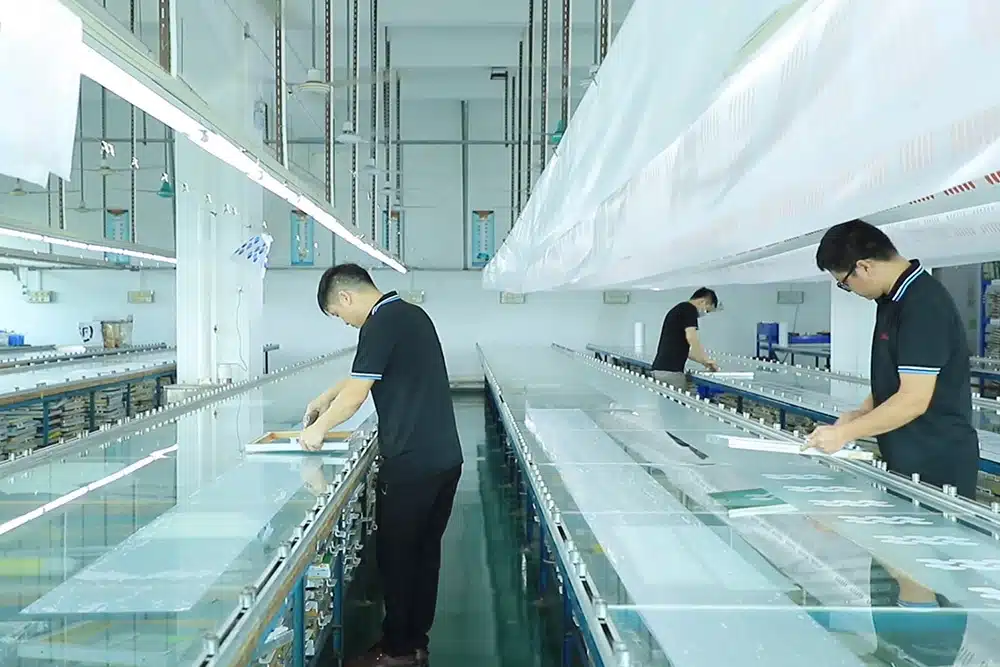

When it’s time to select the best silicone sleeve manufacturer for your OEM project, it’s not just about the unit price when comparing suppliers. A competent silicone sleeve manufacturer can help you every step of the way, from a review and recommendation on the initial design and material, to precision mold making, sample development, production, surface finishing, quality inspection and final packaging so that your custom silicone sleeves not only fit perfectly, but are also durable and brand consistent.
In the case of OEM silicone sleeve projects, the best manufacturer is not necessarily the least expensive supplier – it is the one that can manage and control their design, tooling, material, molding, finishing, inspection and packaging ability to produce consistent results over time at scale. Most buyers think all silicone sleeve manufacturers are the same, but every manufacturer has varying mould designs, mould materials, mould control, finishing, quality inspection and customer communication that can have a profound impact on the final product and the project risk.
What Should a Silicone Sleeve Manufacturer Actually Do?
It is important to the integrity of the project to have practical production support from the initial review of the project through to delivery of the finished product, not just molding parts, from a qualified silicone sleeve manufacturer. They should analyse product drawings, physical product samples, or reference designs to aid in assessing fit, wall thickness, hardness, material, logo method, surface texture, mold feasibility and manufacturing process. They should control mold growth, mould sample production, mass production, mould trimming, finishing, inspection and packaging. Some manufacturers might have a specialization in a certain product line, e.g., bottle sleeves, electronics covers, grips, pet products, or beauty device sleeves. Consumers should ask the manufacturer if they can provide support for the application and not just for silicone molding.
| Manufacturer Role | Why It Matters for OEM Buyers |
| Design review | Helps identify fit, thickness, tooling, and usability risks |
| Material selection | Matches silicone grade, hardness, and performance to the product |
| Mold development | Determines sleeve shape, fit, logo detail, and production repeatability |
| Sample production | Confirms real fit, feel, color, texture, and logo before mass production |
| Silicone molding | Produces the actual sleeves under controlled process conditions |
| Surface finishing | Supports logo, texture, printing, engraving, coating, or touch-feel options |
| Quality inspection | Checks dimensions, hardness, appearance, logo, and packaging |
| Packaging support | Prepares products for retail, wholesale, ecommerce, or OEM delivery |
Key Capabilities to Evaluate Before Choosing a Manufacturer
For OEM projects, it is important to hire a silicone sleeve manufacturer who has been carefully evaluated throughout the production process. When evaluating a silicone sleeve manufacturer, buyers should look beyond unit price and review engineering support, customers must consider engineering support, mold capability, material knowledge, finishing options, quality control, and packaging support – in addition to a unit price.
| Capability | What Buyers Should Check |
| Engineering support | Can they review drawings, samples, fit, thickness, and tooling feasibility? |
| Silicone material knowledge | Can they recommend hardness, food-grade, heat-resistant, or UV-resistant options? |
| In-house mold capability | Can they design, build, adjust, and maintain silicone molds? |
| Molding equipment | Do they have suitable equipment for the sleeve size and order volume? |
| Logo and finishing options | Can they support embossing, debossing, printing, engraving, texture, or coating? |
| Sample development | Do they provide samples for fit, color, logo, and surface approval? |
| Quality control | Do they inspect dimensions, hardness, appearance, logo, and packaging? |
| Packaging support | Can they handle bulk, retail, ecommerce, or custom branded packaging? |
| Export experience | Can they support clear communication, documentation, and shipment planning? |
Engineering Review and Design Support
An engineering review by a manufacturer can avoid design issues before tooling starts. They should review product drawings or samples to assess fit of sleeve/tolerance, wall thickness, the path of stretch and installation direction, button/port opening/cutout requirements, assess position of logo and surface texture, recommend the hardness of material, evaluate the feasibility risks of the mold and suggest changes in design before tooling. Describe compromises among cost, protection, grip, and manufacturing.
| Engineering Review Area | Why It Matters |
| Product dimensions | Determines fit, inner size, and sleeve coverage |
| Wall thickness | Affects protection, flexibility, material cost, and molding |
| Tolerance | Prevents sleeves from being too loose or too tight |
| Installation path | Ensures the sleeve can be installed without tearing or deformation |
| Functional openings | Important for electronics, tools, and device covers |
| Texture and grip | Improves usability and user experience |
| Logo placement | Avoids distortion, poor visibility, or tooling issues |
| Mold feasibility | Reduces tooling changes and sample delays |
Material Selection and Shore A Hardness Expertise
The choice of material is one of the obvious measures of a manufacturer’s technical expertise. A reputable silicone sleeve manufacturer should be able to advise the customer on the following: silicone options, food grade silicone (if applicable), heat resistant silicone, UV/weather resistant silicone, soft touch silicone, and the correct Shore A hardness. Hardness influences the grip, flex, installation and shape retention of the material and should match the application. Product use questions will be asked by a qualified manufacturer before they recommend material, as sample testing is still required to ensure product performance in the field.
| Material / Hardness Topic | What a Qualified Manufacturer Should Help With |
| Silicone grade | Recommend material based on product application |
| Shore A hardness | Balance flexibility, grip, protection, and structure |
| Food-grade needs | Suggest suitable material and documentation path where required |
| Heat resistance | Review temperature exposure and use conditions |
| UV/weather resistance | Consider outdoor or sports product environments |
| Soft-touch feel | Help evaluate surface feel and durability |
| Color matching | Support Pantone matching and sample approval |
| Material consistency | Control material batch and production repeatability |
Mold Design and Tooling Capability
The ability of mold significantly influences attitude of sleeve, its look and the stability of production. To change quickly and accurately, as well as to improve inner core and cavity design, precise placement of the parting line, control of part thickness, and seamless integration of textures and logos, all are possible with in-house mold design and tooling fabrication. Cavity number, venting, material flow, and continuous mold maintenance have an effect on flash, defects, dimensional variation and the number of sample revisions needed.
| Mold Capability | Why It Matters |
| In-house mold design | Reduces communication gaps and speeds up adjustments |
| Tooling precision | Improves fit, logo detail, texture, and dimensional consistency |
| Mold adjustment | Helps correct sample issues before mass production |
| Cavity planning | Affects production efficiency and unit cost |
| Parting line control | Influences appearance and trimming quality |
| Texture and logo integration | Supports branded and functional surface design |
| Mold maintenance | Helps keep quality stable across repeat orders |
| Tooling documentation | Supports clearer project communication and long-term production |
Surface Finishing, Logo and Customization Options
OEM silicone sleeve projects frequently require more than just molding, such as branding and finishing assistance. A competent manufacturer will be able to recommend the process that will best fit the application of the product, such as embossing the logo, debossing the logo, silk screening, laser engraving, custom texture, matte or glossy finish, soft touch coating, spray coating or oil finishing, pantone color matching, or multi-color design. These options help with retail appearance and branding uniformity and help to provide longevity.
| Customization Option | What Buyers Should Confirm |
| Embossed logo | Can the manufacturer integrate the logo into the mold cleanly? |
| Debossed logo | Can they control depth, clarity, and cleaning practicality? |
| Silk screen printing | Can they test ink adhesion and wear resistance? |
| Laser engraving | Can they achieve readable contrast on the selected silicone color? |
| Surface texture | Can they design grip texture that is comfortable and manufacturable? |
| Matte / glossy finish | Can they produce consistent visual appearance? |
| Soft-touch coating | Can they test durability and surface compatibility? |
| Pantone color matching | Can they provide physical color samples for approval? |
| Packaging branding | Can they support branded retail or ecommerce packaging? |
Quality Control System: What Should Buyers Look For?
Materials, process, dimensions, appearance, finishing and packaging should be part of the quality control throughout. When shopping for new material, customers should inquire about incoming material inspection, hardness testing, color verification, dimensional inspection, fit check, appearance check, flash and trimming check, logo check, print adhesion/engraving clarity check, surface texture consistency check, packaging check, final random check, approved sample comparison check, and traceability as appropriate. These checks help to avoid defects from ending up in your customers’ hands.
| QC Area | What It Helps Prevent |
| Material inspection | Wrong silicone grade, color, or hardness |
| Hardness testing | Inconsistent feel, grip, or flexibility |
| Dimensional inspection | Poor fit or assembly problems |
| Fit testing | Loose sleeves, tight sleeves, or installation issues |
| Appearance inspection | Bubbles, stains, marks, flash, or color variation |
| Logo inspection | Unclear, off-position, or inconsistent branding |
| Surface finish inspection | Uneven coating, poor texture, or finish defects |
| Packaging inspection | Wrong labels, damaged packaging, or missing accessories |
| Approved sample comparison | Production deviation from buyer-approved standard |
Communication and Project Management for OEM Buyers
The level of communication has an impact on project speed and risk, particularly as it relates to projects with international OEMs. A good silicone sleeve manufacturer has an accurate scope of quotation, asks engineering questions before quoting, offers sample and tooling timelines, documents changes, keeps changing in-house, confirms drawings, colours, logos, and packaging, and discusses MOQ and price breaks openly, among other things.
| Communication Point | Why It Matters |
| Detailed RFQ response | Shows the manufacturer understands project requirements |
| Engineering questions | Helps uncover risks before tooling |
| Clear quotation scope | Prevents misunderstanding about mold, samples, packaging, or testing |
| Timeline breakdown | Separates tooling, sampling, mass production, and shipping |
| Sample approval process | Ensures buyer and factory work from the same reference |
| Change confirmation | Reduces errors when design or packaging changes |
| Documentation support | Helps importers, retailers, or platforms review products |
| Export coordination | Supports smoother delivery and logistics planning |
Red Flags When Choosing a Silicone Sleeve Manufacturer
When buying, buyers are advised to look out for warning signs before paying the tooling fee or placing bulk orders. Some of the common red flags are suppliers that just quote prices based on photos without talking about dimensions or drawings, extremely low prices with no scope, no discussion of mold cost or sample approval, no material recommendation, no hardness or fit discussion, no quality control explanation, no clarity on packaging or finishing, unwillingness to provide samples, vague lead times, poor communication about design changes, and no experience with similar sleeve applications.
| Red Flag | Why It Creates Risk |
| Quotes from photos only | Price may not reflect real tooling, fit, or material needs |
| No engineering questions | Design risks may be ignored before production |
| Very low unit price without scope | Mold, packaging, finishing, or QC may be excluded |
| No sample approval process | Mass production may not match buyer expectations |
| No material guidance | Sleeve performance may not match application |
| No QC explanation | Defects may not be controlled consistently |
| Vague MOQ or lead time | Project planning becomes difficult |
| No finishing process details | Logo durability or appearance may be uncertain |
| Poor communication | Design changes and production risks may increase |
Questions to Ask Before Starting an OEM Silicone Sleeve Project
The right questions will aid buyers in making more effective comparisons between manufacturers and limit risk. Some questions to ask are: Do you have any experience in making silicone sleeve products before? Is it possible to check our drawing or sample prior to quoting? Which type of material and Shore A hardness is recommended? Do you own a mould making facility? What do you do if a student needs to be molded? Which logo and surface finishing do you prefer? Is it possible to give samples prior to mass production? What QC checks do you have? What are your preferred packaging solutions? What are the tooling lead time and production lead time? What kind of information is required to provide an accurate quote? What are your procedures for design changes?
| Question to Ask | What the Answer Reveals |
| Have you made similar silicone sleeves before? | Application experience |
| Can you review our drawings or samples? | Engineering support capability |
| What material and hardness do you recommend? | Material knowledge |
| Do you have in-house mold capability? | Tooling control and adjustment ability |
| What finishing options do you support? | Branding and customization capability |
| Can we approve samples before mass production? | Process control and risk reduction |
| What QC checks are included? | Quality management discipline |
| What packaging options are available? | Retail/ecommerce readiness |
| What affects MOQ and pricing? | Cost transparency |
| How do you manage design changes? | Project management maturity |
How to Compare Silicone Sleeve Manufacturer Quotes
When comparing quotes from suppliers, it’s not just about the price. Be aware of mold and sample cost, unit price, MOQ, quantity tier, material grade, hardness, color matching, logo method, surface finishing, packaging, testing and documentation, quality inspection, lead time, payment terms, validity of quotes, any assumptions and exclusions. The quote might be lower, but leave out essential factors that will add up later.
| Quote Item | Why It Should Be Compared |
| Mold cost | Tooling may be included or quoted separately |
| Sample cost | Prototype approval may require separate cost |
| Unit price | Must be compared at the same quantity and scope |
| MOQ | Should match realistic production setup |
| Material grade | Different materials affect performance and cost |
| Hardness | Must match the product’s functional needs |
| Logo method | Molded, printed, and engraved logos have different costs |
| Surface finish | Coating, texture, or special finish may add cost |
| Packaging | Bulk and retail packaging are not the same cost |
| Testing/documentation | Reports may not be included unless requested |
| QC scope | Inspection level affects risk and reliability |
| Lead time | Tooling, sampling, and production should be separated |
How to Work With a Qualified Silicone Sleeve Manufacturer
The first step to good cooperation is to have good information about the project and reasonable expectations. A qualified manufacturer can provide experience in making custom silicone products, OEM/ODM development of silicone sleeves, silicone material selection support, Shore A guidance, in-house mold design and tooling, compression molding ability, co-injection silicone molding equipment (when applicable), logo development by silk screen printing, laser engraving, embossing, debossing, and surface finishes, surface texture and touch-feel development, sample development and approval, quality control from raw material inspection to final product testing, assembly and packing lines, and support from concept to prototype, sample approval, mass production and delivery. Buyers should be able to provide full project information, discuss design feasibility, verify scope of quotation, sign off on drawings and samples, confirm quality requirements, outline production schedule, agree changes to the production and review final inspection.
| Cooperation Step | What Buyers Should Do |
| Share complete project information | Provide drawings, samples, quantity, material, logo, and packaging needs |
| Discuss design feasibility | Ask for feedback on fit, thickness, hardness, texture, and tooling |
| Confirm quotation scope | Check mold, samples, finishing, packaging, testing, and QC details |
| Approve drawings and samples | Use real samples as the mass production reference |
| Confirm quality standards | Define dimensional, appearance, hardness, logo, and packaging requirements |
| Plan production timeline | Separate tooling, sampling, mass production, and shipping time |
| Keep changes documented | Confirm design, color, logo, or packaging changes clearly |
| Review final inspection | Confirm products meet approved sample and packaging requirements |
Conclusion — Choose a Manufacturer That Can Control the Whole Process
While a custom silicone sleeve may sound straightforward, its success relies on numerous factory decisions that are made. If the buyer can select the OEM who know design, material, tooling, moulding, finishing, inspection and packaging, the project is easier to control from the concept to mass production. The most important factor to consider when selecting the silicone sleeve manufacturer is not the price alone, but it should be the ability to produce the sleeve. OEM projects involve the following engineering review, material selection, mold development, sample approval, molding control, surface finishing, quality control, packaging, and communication. As a good manufacturer, they should assist customers to understand the risks before tooling begins. The scope of a quotation and supplier ability need to be carefully compared by the buyer. Having the right partner can eliminate project delays, sample changes, quality problems, and cost overruns.