
When you need to add a logo to custom silicone molds with logo, it can be very useful to also make the molds into branded items that help to drive your identity into every product. This can be done by embossing logos (embossed detail molded directly into silicone), debossing logos (detail recessed for a subtle effect), packaging branding, or laser engraving for areas where appropriate. The embossed and debossed are included in the mold tooling, so that they can be repeated for durability and consistent production runs, and the printed logos can be printed in a variety of colors, but also need to be carefully evaluated for adhesion and wear. Utilization of logos on the interior of cavities, particularly for food-contact molds such as baking or candy tools, should be assessed to ensure ease of release, cleanability and food safety.
The ideal approach to the logo for custom silicone molds is determined by the location where the logo will be displayed, the nature of the product, if the mold will come into contact with food, and if the buyer wants a long-lasting, striking, cost-effective, or aesthetically pleasing package. For silicone mold manufacturers, the size of a logo, the format of the artwork to be printed on the mold, the location of the logo on the mold surface, the embossing depth on the mold, the position of the logo on the mold, the colors used in the process, and the cleaning of the mold must all be considered and taken into account, because every one of these factors will impact the final branding that is achieved. Early planning prevents late changes.
What Is the Best Way to Add a Logo to Silicone Molds?
The best method for the addition of a logo to silicone molds will depend on how the product is used in the real world, the surface location, and the production objectives. When a premium, long-lasting embossed logo is desired, use an embossed logo. Select a debossed design for more subdued logos that blend in seamlessly. Use printed logos in situations where a logo’s colour is more significant than its moulded appearance. Logos are effective where surface branding isn’t feasible or desired. Laser marking is suitable for certain surfaces where the material can be marked without harming it. Always check logo placement for food-contact products for cleaning/release problems.
For brand owners developing baking, candy, soap, ice, beverage, or DIY product lines, custom silicone molds with logo should be planned during the design and tooling stage so branding remains clear, durable, and practical for real use.
| Logo Method | Best For | Key Buyer Consideration |
| Embossed Logo | Raised molded branding on product surface | Durable, but requires tooling design and suitable logo size |
| Debossed Logo | Recessed molded branding or subtle brand mark | Durable, but depth must not affect cleaning or release |
| Printed Logo | Color branding, visual logo, or surface decoration | Needs adhesion, wear, and cleaning review |
| Laser Engraving / Marking | Specific marking where material and surface allow | Suitability depends on product surface and process |
| Packaging Logo | Retail, ecommerce, or private-label branding | Flexible and often easier than product-surface branding |
| Logo Inside Cavity | Branded output shape or food/craft impression | Must be reviewed for release, cleaning, and application use |

Embossed Logo on Silicone Molds
The raised embossed detail on silicone molds will make a difference on the end product, and is ideal for tactile branding that is long-lasting and can be felt and seen by the buyer the moment they pick up the item.
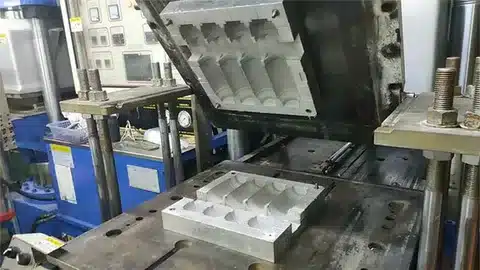
It is a tooling process and the logo is cut into the mold cavity or core. This precision is made possible by our strong in-house mold manufacturing capabilities. It’s particularly suitable for outer surfaces, handles, rims or non-critical areas where the raised element will not affect function. Embossed logos must be carefully reviewed before release when used in cavities, especially in food-contact applications, for release performance and cleaning. It must be vector artwork and extremely small text or fine lines may be lost in the molding process. Prior to tooling, the overall size and shape of the logo, as well as the edge radius and the depth of the logo should all be checked to ensure a crisp result in production.
| Embossed Logo Factor | Why It Matters |
| Raised Logo Design | Creates visible molded branding |
| Tooling-Based Method | Logo must be planned before mold development |
| Logo Size | Small letters or thin lines may lose clarity |
| Logo Position | Should not interfere with release, cleaning, or handling |
| Embossing Height | Too high may affect function or cleaning |
| Edge Radius | Helps avoid sharp or weak tooling details |
| Surface Location | Outer surfaces are usually easier than cavity interiors |
| Sample Approval | Confirms logo clarity before mass production |
Debossed Logo on Silicone Molds
Debossed logo silicone molds create a recessed impression that creates a crisp and simple brand logo without any elements that sticks out or could get damaged.
It is produced using mold tooling and will last longer, as the branding is embedded in the silicone itself, like embossed logos. It is well suited to outer surfaces, bottom, rim surfaces and packaging surfaces. Debossed logos need special care when used within cavities, as too deep and the logo can catch the residue or become cleaning/releasing difficult. Narrow recesses or fine lines may be difficult to reproduce on a consistent basis and surface texture may sometimes obscure. Before making a volume commitment, be sure to test the samples to verify appearance, cleaning and demolding ease.
| Debossed Logo Factor | Why It Matters |
| Recessed Logo Design | Creates a subtle molded brand effect |
| Tooling-Based Method | Must be confirmed before mold machining |
| Logo Depth | Too deep may trap residue or affect cleaning |
| Logo Width | Very fine lines may be difficult to reproduce |
| Location | Should avoid areas where release or user handling may be affected |
| Food-Contact Use | Cavity logos require careful review |
| Surface Texture | Texture can make logo less clear |
| Sample Testing | Confirms appearance, cleaning, and release performance |
Printed Logo on Silicone Molds
Printed logos on silicone molds are a secondary process after the part is molded, and offer vibrant color branding that molded options cannot offer. Our silicone surface finishing services include silk screen printing, pad printing, and other options for high-quality results.
After curing, the silicone can be used for silicone silk screen printing or pad printing on flat or slightly curved surfaces.It’s ideal for creating logos or graphics with vibrant colors and intricate designs. Nevertheless, buyers should check adhesion to surface, wear resistance during normal usage, and ease of cleaning (particularly when the product will be cleaned regularly and/or where food may come into contact with it). Avoiding printing is often preferable, unless proper testing is performed, where printable areas include rough textures, heavy bending areas, or direct food contact cavities. Sample approval is still essential to ensure that the printed logo will perform well for mass printing.
| Printed Logo Factor | Why Buyers Should Review It |
| Color Branding | Allows visual logo colors that molded logos cannot provide |
| Surface Adhesion | Printing must bond properly to silicone surface |
| Wear Resistance | Important if the logo is touched, bent, washed, or rubbed |
| Cleaning Method | Dishwasher or repeated washing may affect durability |
| Surface Texture | Rough or curved areas may make printing difficult |
| Logo Placement | Flat or stable areas are usually easier to print |
| Food-Contact Position | Avoid unsupported printing in direct food-contact areas |
| Sample Test | Confirms appearance and durability before bulk production |
Logo on Product Surface vs Logo Inside the Cavity
Placing a logo on a custom silicone mold can have significant effects on the final logo branding and ease of use, cleaning and mold release. Similar considerations apply when adding logos to custom logo silicone sleeves.
Cavity outer surface logos are very visible, and they don’t usually interfere with cavity function, but they should not be in high-wear areas. Bottom-area logos are still subtle and maintain the primary face clean. When doing identity, edge or rim placement is very effective but does not alter the working cavity. Use logos with flat surface on trays or grips. Inside-cavity logos impart a branded effect right onto the final product (perfect for chocolate, soap or craft products) but must be carefully reviewed for release performance, cleanability and food-contact compliance. No contact packaging logos give excellent retail impact.
| Logo Location | Advantages | Possible Concerns |
| Outer Surface | Easy to see and less likely to affect cavity function | Must avoid heavy bending or high-wear areas |
| Bottom Area | Subtle branding and cleaner product face | Less visible during normal use |
| Rim / Edge | Good for brand identity without affecting cavity | Small space may limit logo size |
| Handle Area | Practical for trays or molds with grip areas | Requires enough flat surface |
| Inside Cavity | Creates branded impression on finished item | May affect release, cleaning, and food-contact review |
| Packaging | Strong retail branding without affecting mold function | Does not permanently brand the silicone mold itself |
Logo Design Rules for Custom Silicone Molds
A well-designed silicone mold logo will focus on manufacturability, ensuring that every aspect is reproduced clearly and consistently throughout thousands of manufacturing cycles.
Use clean vector files and/or simplify as much as possible. The fine lines, the fine text, or the complicated gradations often don’t work in molded or printed materials. Correct letter spacing prevents letter merging and specifying exact logo size (in millimeters) will prevent surprises on tooling. If embossed or debossed, give an early indication of the height or depth. Always provide a drawing with exact location (2D or 3D). The only certain way to verify real world clarity before mass production is to get a physical sample approved.
| Logo Design Rule | Practical Reason |
| Use Vector Artwork | Helps manufacturer create accurate tooling or printing files |
| Avoid Tiny Text | Small letters may not mold or print clearly |
| Avoid Thin Lines | Thin lines may disappear or break in tooling |
| Keep Letter Spacing | Improves readability after molding |
| Simplify Complex Logos | Makes the logo easier to reproduce clearly |
| Define Logo Size | Prevents scaling mistakes during tooling |
| Mark Logo Position | Avoids misunderstanding about placement |
| Confirm Logo Height / Depth | Controls embossed or debossed effect |
| Review a Physical Sample | Confirms real logo clarity and appearance |
Logo Artwork Files Buyers Should Prepare
Accurate artwork files increase quoting speed, minimize tooling mistakes and ensure that the engineering team provides you with exactly what you’re expecting on the first sample.
AI, EPS, SVG, or vector PDF are preferred formats as they are easily editable and scalable. High resolution PNG only works as a visual reference. Add logo size, exact location on product drawing, colour codes (particularly for print), known emboss / deboss depth. Brand guidelines are helpful to maintain consistency of product and packaging. The more comprehensive the package that you provide at the outset, the smoother the entire customisation process will run.
| Artwork / File Detail | Why It Helps |
| AI File | Preferred for editable logo artwork |
| EPS File | Useful for vector-based tooling or printing review |
| SVG File | Good for clean digital vector logo transfer |
| Vector PDF | Useful if vector data is preserved |
| High-Resolution PNG | Helpful for visual reference but not ideal for tooling alone |
| Logo Size | Helps confirm if the logo can be reproduced clearly |
| Logo Position | Prevents placement misunderstanding |
| Color Code | Important for printed logos or packaging branding |
| Emboss / Deboss Depth | Helps engineering review before tooling |
| Brand Guideline | Supports consistent logo and packaging presentation |
Logo Customization by Silicone Mold Product Type
Each type of silicone mold products requires a specific approach to the logo, considering both the brand’s objectives and the practicalities of manufacturing.
Baking molds consider outer-rim or packaging logos as the preferred options as cavity logos require additional food-contact and release evaluations. Simplified designs or packaging branding is advantageous to candy and chocolate molds for small cavities. With the appropriate depth control, logos embossed or debossed can be reproduced with a degree of success by soap molds. The best ice cube trays are those with the outer surface, lid or packaging. Food-contact and freezer-performance mold evaluation is recommended around any logo placement for beverage and popsicle molds. When making DIY craft molds, the release factors of the secondary material (resin, clay, plaster) are important. Often product-surface logos are paired with coordinated packaging on promotional and private-label sets to maximize the impact on the shelf.
| Product Type | Recommended Logo Consideration |
| Baking Molds | Outer rim or packaging branding is often practical; cavity logos need food-contact and release review |
| Candy Molds | Small cavities need simplified logos or packaging branding |
| Chocolate Molds | Cavity logos can create branded chocolate but require fine tooling and release testing |
| Soap Molds | Embossed or debossed cavity logos can work well with proper depth and release review |
| Ice Cube Trays | Outer surface, lid, or packaging logo may be more practical than small cavity logos |
| Beverage Molds | Food-contact and freezer performance should be reviewed with logo placement |
| Popsicle Molds | Handle, lid, or packaging branding may be practical |
| DIY Craft Molds | Logo placement depends on resin, clay, plaster, or craft material release |
| Promotional Molds | Logo visibility and gift packaging often matter most |
| Private-Label Sets | Combine product logo, packaging logo, insert card, and barcode branding |
How Logo Choices Affect Cost, MOQ and Lead Time
When ordering logo custom silicone molds, there are additional factors to consider other than logo design, such as the impact it has on the tooling, secondary process, sample approval, and overall project schedule.
Logos are embossed or debossed onto the mold, which adds detail to the mold and adds to the initial tooling cost and sample review time. Printed logos include pad or screen setup costs, ink testing and extra inspection. Logos that are embedded in holes may need more exact tooling and fixture testing. The MOQ and lead time will be slightly increased if it requires multi-color printing or complex packaging branding. Revision after tooling begins is costly due to late changes. The manufacturer will make the best recommendations about volume, time and exact requirements if these are communicated clearly and upfront, safeguarding the quality of the product.
| Logo Factor | Cost / MOQ / Lead Time Impact |
| Embossed Logo | Adds tooling detail and sample review |
| Debossed Logo | Adds tooling work and depth control |
| Printed Logo | Adds printing setup, ink testing, and inspection |
| Logo Inside Cavity | May require more tooling and release testing |
| Multi-Color Logo | Increases printing or packaging complexity |
| Small Text | May require artwork adjustment or sample revision |
| Packaging Logo | Adds packaging design, printing MOQ, and lead time |
| Sample Approval | Necessary to confirm clarity before mass production |
| Logo Revision | Changes after tooling can add cost and delay |
| QC Inspection | Logo clarity and position must be checked in production |
Quality Control for Custom Silicone Molds with Logo
Logos on custom silicone molds require quality control in all stages from sample approval, in process and final shipment inspection.
Position and size of logos on drawings as per approved drawings, clarity of text and icons, emboss height and deboss depth, and printed colour accuracy. The printed logos are tested for adhesion, surface cleanliness, and overall consistency to ensure that each logo is consistent with the others. Packaging branding is treated in the same manner. During the mass production of the physical sample, referring to the approved sample ensures results will be consistent and safeguards the reputation of your brand.
| Logo QC Check | What Inspectors Should Confirm |
| Logo Position | Matches approved drawing or sample |
| Logo Size | Matches agreed dimensions |
| Logo Clarity | Text, icon, or pattern is readable and complete |
| Emboss Height | Raised logo is not too high or too weak |
| Deboss Depth | Recessed logo is clear but not too deep |
| Printed Color | Matches approved color reference |
| Printing Adhesion | Logo does not fail under agreed test conditions |
| Surface Cleanliness | No stains, dust, smudges, or ink contamination |
| Packaging Logo | Box, label, barcode, and insert branding are correct |
| Approved Sample Reference | Bulk production matches the confirmed sample |

Common Logo Customization Mistakes Buyers Should Avoid
Sometimes even a seasoned sourcing team will face an unnecessary logo problem that will cause delays or compromise the outcome of a project.
Typical mistakes include sending only low-resolution images, creating logos that are too small or thin, creating logos in hard-to-reach cavity areas that have not been tested, selecting printing areas for high traffic without durability testing, failure to consider food contact issues, failure to test for depth, approving only digital mockups, or artwork change after tooling starts. Other times, the cost of packaging branding can come as a surprise because people don’t coordinate the branding or look at quotes without knowing what services should be included for the logo. It is best to finalise the artwork as a vector, agree placement and method at the outset and always approve physical samples.
| Common Mistake | Better Approach |
| Sending Low-Resolution Logo | Provide AI, EPS, SVG, or vector PDF files |
| Logo Too Small | Confirm minimum readable size before tooling |
| Thin Lines or Tiny Text | Simplify artwork for silicone molding |
| Difficult Cavity Placement | Review release, cleaning, and food-contact use before tooling |
| Printing on High-Wear Areas | Test adhesion and durability first |
| Ignoring Food-Contact Use | Avoid unsupported printing or difficult cavity logos in food-contact areas |
| No Depth Confirmation | Define emboss height or deboss depth before tooling |
| Digital Approval Only | Approve physical samples before mass production |
| Late Logo Change | Finalize branding before mold machining |
| No Packaging Branding Plan | Coordinate product and packaging logo together |
| Comparing Different Quote Scopes | Check whether tooling, printing, packaging, and QC are included |
Logo Artwork Files Buyers Should Prepare
Accurate artwork will minimize quoting mistakes and tooling delays.
What Buyers Should Prepare Before Requesting Logo Customization
Having the proper data ready before asking for logo customization on a custom silicone mold helps to speed up quoting, tooling and sampling.
Compile all of the following elements: product category, vector logo artwork, exact logo size and position, preferred branding method, emboss or deboss depth (if applicable), printing colors, silicone material grade, food contact status, desired surface texture, product color, packaging style, order quantity, target market, and any test requirements. This checklist ensures that the manufacturer can give feedback with regard to feasibility and cost from day one.
| Information to Prepare | Why It Helps |
| Product Category | Helps choose suitable logo method and placement |
| Vector Logo Artwork | Supports accurate tooling or printing review |
| Logo Size | Confirms whether details can be reproduced clearly |
| Logo Position | Prevents placement errors |
| Preferred Logo Method | Helps compare embossed, debossed, printed, or packaging options |
| Emboss / Deboss Depth | Helps engineering review before tooling |
| Printing Color | Supports printed logo or packaging branding |
| Silicone Material | Affects tooling, surface feel, and printing suitability |
| Food-Contact Status | Important for logo placement and testing review |
| Surface Texture | Affects logo clarity and printing adhesion |
| Product Color | Affects logo visibility and brand appearance |
| Packaging Style | Supports retail and private-label branding |
| Order Quantity | Helps estimate MOQ, unit cost, and process setup |
| Target Market | Affects documentation and product claim planning |
How a Manufacturer Supports Silicone Mold Logo Customization
A qualified custom silicone molds manufacturer will assist in the customization of logos by examining the feasibility of the artwork, the product design, material selection, tooling design, production, finishing and quality control.
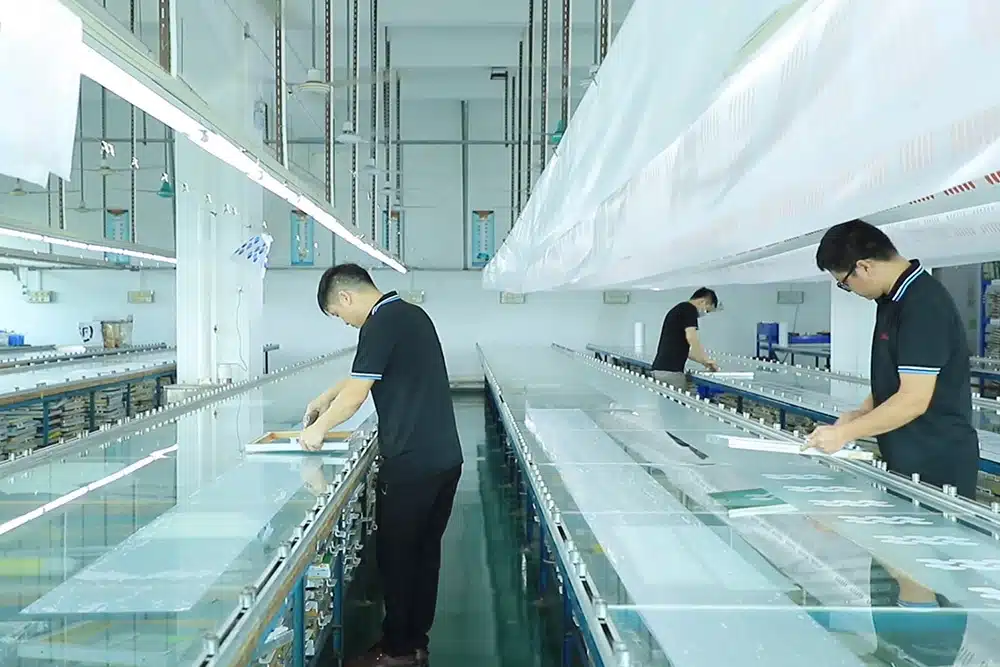
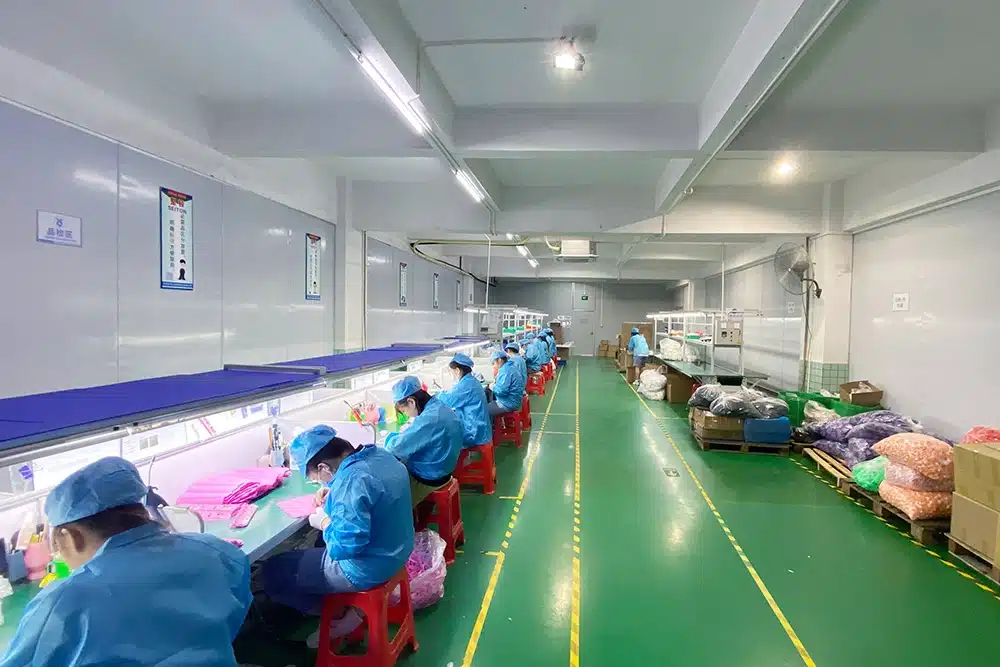
They have a wealth of expertise in product design and structural development, silicone material optimization, including Shore hardness recommendations, mold manufacturing in house, prototype and sample production, compression molding, surface finishing options including silk screen printing, spray coating, oil finishing, and laser engraving, and dust free assembly and packaging. They also inspect raw material, do in-process quality control, deliver final test, and supply support for retail ready packaging. This end-to-end knowledge guarantees that your logo will incorporate effortlessly without any unforeseen challenges during creation or compliance.
| Manufacturer Capability | Why It Matters for Logo Customization |
| Artwork Review | Confirms whether logo details are suitable for molding or printing |
| Design Review | Checks logo position, size, depth, and product function |
| In-House Tooling | Supports embossed or debossed logo development |
| Sample Development | Allows logo clarity and placement to be approved before bulk production |
| Material Selection Support | Helps match silicone material to product use and branding process |
| Surface Finishing Support | Supports printing, coating, laser engraving, or other branding options |
| Quality Control | Checks logo position, clarity, color, adhesion, and consistency |
| Packaging Support | Helps align product branding with retail or ecommerce presentation |
| Production Capability | Supports repeatable logo quality in bulk orders |
| Export Experience | Supports communication, approval records, and international delivery |
Final Buyer Checklist for Custom Silicone Molds with Logo
Apply this handy checklist to ensure that all the elements are in place before you approve tooling for custom silicone mould with logo.
| Checklist Question | Why It Matters |
| Is the logo file vector-based? | Reduces tooling and printing errors |
| Is the logo size realistic? | Improves clarity after molding or printing |
| Is the logo position marked clearly? | Prevents placement mistakes |
| Is the logo method confirmed? | Embossed, debossed, printed, engraved, or packaging logo each affects cost |
| Is the product food-contact? | Logo placement may affect release, cleaning, and testing review |
| Is the emboss/deboss depth practical? | Prevents cleaning, release, or unclear branding problems |
| Is printing durability required? | Adhesion and wear should be tested |
| Is packaging branding included? | Supports retail and private-label presentation |
| Has a physical sample been approved? | Confirms real logo clarity and appearance |
| Are logo QC standards defined? | Helps maintain consistency in mass production |
| Are costs and lead time clear? | Logo customization may affect tooling, finishing, packaging, and MOQ |
Conclusion — Logo Customization Should Be Planned Before Tooling
Custom silicone molds can be branded with logos via embossing, debossing, printing, laser engraving, or packaging branding. For related guidance on sleeves, see our detailed guide on silicone sleeve surface finishing options.The right choice depends on the use, place of the logo, material, food contact, durability expectations, cost, MOQ, lead time and presentation of the brand of the product. Embossing and debossing logos should be designed prior to tooling. Surface and durability review required for the printed logos. Branding of packaging can be effective in the retail market without impacting the product itself. Buyers can order custom silicone molds with logo, confirm the logo artwork, size, position, material, food-contact use, sample approval and QC standards before mass production production to ensure that the logo silicone mold is clear, practical and repeatable.