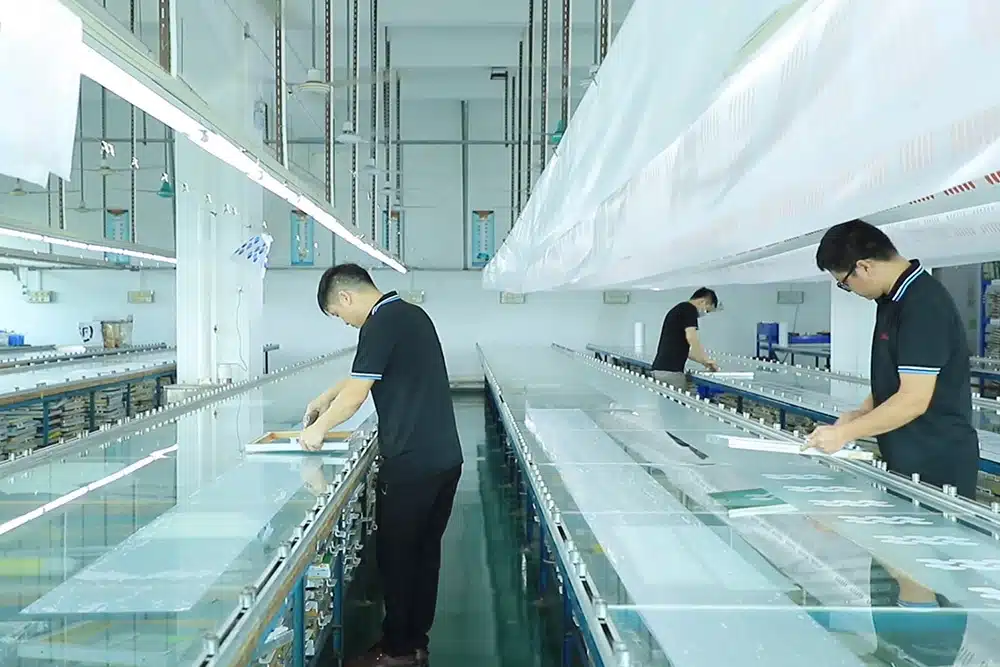

One of the crucial considerations in the quality and the overall cost of custom silicone seals is mold design. Much more than merely forming the part, the mold dictates the tolerances to be maintained, the level of flash control, the surface finish to be obtained, and the consistency with which the parts may be made in the future. The construction of the mold is believed to be a major factor in the initial tooling price by many buyers. In practice, the design of poor molds can lead to significantly greater downstream expenses due to dimensional issues, erratic manufacturing, repeated sample revisions and variable field operation.
Properly designed molds enhance seal quality, minimize unnecessary production risk, and incur lower costs in the project over time, whereas poorly-designed molds usually cause hidden costs that are many times higher than the original tool cost.
Why Mold Design Matters More Than Many Buyers Realize
Mold design is not just a tooling problem – it is a product-quality and production-stability problem. The final performance of a custom silicone seal is strongly based on the way the original design intent is conveyed into repeatable parts of the mold. Unhealthy choices of molds can directly influence fit, sealing contact, flash formation, stability in part shape and total sampling efficiency.
Practically, the quality of molds affects the success of the first article and consistency of repeat purchase. Designing molds should also be considered a component of the entire OEM process by engineers and sourcing teams, and not a hidden factory cost.
| Mold Design Factor | Why It Matters |
| Mold precision | Affects dimensional accuracy and repeatability |
| Parting line design | Influences sealing surfaces and flash control |
| Venting strategy | Affects filling quality and defect prevention |
| Cavity layout | Influences production balance and efficiency |
| Shrinkage control | Supports dimensional stability after molding |
| Tool durability | Affects long-term production economics |
Start with the Seal Design Requirements Before Designing the Mold
The design of custom silicone seals mold requires a proper sense of the geometry of the seal, tolerance priorities, and functional sealing surfaces. The dimensions that are important in sealing must be identified at a very early stage since they determine the point at which the best tooling precision is needed.
Tooling decisions are affected by compression behavior, groove fit, and the desired method of assembly. The behavior of materials and anticipated shrinkage must also be checked meticulously prior to cavity finalization. With a weak or incomplete design definition, the chances of mold revisions are much more likely to occur later in the project.
Mold design must eventually be able to serve the physical implementation as opposed to merely creating a nominal CAD representation.
| Design Input | Why It Matters for Mold Design |
| 2D drawing and 3D model | Defines geometry and manufacturability basis |
| Critical sealing dimensions | Guides tooling precision priorities |
| Tolerance expectations | Determines mold complexity and control needs |
| Material selection | Influences shrinkage and processing behavior |
| Assembly method | Affects dimensional priorities and flash sensitivity |
| Expected volume | Helps define tooling strategy and cavity planning |
Speaking of these initial-stage tooling considerations, most seasoned teams tend to consider precision silicone seal tooling in order to make sure that the functional requirements are duly converted into effective production.
Parting Line Design Has a Direct Effect on Seal Quality
Placement of parting line in silicone seal tooling is an area of concern since it has direct influence on the functional performance. Improper positioning may result in flash on sensitive sealing areas, posing leakage or installation problems in the end product.
Protection against unnecessary risk of molding of contacts areas should be ensured at all times. The parting line strategy also determines the difficulty of trimming, visual appearance and repeatability in the long-term. One such seemingly insignificant tooling choice can cause serious downstream quality issues when not handled effectively.
| Parting Line Issue | Quality or Cost Impact |
| Poor placement on sealing area | Higher leakage or fit risk |
| Difficult trimming location | Added labor and inconsistency |
| Excessive flash tendency | More inspection and rework cost |
| Weak alignment control | Greater dimensional variation |
| Better parting line strategy | More stable quality and lower finishing burden |
Cavity Design and Mold Layout Influence Consistency and Cost
The shape of the cavities defines the uniformity of the fill and shape of every seal of liquid or solid silicone. Mold layout, in its turn, influences general efficiency, balance within cavities and scalability to various production volumes.
Multi-cavity decisions must never be based on the estimated volume targets and quality priorities of the project. An imbalanced cavity layout can enhance the part-to-part variation whereas the properly planned layout can enhance the throughput without affecting the consistency. Cavity strategy is most effective when it is specific to the production objectives, but not duplicated based on irrelevant projects.
| Cavity / Layout Decision | Potential Impact |
| Single-cavity design | Simpler control, slower throughput |
| Multi-cavity design | Higher output, greater balance requirements |
| Unbalanced cavity layout | Increased variation between parts |
| Better cavity design | Improved repeatability and efficiency |
| Weak mold layout planning | Higher hidden production cost |
Venting, Flow Control, and Shrinkage Planning Affect Final Part Stability
Silicone molding quality is not entirely dependent on the shape of the cavity. It is also properly vented to minimize enclosed air, unfinished fill, and typical defects like voids or burn marks. The tooling size should also consider the effect of shrinkage correctly since the silicone materials have a different shrinkage behavior under various formulation and processing conditions.
In situations where these factors are not appropriately managed, dimensional drift, unstable part geometry or repeated change of samples tend to occur. Mold engineering to reflect real material behavior minimizes subsequent corrections and makes the production runs more stable.
| Mold Engineering Factor | Why It Matters |
| Venting design | Helps reduce fill defects and trapped air |
| Flow control logic | Supports more stable part formation |
| Shrinkage allowance | Affects final dimensional accuracy |
| Material-specific tooling adjustment | Improves fit to real molding behavior |
| Weak engineering assumptions | Leads to sampling and production instability |
Mold Precision Directly Affects Tolerances, Flash, and Surface Quality
The quality of silicone seals in the real-world directly depends on tooling precision. Seals are also very sensitive to dimensional variation since even minimal changes can affect compression set and sealing performance. Flash control is particularly significant to seals as compared to most other molded products because too much flash on edges may jeopardize functionality or necessitate further processing.
Mold accuracy also affects the surface uniformity, difficulty of trimming, and the general inspection load. An inexpensive tool may soon turn costly when it yields unreliable part quality or needs frequent repairs.
| Quality Factor | How Mold Precision Affects It |
| Critical dimensions | Influences fit and compression performance |
| Flash control | Affects sealing edges and rework needs |
| Surface consistency | Supports contact stability and appearance |
| Part shape repeatability | Reduces batch variation |
| Inspection efficiency | Improves when output is more stable |
Poor Mold Design Often Increases Hidden Cost Across the Project
The cost of the project is still influenced by mold design many years after paying the tooling payment. Poor choices often result in the repeated revisions of samples, longer development times, and scrap, as well as requiring greater quality control. Dimensional instability may lead to higher shipment rejection risk, and low tool life may lead to higher maintenance and downtime costs.
A more engineered mold can lower the overall project cost in a large number of situations despite the increased cost of the tooling. Intelligent purchasers compare tool quotes with the lifecycle cost as opposed to the cheapest upfront price.
| Mold-Related Cost Driver | Hidden Cost Consequence |
| Repeated tooling revisions | Delay and engineering rework cost |
| High defect / scrap rate | Increased production cost |
| Flash-heavy output | Added trimming and inspection labor |
| Poor repeatability | Repeat-order instability |
| Weak mold durability | Maintenance and downtime expense |
| Better initial tooling quality | Lower lifecycle cost over time |
Common Mold Design Mistakes in Custom Silicone Seal Projects
Some common errors are found in individual silicone seal projects. These are consideration of mold design as an issue of tooling department only, consideration of lowest tool price than functional need and neglecting the critical sealing surfaces protection when planning the parting line.
Other common-sense problems include neglect of material-specific shrinkage behavior, the choice of cavity layouts that fail to correspond with the real production volumes, and failure to consider early on trimming and flash control. Other teams also believe that a good first sample can be used as a guaranty of consistent long-term production, or they base the choice of tooling without adequate communication between design engineering and manufacturing teams.
| Common Mistake | Likely Result |
| Lowest-cost tooling decision only | Higher downstream quality cost |
| Poor parting line placement | Sealing and flash problems |
| Weak shrinkage planning | Dimension mismatch after molding |
| Inappropriate cavity strategy | Variation or inefficiency |
| No lifecycle cost view | Wrong economic decision |
| Weak engineering-manufacturing alignment | More revisions and delays |
A Practical Mold Design Review Checklist for Custom Silicone Seals
Pre-tooling-release comprehensive mold design review can do a great deal to cut downstream risk. When sourcing, tooling, engineering and production teams are in sync at an early stage, quality and the project economics is likely to improve.
The following checklist outlines the important things that established teams usually check:
| Checklist Item | Why It Should Be Confirmed |
| Critical sealing dimensions identified | Guides tooling precision priorities |
| Tolerance expectations aligned with function | Balances quality and cost |
| Material shrinkage reviewed | Supports accurate cavity sizing |
| Parting line placement evaluated | Protects sealing surfaces |
| Cavity strategy matched to production volume | Improves efficiency and repeatability |
| Venting and flow logic reviewed | Reduces defect risk |
| Flash control expectations defined | Lowers finishing burden |
| Tool lifecycle and maintenance considerations reviewed | Supports long-term production stability |
Conclusion — Good Mold Design Improves Both Seal Quality and Project Economics
Powerful design of custom silicone seals is more than an engineer of a working tool. It assists in the conversion of design intent into consistent molded output, guards important sealing characteristics, minimizes latent production cost, and aids in repeatable long-term supply.
The best tooling choices strike a balance between seal performance, tooling accuracy, parting line plan, cavity design, shrinkage planning, quality consistency, and cost-effective production over the long term, right at the start.