
Silicone grade food is most commonly used in products that come in contact with food, beverages or environments that may be used in kitchens. Healthcare, medical device, body-contact, or regulated medical-use applications may require stricter testing, documentation, cleanliness and risk control. Medical-grade silicone is therefore chosen where more stringent testing, documentation, cleanliness and risk control may be necessary.
The actual difference is not merely one of safer and less safer, but intended use, compliance route, expectations of testing, manufacturing control, and documentation level. The common misconceptions held by many purchasers are: that food-grade silicone is automatically suitable to use in medicine; or that medical-grade silicone is merely a pricier version of food-grade silicone. Actually, correct material is based on the intended use of the product, the target market, the necessary testing, and the regulatory expectations.
The appropriate silicone grade must be chosen based on product usage, level of contact with the user, compliance needs, and level of manufacturing control expectations, not by label.
Food-Grade vs Medical-Grade Silicone at a Glance
The intended use, the extent of testing, the required documentation, and the risk level of production should be used to start a practical comparison between food-grade and medical-grade silicone.
| Comparison Factor | Food-Grade Silicone | Medical-Grade Silicone |
| Common use | Food-contact products, kitchenware, baby feeding items | Medical devices, healthcare products, body-contact components |
| Main concern | Food-contact safety, odor, heat resistance, cleaning | Biocompatibility, cleanliness, traceability, risk control |
| Testing expectation | Food-contact related testing depending on market | Medical or biocompatibility testing depending on application |
| Documentation | Material data, test reports, food-contact documents | More detailed material, process, and compliance documentation |
| Production environment | Clean and controlled production may be required | Often stricter process control and cleanliness expectations |
| Risk level | Consumer safety and food-contact compliance | Higher regulatory and user-safety risk |
| Selection logic | Based on food-contact use and temperature | Based on medical use, contact duration, and risk classification |

This table is a quick guide, but, in reality, you need to think more about your particular product and market.
What Is Food-Grade Silicone?
food-grade silicone is used in products that can come into contact with food, beverages, or the mouth in normal consumer use.
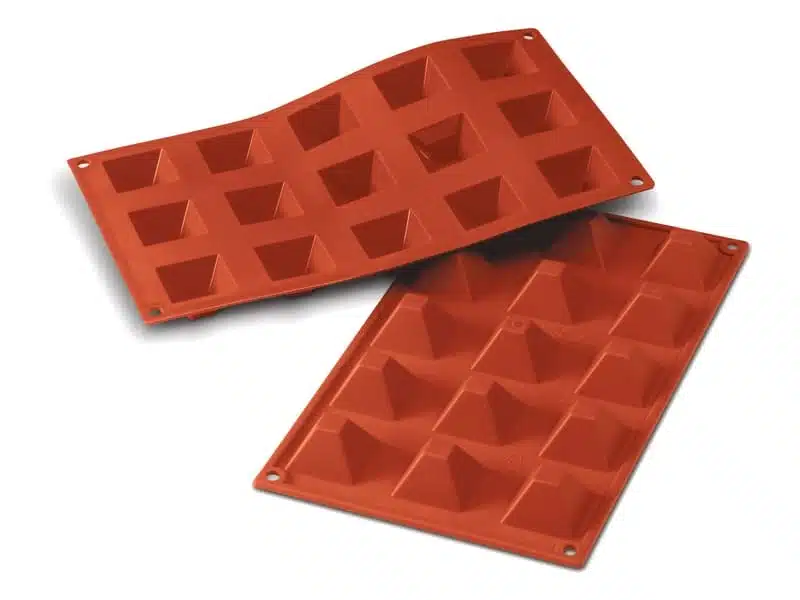
It is used in items like baking molds, spatulas, ice cube tray, baby bottle nipples, sippy cup, food storage lid, and kitchen mat. It is normally required to be of low odor, have good heat resistance (often to 200250 C), be flexible, easy to clean, and be compatible with food-safe pigments.
Of importance is the target market issues. In EU, USA, or China, testing requirements may vary and therefore documentation must be compatible with the food-contact regulations of the destination country. A supplier should never claim to be of food grade without providing any supporting relevant migration test reports and material declaration instead of giving a verbal confirmation.
Typical Food-Contact Applications and Requirements
| Food-Contact Product Type | Key Material Requirement |
| Baking molds | Heat resistance, low odor, shape stability |
| Baby feeding products | Safety, softness, cleanliness, bite resistance |
| Kitchen utensils | Durability, food-contact suitability, easy cleaning |
| Ice trays | Flexibility, low odor, cold resistance |
| Food storage accessories | Seal performance, odor control, repeated-use stability |
These characteristics aid in making sure that the silicone has good performance without transferring undesired substances to food.
What Is Medical-Grade Silicone?
Medical grade silicone is employed when application of the product is in a healthcare related application, contact with the body or in medical related device performance and documentation requirements.
Not just with increased material purity, it is closely related to application risk, documentation, testing, and process control. Typical uses can be medical tubing, seals, respiratory masks, wearable healthcare parts or selected long-term body-contact parts.
The type of contact and the length of time are very important. There are dissimilar evaluation standards with respect to short-term skin contact and long-term implantation or mucosal contact. Medical-grade use frequently needs a more rigorous validation, than general consumer-grade use.
A structured food-grade silicone selection guide can be used to bridge material safety, hardness, production process, and documentation needs prior to the development of the mold.
Medical-Use Considerations
| Medical-Use Consideration | Why It Matters |
| Contact type | Skin contact, mucosal contact, or other medical-use conditions may require different evaluation |
| Contact duration | Short-term and long-term contact may involve different testing expectations |
| Sterilization method | Material must tolerate the intended cleaning or sterilization process |
| Biocompatibility | Must be evaluated according to the intended medical application |
| Traceability | Supports quality control and documentation review |
| Clean production | Reduces contamination risk in sensitive applications |

The Real Difference: Intended Use, Testing, and Documentation
The primary distinction between food-grade silicone and medical-grade silicone is the degree of risk to use and the kind of evidence needed to demonstrate safe usage.
Food grade silicone emphasizes on food-contact suitability and consumer-use safety. Medical-grade silicone addresses medical-use risk, biocompatibility, cleanliness and traceability. All testing requirements are always dependant on the specific application, market and any claims made concerning the product.
It might not be sufficient to have material certificates. Product teams must specify which standard or test is required before the production begins.
| Evaluation Area | Food-Grade Silicone | Medical-Grade Silicone |
| Intended use | Food contact and consumer kitchen use | Medical or healthcare-related use |
| User risk | Consumer food-contact exposure | Potentially higher user-safety risk |
| Testing focus | Food-contact migration, odor, heat resistance | Biocompatibility, sterilization, contact safety |
| Documentation depth | Moderate, depending on market | Usually more detailed and application-specific |
| Production control | Clean handling may be needed | Stronger traceability and controlled production expected |
| Claim risk | “Food-safe” must match test evidence | “Medical-grade” must be supported by intended-use documentation |
Can Food-Grade Silicone Be Used for Medical Products?
Silicone used in food grade should not be assumed to be suitable in medical products, unless the intended use of the product, the necessary tests, and documentation have been properly checked.
Suitability of food-contact is not a measure of medical-device suitability. Other testing and risk assessment may be necessary in medical applications. Consumer products made of skin-contact are not necessarily identical with medical-use products.
Buyers are not supposed to carry general labels without ascertaining the application-specific needs. When the product will be sold on the basis of healthcare or medical claims, more emphasis is put on regulatory review.
Important activities to check the appropriateness:
- Establish the precise product use.
- Specify contact type and duration of contact.
- Determine requirements of target markets.
- Review test reports available.
- Certify production environment and traceability.
- It is important not to make unsubstantiated medical claims.
Can Medical-Grade Silicone Be Used for Food-Contact Products?
Although medical-grade silicone can possess very good safety and performance properties, it nevertheless needs to be compared with the particular food-contact requirements of the target market.
Medical-grade does not necessarily fill in the position of food-contact testing. Some food-contact uses might need some migration or food-safety related testing. The content and pigments should be corresponding to the ultimate application of the product.
Replacement of food-grade silicone with medical-grade silicone can increase the cost without necessarily enhancing the real value of the product. Excessive specification of material increases costs in raw material, documentation and occasionally processing time.
| Question | Why It Matters |
| Will the product contact food directly? | Determines food-contact testing needs |
| Is the silicone colored or transparent? | Pigments may need separate evaluation |
| Will the product be heated? | Heat exposure affects migration and odor considerations |
| Is medical-grade necessary? | Avoids unnecessary cost and over-specification |
| What market will it enter? | Standards and documentation expectations may differ |
How to Choose Between Food-Grade and Medical-Grade Silicone
The first step in deciding how to choose between food-grade and medical-grade silicone is not the label on the material, but rather the intended use of the product.
This practical checklist can be used at the beginning of the development process:
| Selection Question | Why It Matters |
| What is the product’s primary use? | Separates food-contact, consumer, and medical applications |
| Will it contact food, skin, mouth, or body tissue? | Defines safety and testing expectations |
| How long will contact last? | Helps assess risk level and documentation needs |
| Will the product be heated, boiled, sterilized, or cleaned repeatedly? | Determines thermal and chemical resistance requirements |
| What country or market will the product be sold in? | Affects applicable standards and test reports |
| Are pigments, additives, or surface treatments used? | May affect compliance and safety evidence |
| Is the claim “food-grade” or “medical-grade” supported by documents? | Reduces sourcing and compliance risk |
| Is the production environment suitable? | Supports cleanliness and consistency requirements |
Common Mistakes Buyers Make With Food-Grade and Medical-Grade Silicone
The majority of issues occur when buyers do not perceive food-grade and medical-grade silicone as an application-based decision of the material, but rather, as an easy labeling.
Common pitfalls include:
- Food-grade silicone, which is automatically deemed as suitable in medical products, is assumed.
- Supposition: All food-contact requirements are automatically met by assuming that medical-grade silicone is used.
- Ordering FDA silicone without specifying the desired test or market.
- Not taking into account pigments, additives, or surface finishing when reviewing compliance.
- Comparison of material price only compared to testing and documentation cost.
- Failure to specify contact time and user exposure.
- Marketing in medical terms without adequate justification.
- The confirmation of material following the development of the mold rather than prior to tooling.
Addressing these early will save a lot of redesigns and compliance problems in the future.
Practical Documentation to Confirm Before Production
When working with food-contact or medical-related silicone products, documentation must be reviewed prior to sampling and tooling decisions becoming hard to modify.
Documents that are usually essential are:
- Material data sheet
- Test reports related to intended use
- Documentation of pigment or additives where necessary.
- Compliance statement, where necessary.
- Batch traceability expectations
- Production environment requirements
- Sample approval records
| Document / Evidence | Why It Matters |
| Material data sheet | Shows basic material properties and grade information |
| Relevant test report | Supports food-contact or medical-use claims |
| Pigment/additive information | Confirms color and formulation compatibility |
| Compliance declaration | Helps support buyer and market documentation |
| Batch records | Supports traceability and repeat production |
| Sample approval | Confirms material, color, hardness, and appearance before mass production |
Conclusion — The Right Silicone Grade Depends on Intended Use
Food-grade and medical-grade silicone are not very different, primarily in terms of intended use, testing, documentation and risk control. Silicone in food-grade is suitable when used in food-contact application when backed by relevant documentation. Healthcare or medical-related Medical-grade silicone Healthcare or medical-related applications may require stricter validation.
Both the labels are not to be used without ensuring that the actual application of the product and its demand on the market are verified. Not merely the quality level is the real difference between the food-grade and the medical-grade silicone. The connection between the material, the way the intended product is to be used, the evidence required, and the controls of manufacture behind it.
The application should be defined first by product teams, who should also ensure they identify testing and documentation requirements early, and also select the silicone grade that fits both the safety expectations and the production reality. The result of this approach is better custom silicone products, less compliance, and more confident sourcing decisions.