
A custom silicon seal is more than choosing an obscene or aesthetically pleasing material to keep a medical or laboratory device clean and sealed: matching the material to its applications, contact characteristics, to sterilization or cleaning, to compression design, and manufacturing reliability is just as important as matching it to the actual needs of the medical or laboratory apparatus.
Developing numerous engineering teams begin with a silicone compound that has medical labels and that the other will eventually follow it. Practically, seal reliability over time is conditioned by the ability of the material, geometry, and production process to be aligned with the real condition of operation, contact profile, cleaning, and validation pathway of the device. Medical and laboratory devices require reliable performance of the seal in the context of material suitability, contact and cleanliness requirements, compression control, control of operating exposure and manufacturing repeatability, rather than rely on an abstract label of medical-material.
Why Medical and Laboratory Seal Design Requires More Than a Material Label
There are special needs of seals in medical equipment and laboratory equipment that extend well beyond the general-industrial needs. The notions of cleanliness, dimensional precision and repeatability under processing or repeated use are usually what dictate whether a seal will add reliability to a device or create a risk during the process of validation or in the field.
A seal that works well in a normal enclosure is likely to fail in a diagnostic instrument or fluid-handling system as long as the surface quality, compression characteristics, or material stability is not maintained in accordance with the requirements of the device. In such environments, custom silicone seals should be designed as engineered parts as opposed to generic molded rubber materials. Each of them, such as the choice of materials, the ability of the production to repeat, etc., determines the results of validation and the long-term operation of the device.
| Design Factor | Why It Matters in Medical and Laboratory Devices |
| Material suitability | Must align with intended use and contact profile |
| Compression control | Maintains sealing without overstressing the part |
| Surface quality | Affects sealing, cleanliness, and fit |
| Dimensional consistency | Supports repeatable device assembly |
| Cleaning / sterilization exposure | Influences durability and validation logic |
| Manufacturing consistency | Supports repeat-order stability and design repeatability |
By taking these factors into account initially during the project, the teams minimize the chances of leaking, fit irregularities, early degradation, and expensive revalidation during a later stage of the project.
Start with the Actual Device Environment and Contact Conditions
Designing custom silicone seals to medical and laboratory device needs should not start with a generic silicone category, but rather needs to start with, understanding the actual environment of the device. The application of the seal, in laboratory equipment or therapeutic apparatus, fluid handling, enclosure, cowls, or covers, directly influences the priorities of engineering.
The first ones are whether the seal is in direct or indirect contact with the bodies, whether it is exposed to fluids, reagents, or moisture, and whether the seal has to be able to sustain repetitive assembly or work in a sterile, clean, or non-sterile condition. It is important to clarify how the product will be used and the length of contact and operating environments to prevent assumptions resulting in downstream issues.
| Device / Use Condition | Design Implication |
| Non-patient-contact lab equipment | May prioritize fit, cleanliness, and chemical exposure review |
| External-contact medical device | Raises additional material and validation questions |
| Fluid-handling application | Requires stable sealing and media review |
| Repeated opening / closing | Increases recovery and wear considerations |
| Sensitive enclosure sealing | Requires dimensional precision and stable compression |
| Clean or controlled environment use | Raises surface and contamination-control expectations |
This environment-first design can make sure that downstream decisions based on material and geometry are not made to be untruthful or ill-informed concerning real performance requirements.
Seals in medical devices made of silicone are vital in most medical device applications where slight changes in behavior can produce changes in how the device functions or in validation outcomes.
Material Selection Must Match Validation Needs and Functional Performance
Both the application functional requirements and the validation context of the device should guide the material selection used in making custom medical silicone seals. The hardness, compression set resistance, retention elasticity, surface stability and compatibility with anticipated fluids or cleaning agent all affect how the seal would perform over the time.
Medical-grade is a term used to describe an initial level to some formulations but it is not in itself a solution to the engineering questions. The proper material is based on the nature of the contact as well as the duration of the contact, the kind of fluids or reagents that will be used, and the manner in which the completed device would be processed. Refrain to make the choice to be acceptable across the board but to frame it as fit-for-use thus maintaining the conversation about the actual performance.
| Material Consideration | Why It Matters in Medical and Lab Seals |
| Hardness | Affects fit, compression, and sealing force |
| Compression set resistance | Supports long-term sealing under load |
| Surface stability | Matters for fit, cleanliness, and repeat use |
| Chemical / fluid compatibility | Helps reduce degradation risk |
| Aging behavior | Influences long-term reliability |
| Validation relevance | Helps align material choice with device requirements |
Comparing such properties with the real conditions of the device, teams can make better decisions that help to sustain performance and regulatory ways.
Compression and Seal Geometry Still Determine Whether the Seal Performs Reliably
Although it has a carefully selected material, custom silicone seals might worsen unless compression and geometry are strategized. Excessively low compression can result in leakage paths or unsound sealing, whereas excessive squeeze may result in permanent deformation and reduce service life.
Geometry controls the distribution of contact pressure, repeatability of fits in assembly or maintenance, and if the seal can recover after repeated cycles. In medical and laboratory equipment, where consistent operation over a number of openings or cleaning cycles are often needed, controlled deformation is likely to be more predictable than aggressive compression.
| Design Parameter | Risk If Too Low | Risk If Too High |
| Compression / squeeze | Leakage and unstable sealing | Faster permanent deformation |
| Contact pressure | Weak sealing contact | Higher stress and reduced recovery |
| Cross-section stability | Poor positional control | Difficult assembly or overfill |
| Recovery margin | Reduced resealing ability | Overstressed long-term behavior |
Early discussion of these factors leads to a better choice of material and geometry with the anticipated life cycle stresses.
Cleaning, Sterilization, and Processing Exposure Can Change the Design Priorities
The biocompatibility test of silicone seals used in medical devices is based on the type of contact with the body, contact time and the intended purpose of the completed equipment. It is not based exclusively on the description of the raw material but on the basis of a risk-based evaluation that adheres to the prevailing guidelines like the ISO 10993-1.
A variety of instruments and equipment, both non-contact (laboratory) and external contact (medical devices) have varying evaluation requirements. This needs to be recognized as a device logic in technical discussions instead of general terminology. The level of priority in validation is thus determined by the role the seal plays within the entire system.
| Processing / Exposure Factor | Why It Matters |
| Repeated cleaning cycles | Can accelerate wear, aging, or recovery loss |
| Moist heat / steam exposure | May affect long-term material behavior depending on application |
| EtO or other low-temperature sterilization pathways | May change validation considerations |
| Radiation or oxidative methods | Can influence material stability depending on the system |
| Chemical cleaning agents | May affect long-term durability |
| Frequent maintenance cycles | Increases resilience and fit repeatability demands |
The cautious stance will facilitate effective engineering-quality-regulatory communication.
Biocompatibility and Validation Should Be Discussed Carefully, Not Broadly
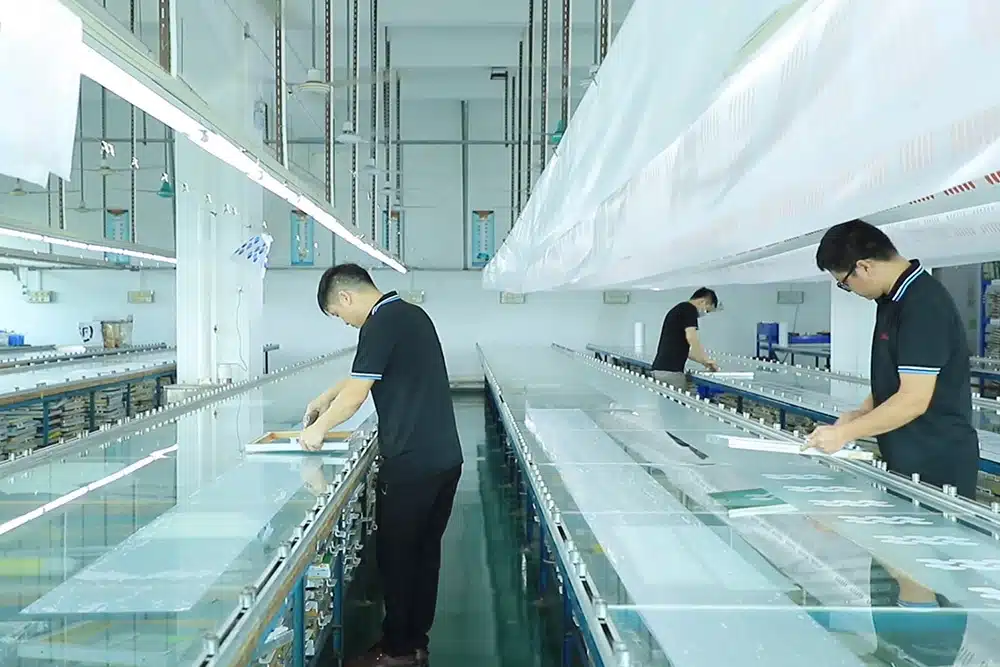
Dimensional repeatability and process control are particularly necessary whenever manufacturing some customized silicone seals to be used in medical and laboratory purposes. Compression behavior, fit in assembly, or cleanliness characteristics can be impacted by even minor changes in mold precision, conditions used in curing, or surface finish.
A successful prototype does not necessarily lead to the same success in the production in case there is no batch-to-batch consistency. The ability to manufacture should hence be able to support not only the functional performance but also the documentation discipline that would be needed to sustain the supply and replacement parts.
| Validation Consideration | Why It Matters |
| Nature of body contact | Helps define evaluation relevance |
| Contact duration | Influences assessment scope |
| Intended device use | Changes material and validation priorities |
| Finished-device context | Matters beyond raw material description |
| Documentation and testing pathway | Supports technical decision quality |
The very existence of strong manufacturing alignment eliminates variability early in the manufacturing process and establishes confidence in the supply at scale.
Manufacturing Consistency Is Essential in Medical and Laboratory Seal Projects
There are multiple frequently occurring misunderstandings that could make projects involving custom silicone seals to medical and laboratory devices difficult. The processing exposure can be neglected or treated as the entire requirement by treating a material label as the entire requirement or an initial softness, which becomes apparent later in the validation or field application.
Frequent traps also consist of excessively compressing seals to seem safe, not considering the design and maintainability of grooves or poor claims of unqualified compliance with no device context. Another pitfall is the assumption that once a prototype succeeds in its performance, this will automatically translate into a consistent performance in production.
| Manufacturing Factor | Why It Matters in Medical and Laboratory Seals |
| Mold precision | Influences shape accuracy and fit |
| Dimensional consistency | Supports predictable compression and assembly |
| Cure consistency | Affects elasticity and long-term behavior |
| Surface quality control | Influences sealing contact and cleanliness |
| Batch stability | Supports repeat production reliability |
By identifying these errors at an early stage, the teams can respond to them at the design stage.
Common Mistakes When Designing Silicone Seals for Medical and Laboratory Devices
There are multiple frequently occurring misunderstandings that could make projects involving custom silicone seals to medical and laboratory devices difficult. The processing exposure can be neglected or treated as the entire requirement by treating a material label as the entire requirement or an initial softness, which becomes apparent later in the validation or field application.
Frequent traps also consist of excessively compressing seals to seem safe, not considering the design and maintainability of grooves or poor claims of unqualified compliance with no device context. Another pitfall is the assumption that once a prototype succeeds in its performance, this will automatically translate into a consistent performance in production.
| Common Mistake | Likely Result |
| Label-based material selection only | Poor fit to real device requirements |
| Ignoring processing exposure | Premature degradation or validation issues |
| Overcompression | Faster loss of sealing recovery |
| Weak groove and maintenance review | Harder serviceability and unstable fit |
| Broad compliance claims without context | Misleading technical communication |
| No production consistency review | Variable field performance |
By identifying these errors at an early stage, the teams can respond to them at the design stage.
A Practical Design Review Checklist for Medical and Laboratory Seal Projects
Complex sealing, projects gain an advantage of close front-end definition, as well as cross-functional alignment, prior to the start of tooling or validation. Combining engineering, sourcing, quality and manufacturing viewpoints lessens the likelihood of late redesign or tests to meet qualification.
The checklist below lists some of the major items that should be verified at the outset of a project:
| Checklist Item | Why It Should Be Confirmed |
| Intended device use | Defines performance and validation context |
| Body-contact relevance and duration | Helps frame material evaluation needs |
| Cleaning or sterilization pathway | Affects durability and design logic |
| Fluid, chemical, or reagent exposure | Influences material review |
| Target compression range | Supports long-term sealing reliability |
| Groove dimensions and assembly method | Influences fit and service repeatability |
| Documentation expectations | Reduces communication and qualification risk |
| Prototype-to-production consistency | Supports scale-up stability |
Working on such a checklist leads to clarity and more powerful results.
Conclusion — Reliable Medical and Laboratory Sealing Depends on Balanced Design and Careful Validation Logic
Medical and laboratory device silicone seal design requires more than picking a material that has an affiliation with medical usage. The ability of long-term reliable performance is achieved by matching material suitability, device contact conditions, compression behavior, processing exposure, dimensional control, and manufacturing repeatability with actual need of the finished device.
The concept of treating custom silicone seals as engineered solutions instead of commodity products enables teams to minimize risk of leakage, enhance assembly consistency, and gain confidence during the validation and production phases.