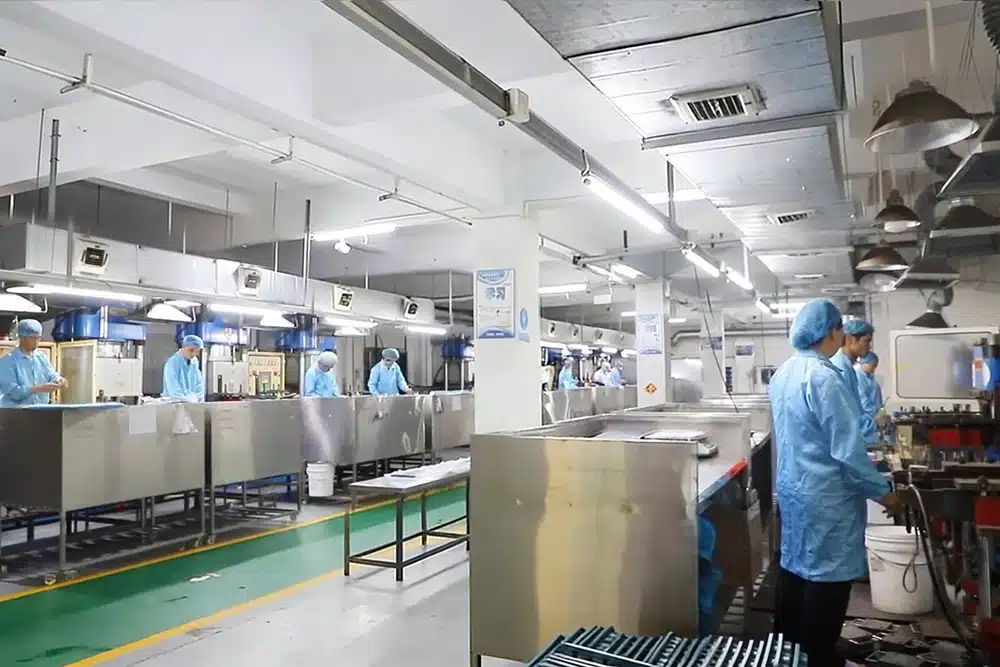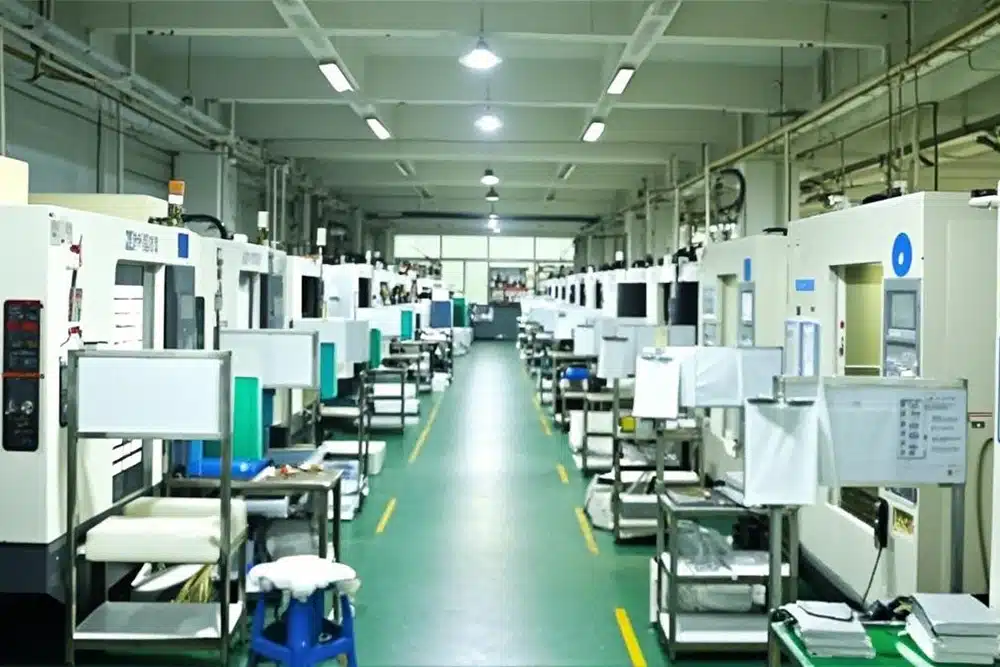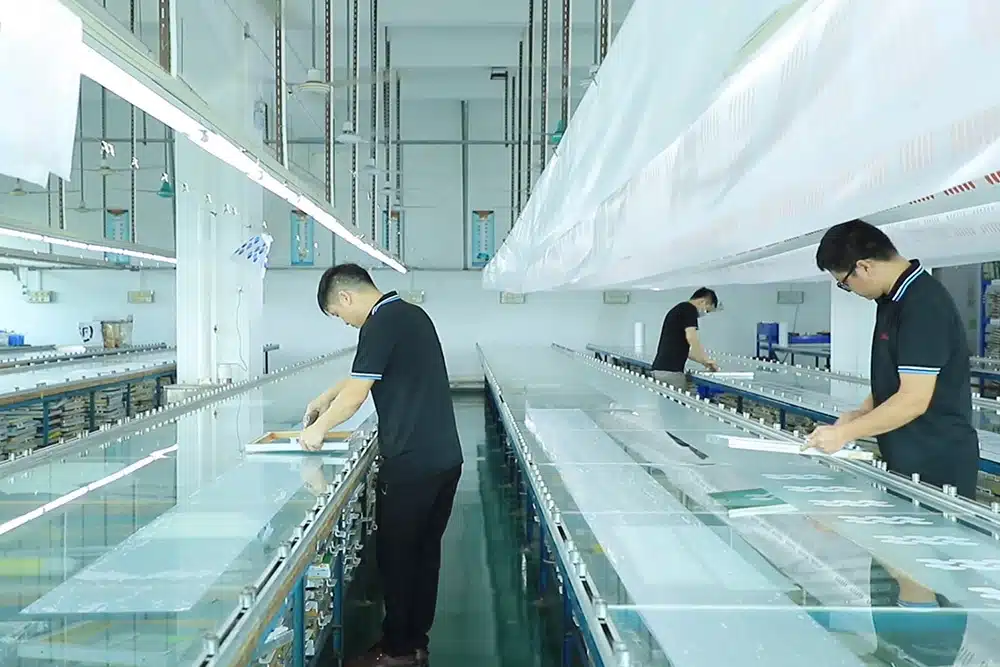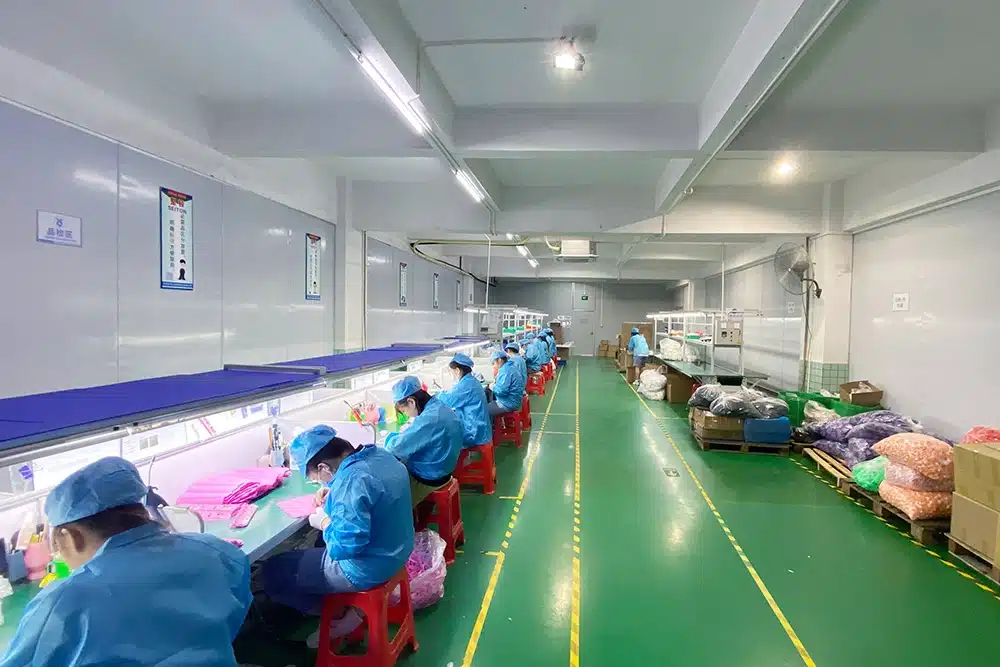

The minimum order quantity (MOQ) for manufacturers to make kitchen silicone products efficiently and consistently is called custom silicone kitchenware MOQ. It is subject to change depending on the product, whether it is based on an existing mold or new mold, product size, silicone material, color, logo method, packaging, production set up, inspection requirements, order complexity etc.
In the custom silicone kitchenware production line, MOQ is not just an arbitrary number, it will be closely related to batching of materials, color preparation, output of mold cavity, setup of logo, packaging MOQ, work efficiency of labor, and workload of final inspection. Custom silicone kitchenware MOQ is not just a policy of sale, but it is a planning decision for the production, such as the material preparation, mold setting, production efficiency, stability, packaging needs, and quality control.
What Does MOQ Mean for Custom Silicone Kitchenware?
MOQ stands for minimum order quantity, which is the smallest order quantity the factory can take with a quality, cost and efficiency that is acceptable. This applies to SKU level, individual product unit, packaging variation and product colour.
| MOQ Area | What It Means |
| Product MOQ | Minimum number of product units required for production |
| Color MOQ | Minimum quantity required for each custom color or Pantone color |
| Packaging MOQ | Minimum quantity required for printed boxes, cards, labels, or inserts |
| SKU MOQ | Minimum quantity per product variation, size, color, or set |
| Mold-Based MOQ | Quantity needed to make mold setup and production efficient |
| Private Label MOQ | Quantity required when logo, packaging, or branding is customized |
Understanding these distinctions helps buyers set realistic expectations when discussing custom silicone kitchenware MOQ with suppliers.
Why MOQ Varies Between Different Silicone Kitchenware Projects
MOQ is not only categorized by product type, but also by production complexity. The needs of a simple silicone spatula made from an existing mold are going to be quite different from a set of kitchenware, made of multiple pieces with custom colors and retail packaging.
For brands and importers planning bulk custom silicone kitchenware orders, MOQ is discussed along with the tooling requirements, color specifications, logo application, packaging type, and reordering expectations for the long term.
| Project Type | Typical MOQ Pressure | Why It Varies |
| Existing Mold Product | Usually lower | No new tooling needed, easier to schedule |
| Private Label Product | Medium | Logo, color, packaging, and labeling add setup |
| OEM Product | Medium to high | Buyer design may require new tooling and validation |
| Fully Custom Product | Higher | New mold, material planning, testing, and setup |
| Multi-Color Product | Higher | Each color requires separate material preparation |
| Product Set | Higher | Multiple items must be matched, inspected, packed |
| Retail Packaging Project | Medium to high | Printed packaging has its own MOQ and proofing |
Existing Mold vs New Custom Mold: How Tooling Affects MOQ
Among all factors that influence custom silicone kitchenware MOQ one of the most significant is mold status. The actual minimum quantity can be substantially lower because the bulk of the investment in the major tooling has been already made and existing molds can be used.
| Mold Situation | MOQ Impact |
| Existing Standard Mold | May allow lower MOQ because tooling already exists |
| Existing Mold with Logo Customization | MOQ may increase if logo, color, or packaging setup required |
| New Custom Mold | Usually requires higher MOQ to justify tooling |
| Multi-Cavity Mold | Supports higher-volume production more efficiently |
| Molded Logo | Requires tooling planning and enough quantity to justify |
| Special Texture or Shape | May increase development complexity |
| Mold Trial Requirement | Adds development steps before bulk production |
Typically, when new tooling is involved, the manufacturers must have enough volume to offset the mold cost and to maintain a stable production parameter.
How Product Size, Weight and Structure Affect MOQ
The actual physical design of silicone kitchenware will directly affect material consumption, the efficiency of the mold, production speed and inspection workload.
| Product Factor | MOQ Impact |
| Product Size | Larger products may require more material and mold capacity |
| Silicone Weight | Higher material usage affects planning and cost |
| Wall Thickness | Thick or uneven walls affect molding cycle |
| Flexible Thin Areas | Require more careful production and inspection |
| Complex Geometry | Increases mold setup and production difficulty |
| Demolding Difficulty | May slow production and increase defect risk |
| Trimming Requirement | More labor affects efficiency |
| Product Sets | Require coordination across multiple parts |
The MOQ will naturally be different when using a small and simple ice cube tray, compared to a large, complex baking mold with intricate details.
How Silicone Material and Color Matching Affect MOQ
The MOQ of custom silicone kitchenware can be affected by silicone material preparation and color matching, particularly if the customer specifies a custom color or special performance requirements.
| Material / Color Factor | MOQ Impact |
| Food-Grade Silicone | Requires suitable material selection and batching |
| Special Hardness | May require separate material preparation |
| Heat-Resistant Requirement | Affects material choice and production planning |
| Pantone Color Matching | Usually requires color sample preparation |
| Multiple Colors | Each color may have its own minimum quantity |
| Small Color Split | Can increase unit cost or MOQ pressure |
| Translucent / Special Effect | May require additional testing |
| Repeat Order Color Standard | Approved samples ensure future batch consistency |
Silicone kitchenware used in the food industry must be monitored to ensures their consistency and compliance.
Logo, Branding and Surface Customization MOQ
The MOQs for custom silicone kitchen utensils and kitchenware can be influenced by branding methods because of extra setup requirements.
| Branding Method | How It Can Affect MOQ |
| Embossed Logo | May require mold modification |
| Debossed Logo | Needs tooling planning |
| Silk Screen Printing | Printing setup requires minimum quantity for efficiency |
| Laser Marking | Setup and handling time affects low quantities |
| Printed Graphics | Complex graphics need extra setup |
| Surface Texture | Mold surface preparation may affect MOQ |
| Soft-Touch Finish | Additional process steps require practical quantity |
| Multiple Logo Versions | Each version may be treated as separate SKU |
Packaging MOQ for Retail, Wholesale and Ecommerce
The MOQ for packaging may sometimes be different from that of the product itself, particularly when it comes to private label/retail ready silicone kitchenware products.
| Packaging Type | MOQ Consideration |
| Bulk Packaging | Usually simpler and lower MOQ pressure |
| Individual Polybag | Adds packing material and labor |
| Paper Card | Printed cards may have their own MOQ |
| Retail Box | Printing and proofing require minimum quantities |
| Gift Box | Higher cost needs larger quantity to be practical |
| Insert Card | Printing may require separate MOQ |
| Barcode / Label | Quantity and SKU variation should be planned |
| Ecommerce Packaging | Requires product protection and branded presentation |
How MOQ Affects Unit Price and Total Project Cost
Production setup costs are distributed over the order quantity, which is how they and MOQ are related.
| MOQ / Quantity Situation | Pricing Impact |
| Very Small Quantity | Higher unit cost due to setup |
| Trial Order | Useful for testing but limited customization |
| Medium Quantity | Better balance between risk and efficiency |
| High Quantity | More efficient production and stronger unit cost |
| Multiple Colors | May increase MOQ per color |
| Multiple SKUs | Requires separate planning |
| Repeat Order Plan | Helps optimize over time |
MOQ is never the only factor that should be taken into consideration for the total project cost when buying.
Low MOQ vs Bulk Orders: Which Is Better for Buyers?
Low MOQ and Bulk orders are two different requirements for businesses. The product maturity, cost, market demand, and depth of customization are criteria for buyers.
| Order Strategy | Best For | Limitations |
| Low MOQ Trial Order | Market testing, early launch | Higher unit cost, limited customization |
| Existing Mold Order | Faster launch | Product differentiation may be limited |
| Private Label Order | Branding with manageable scope | Logo and packaging may increase MOQ |
| Full Custom Bulk Order | Unique design, long-term line | Requires tooling investment |
| Repeat Bulk Order | Stable supply | Requires demand forecast |
What Buyers Should Prepare Before Asking About MOQ
MOQ discussions are more realistic when the buyers will give definite product information and project information.
| Information to Prepare | Why It Helps MOQ Evaluation |
| Product Type | Identifies production process |
| Existing or Custom Design | Determines tooling needs |
| Product Size | Affects material usage |
| Drawing / Sample | Supports accurate evaluation |
| Material Requirement | Helps plan batching |
| Hardness Requirement | May affect material preparation |
| Color Requirement | Evaluates color MOQ |
| Number of SKUs | Each variation affects MOQ |
| Logo Method | Determines branding setup |
| Packaging Requirement | Identifies packaging MOQ |
| Estimated Quantity | Allows practical suggestions |
| Repeat Order Forecast | Helps optimize long-term |
| Timeline | Plans sample, tooling, and production |
How to Negotiate MOQ Without Creating Quality Risk
The negotiation of MOQ should be realistic, and should not impact the quality of materials, QC time or process controls.
| MOQ Optimization Method | Why It Helps |
| Use Existing Mold | Reduces tooling requirement |
| Limit Color Options | Reduces material batching |
| Choose Practical Packaging | Avoids high packaging MOQ |
| Simplify Logo Method | Reduces branding setup |
| Combine Product Variants | Improves production efficiency |
| Share Repeat Order Plan | Helps supplier see long-term value |
| Accept Realistic Trial Pricing | Allows small quantity without quality sacrifice |
| Keep QC Standards Clear | Prevents cost reduction from affecting quality |
Common MOQ Misunderstandings Buyers Should Avoid
A lot of buyers have preconceived notions that don’t match up with manufacturing facts.
| Misunderstanding | More Accurate View |
| MOQ is just a supplier rule | Linked to material, mold, setup, and QC efficiency |
| All products have the same MOQ | Size, mold, color, and process affect MOQ |
| New mold equals existing mold MOQ | Custom tooling requires more serious planning |
| Color does not matter | Each custom color needs separate preparation |
| Packaging has no MOQ | Printed boxes and inserts often have their own MOQ |
| Lower MOQ always saves money | May increase unit price and limit options |
| Bulk pricing applies to small trials | Setup costs spread across fewer units |
How to Choose a Manufacturer for Flexible MOQ Planning
Select a manufacturer that can logically explain MOQ, and offer you realistic solutions for your project.
| Manufacturer Capability | Why It Matters for MOQ Planning |
| Kitchenware Manufacturing Experience | Suggests realistic MOQ based on product type |
| Existing Mold Options | Supports lower MOQ or faster trials |
| Custom Mold Capability | Handles fully custom projects |
| Material Preparation Control | Manages hardness, color, and consistency |
| Logo Process Options | Allows suitable branding methods |
| Packaging Support | Evaluates product and packaging MOQ together |
| Production Planning | Improves scheduling and cost efficiency |
| Quality Control | Ensures negotiation doesn’t weaken standards |
| Export Experience | Supports communication and delivery |
Conclusion — MOQ Should Be Planned Around Product Scope and Business Goals
The FOQ for customized silicone kitchenware varies from product type, mold status, material, color, logo, packaging, production set-up, quality control and order planning. MOQ shouldn’t be taken as an independent criterion, apart from the unit cost, tooling cost, lead time, customization degree and long-term selling strategy.
The first step in a practical MOQ plan is to fully grasp the scope of the project. Buyers clarify their product design, material, colors, logo, packaging, quantity, target market and repeat order expectations, so that the manufacturer can provide a structure for the MOQ that is more realistic, considering the combination of manufacturing efficiency and product quality with development risk. When drafting clear specifications, everyone can communicate with each other more smoothly and get better results.