
Custom silicone bottle sleeves are silicone molded parts that enhance grip, protection, insulation feel, appearance and branding for all types of bottle products. They’re widely used from drinkware companies for glass bottles, stainless steel tumblers, shaker bottles, baby bottles, sports bottles and reusable cups to enhance the user experience and product differentiation.
For drinkware brands, custom silicone bottle sleeves are a perfect mix of fit, silicone properties, design, hardness/softness, ability to incorporate the logo, MOQ, and production possibilities. They are often thought to be an easy add-on – but when it comes to OEM development, the precision of engineering around actual bottle dimensions, stretch properties, wall thickness, molding process, branding durability and packaging requirements is vital. A clearly-defined brief is the first step in a well-planned project to reduce the need for changes and to ensure the project is cost-effective.
Why Drinkware Brands Use Custom Silicone Bottle Sleeves
While decorative, custom silicone bottle sleeves can have real-world consequences on product usability, safety, and marketability.
They enhance grip and handling, prevent breakage and scratches on glass bottles and offer a comfortable thermal barrier for hot or cold drinks, and add colour, texture, and logos to make them more visually appealing and memorable to the viewer and more distinctive as a brand. This enables brands to create integrated product lines in various sizes and enable retail, ecommerce, promotional and private label approaches. In conclusion, a well-designed sleeve can enhance the perceived value and customer satisfaction.
| Buyer Goal | How a Custom Silicone Bottle Sleeve Helps |
| Better grip | Textured silicone improves handling and reduces slipping |
| Glass bottle protection | Flexible silicone helps cushion daily impact and surface contact |
| Brand recognition | Custom colors, logos, and textures make the product more recognizable |
| Product differentiation | Sleeve design can separate one drinkware line from competitors |
| Retail value | A well-designed sleeve can make the bottle feel more premium |
| User comfort | Silicone can improve handling for hot, cold, or wet bottles |
| Product family design | Matching sleeves can support multiple bottle sizes or collections |
Common Drinkware Products That Use Silicone Bottle Sleeves
The right sleeve design is essential to the type of drinkware it will fit to ensure optimal performance and fit.
Whether you’re looking for simple glass water bottles, premium stainless steel tumblers, or specialized baby bottles, the type of cover, durability, and user interaction differ.
| Drinkware Type | Common Sleeve Purpose | Design Notes |
| Glass water bottle | Grip and impact protection | Secure fit and thicker base zones are often important |
| Stainless steel bottle | Grip, color, and brand identity | Sleeve should not slide on smooth metal surfaces |
| Tumbler | Base protection and handling comfort | Partial sleeves or grip bands may work well |
| Shaker bottle | Anti-slip grip and sporty appearance | Texture and durability should be considered |
| Baby bottle | Soft grip and easy handling | Material safety and cleaning requirements are important |
| Sports bottle | Wet grip and outdoor use | Texture and weather resistance may matter |
| Coffee cup | Heat buffer and reusable grip | Thickness and comfort should be tested |
| Promotional bottle | Logo visibility and cost control | Simple designs may reduce complexity |
| Retail drinkware set | Brand presentation and packaging | Color consistency and packaging design are important |
Key Design Options for Custom Silicone Bottle Sleeves
The comfort, protection, production feasibility, and cost are all greatly affected by design options for custom silicone bottles for sleeves.
They come in a variety of covers, some covering all the way down to the grip, others only to the wrist, and have different types of under design, surface texture, and reinforcement. Custom silicone bottle sleeves for drinkware brands can assist in streamlining bottle sleeve product development for drinkware brands, custom silicone bottle sleeves for drinkware brands can help combine grip, protection, color identity, logo customization, and OEM production planning into one product development process.
| Design Option | Best For | Buyer Consideration |
| Full sleeve | Maximum coverage and stronger visual identity | Higher material use and more complex fit |
| Half sleeve | Balanced grip, protection, and cost | Good for reusable bottles and tumblers |
| Bottom sleeve | Base protection and anti-slip function | Useful for glass and stainless steel bottles |
| Grip band | Simple handling improvement | Lower coverage but easier design |
| Open-bottom sleeve | Easier drainage and lighter structure | Less bottom protection |
| Closed-bottom sleeve | Better base protection | Requires careful fit and installation review |
| Textured surface | Anti-slip performance | Texture should be tested for comfort and cleaning |
| Reinforced edge | Better sleeve stability | Helps reduce rolling or edge deformation |
| Logo panel | Clearer branding area | Must be planned during mold design |
How to Choose Silicone Hardness, Thickness and Grip Texture
Choosing the right silicone hardness, thickness and texture is essential as they all contribute to the feel, durability and performance that the sleeve offers in real-world usage.
Shore A hardness can be softer for better flexibility and grip or firmer for better shape retention when repeatedly used. The thickness of the wall influences the cushioning and the costs of the material, and the texture is related to the anti-slip and cleaning properties.
| Design Factor | Practical Effect | Buyer Notes |
| Softer silicone | Easier grip and flexibility | May deform if walls are too thin |
| Medium hardness | Balanced grip, structure, and durability | Often a useful starting point for drinkware sleeves |
| Firmer silicone | Better shape retention | Installation and comfort should be tested |
| Thicker wall | Better cushioning and premium feel | Increases material cost and weight |
| Thin wall | Lower cost and lighter feel | May reduce protection and edge stability |
| Textured surface | Better anti-slip performance | Texture should be comfortable and easy to clean |
| Matte finish | Soft visual and tactile feel | Common for premium reusable products |
| Glossy finish | Clean appearance | Grip and scratch visibility should be tested |
Logo and Branding Options for Drinkware Brands
There are several factors to consider when selecting the logo and branding technique to use for your custom silicone bottle sleeves, such as the visual impact, durability, production cost, and compatibility with the curved surface of the drinkware.
Examples include embossed or debossed logos that are molded directly into the sleeve, silk screen printing for detailed graphics, laser engraving for more precise details, and even multi-color molding for complex designs. Pantone Matching ensures brand color consistency from batch to batch.
| Branding Option | Best For | Buyer Notes |
| Embossed logo | Durable raised brand mark | Requires mold planning |
| Debossed logo | Subtle premium branding | Works well for clean designs |
| Silk screen printing | Simple printed logos or text | Ink and surface compatibility should be confirmed |
| Laser engraving | Precise markings on suitable surfaces | Best tested on real samples |
| Pantone color matching | Brand color consistency | Physical color approval is recommended |
| Multi-color design | Strong shelf differentiation | May increase process complexity |
| Texture branding | Combining grip and design identity | Pattern depth should be comfortable to hold |
| Logo panel | Clear logo display | Needs proper placement on curved surfaces |
MOQ for Custom Silicone Bottle Sleeves: What Buyers Should Know
Sleeves, MOQ refers to the Minimum Order Quantity.
The MOQ for custom silicone bottle sleeves is not a strict, “must be” requirement based on the supplier, but it is set based on production practical consideration, mainly on the efficient use of the mold, preparing materials and set-up cost.
Fully custom designs generally will need larger volumes to break even on the costs of tooling, while existing molds or semi-custom designs could enable smaller initial runs. Some factors, such as custom colors, certain logo processes, sleeve weight, mold cavity count, and packaging type are all relevant to setting feasible minimums. Talking about your long term order goals, budget and tools helps you determine the best route to take to maximize your efficiency.
| MOQ Factor | How It Affects the Project |
| Fully custom mold | Usually requires a practical production quantity to justify tooling |
| Existing mold | May allow easier sampling or lower-complexity orders |
| Custom color | Material preparation may affect MOQ |
| Product weight | Heavier sleeves use more silicone and affect cost planning |
| Mold cavity number | More cavities can improve efficiency for larger orders |
| Logo process | Printing, engraving, or molded logos may have setup requirements |
| Packaging type | Custom retail packaging can increase MOQ or setup cost |
| Repeat order plan | Larger or repeat orders can improve cost efficiency |
What Affects the Cost of Custom Silicone Bottle Sleeves?
By knowing what factors contribute to the unit cost of these custom silicone bottle sleeves, drinkware brands can make informed decisions that balance their design vision with budget constraints.
Factors that are key are the amount of mold investment, silicone material grade and quantity, wall thickness, colour matching needs, selected logo application method, surface texture complexity, order volume and secondary processing for finishing and packaging. Generally, per-unit cost decreases with increasing volume due to fixed costs being divided by more units.
| Cost Factor | Why It Matters |
| Mold development | Custom shapes usually require tooling investment |
| Product size and weight | More silicone material increases unit cost |
| Wall thickness | Affects protection, feel, material use, and molding cycle |
| Silicone material grade | Food-grade or special material requirements may affect cost |
| Color matching | Custom colors may require sampling and material preparation |
| Logo method | Molded, printed, or engraved logos have different cost structures |
| Surface texture | Complex textures require precise mold design |
| Order quantity | Higher volume can improve unit cost efficiency |
| Packaging | Retail packaging adds material, labor, and setup cost |
| Testing/documentation | Food-contact or market reports may add project cost |
What Buyers Should Expect During Sampling and Mold Development
The development and molding of samples are crucial components that help validate the design before moving into mass production of custom silicone bottle sleeves.
Normally it starts with a thorough review of the requirements, bottle sample review, design confirmation (if required), mould fabrication, trial moulding, sample production, inspection, and repeated changes until final acceptance. This cooperative stage allows all problems to be identified early in the process and helps to ensure the end product is accepted as desired.
| Development Stage | What Happens | Buyer Responsibility |
| Requirement review | Manufacturer reviews bottle size, sleeve function, and design goals | Provide clear project details |
| Drawing/sample review | Engineers check dimensions and fit feasibility | Send accurate drawings or physical bottle samples |
| Design confirmation | Sleeve structure, thickness, logo, and color are confirmed | Approve design before tooling |
| Mold development | Tooling is made for the custom sleeve | Avoid major design changes after this stage |
| Trial molding | First samples are produced | Review real fit, feel, and appearance |
| Sample inspection | Size, hardness, color, logo, and surface are checked | Compare sample against expectations |
| Sample approval | Buyer approves before mass production | Confirm all details in writing |
Quality Control Checks for Silicone Bottle Sleeves
The quality control system is stringent throughout the production process, each custom silicone bottle sleeve is guaranteed to be consistent in quality and performance.
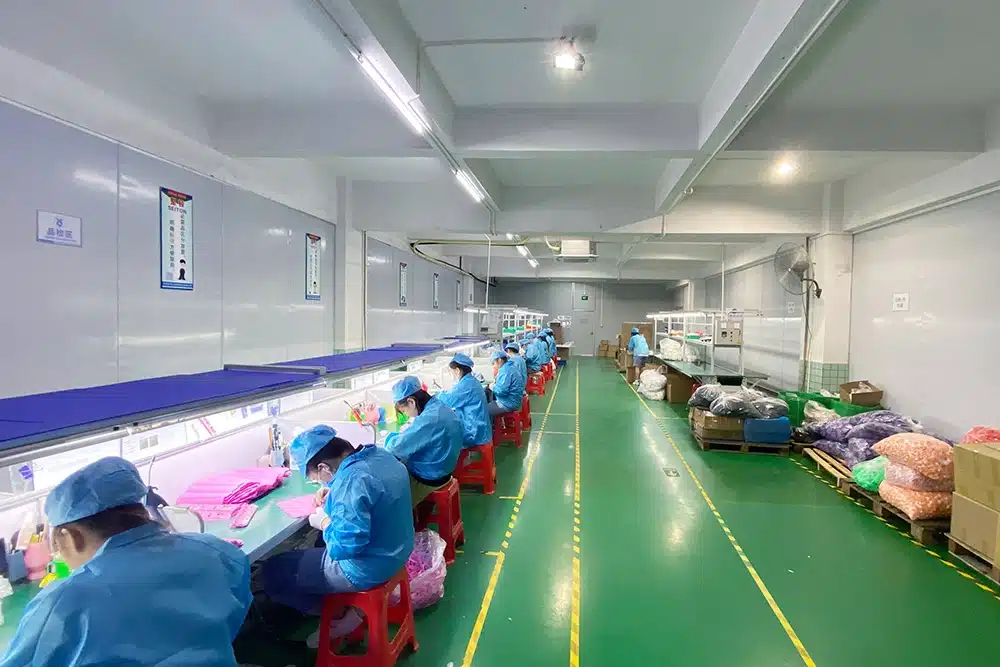
All checks include raw material verification, color and hardness testing, dimensional accuracy, real bottle fit trials, surface and logo inspection, edge trimming quality and final packaging review. This systematic approach helps reduce defect rates and ensures sustainable supply for drinkwater companies.
| Quality Check | Why It Matters |
| Material verification | Confirms correct silicone grade and color |
| Hardness testing | Ensures approved feel and flexibility are maintained |
| Dimensional inspection | Helps ensure sleeve fit consistency |
| Bottle fit test | Confirms the sleeve stays secure in real use |
| Appearance inspection | Checks stains, bubbles, marks, or color variation |
| Logo inspection | Ensures branding is clear and correctly positioned |
| Edge trimming | Prevents rough edges and improves user experience |
| Texture inspection | Confirms grip pattern consistency |
| Packaging check | Ensures products are ready for retail or ecommerce delivery |
Packaging Options for Drinkware Brand Projects
The packaging process is a critical element in ensuring the product’s safety while in transit, improving retail appeal, and catering to the requirements of ecommerce and Amazon for custom silicone bottle sleeves.
They can be offered as a basic option of bulk packing for wholesale or as individual polybags, hang cards, retail boxes or even as a full customised branded system. Early packaging selection is a great way to ensure costs match brand position and distribution outlet.
| Packaging Option | Suitable For | Buyer Notes |
| Bulk packaging | Wholesale or assembly projects | Cost-effective but less retail-ready |
| Individual bag | Ecommerce and spare accessories | Simple protection and SKU separation |
| Hang card | Retail display or promotional products | Good for visibility and branding |
| Retail box | Premium drinkware brands | Better customer experience but higher cost |
| Paper sleeve packaging | Eco-conscious retail products | Supports simple branding and lower material use |
| Barcode labeling | Amazon and ecommerce fulfillment | Helps inventory and logistics management |
| Instruction card | Consumer products | Useful for care, installation, and safety notes |
| Custom branded packaging | Private label brands | Supports stronger brand identity |
Common Mistakes Drinkware Brands Should Avoid
Some of the common mistakes people make in creating custom silicone bottle sleeves can be quite time consuming and expensive, and may lead to substandard results.
Common problems are inaccurate bottle measurements, designs that are completed after mold formation has already started, hardness/ thickness selection without physical sample, and finally, packaging until late stages of the design process. Collaborating closely with an experienced manufacturer allows you to tackle these challenges effectively.
| Mistake | Better Approach |
| Providing rough bottle measurements | Send accurate drawings, CAD files, or physical samples |
| Choosing design by appearance only | Evaluate grip, fit, thickness, and user handling |
| Ignoring MOQ factors | Discuss mold, material color, packaging, and production setup |
| Skipping sample testing | Approve fit, hardness, logo, color, and packaging before production |
| Changing design after tooling | Finalize design before mold development |
| Ignoring compliance claims | Confirm FDA, LFGB, or buyer documentation needs early |
| Treating packaging as an afterthought | Plan packaging together with product development |
| Selecting supplier only by price | Evaluate engineering, tooling, QC, and communication capability |
What to Prepare Before Requesting a Quote
Creating a detailed project brief is a great way to ensure quotes for custom silicone bottle sleeves are accurate and speedy.
Details on the drawings or samples of bottles, desired sleeve coverage and specification, materials and hardness, colour and logo files, estimated quantity, packaging requirements, targeted markets, compliance needs and timelines are key pieces of information. This preparatory work enables manufacturers to offer accurate proposals that can be customized to your requirements.
| Information to Prepare | Why It Helps |
| Bottle sample or drawing | Allows accurate fit and tolerance evaluation |
| Sleeve coverage area | Defines size, material usage, and appearance |
| Product application | Helps determine hardness, thickness, and texture |
| Material requirement | Supports food-grade, outdoor, or special performance needs |
| Color requirement | Helps plan Pantone matching and sample approval |
| Logo file | Allows evaluation of embossing, debossing, printing, or engraving |
| Estimated quantity | Helps calculate tooling, unit cost, and production planning |
| Packaging requirement | Affects cost, MOQ, labor, and retail readiness |
| Target market | Helps identify documentation or testing expectations |
| Timeline | Helps plan tooling, sampling, production, and shipping |
How to Choose a Custom Silicone Bottle Sleeve Manufacturer
The engineering ability and production control, material knowledge, and the manufacturer’s ability to handle the entire customization process should be considered for the drinkware brands when evaluating potential custom silicone bottle sleeve manufacturers rather than price.
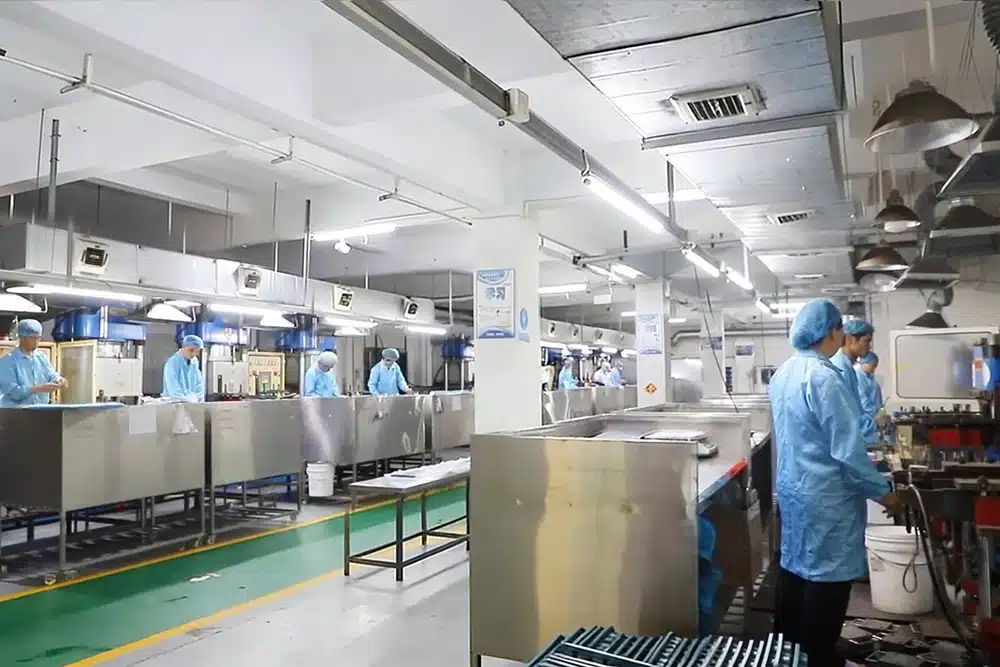
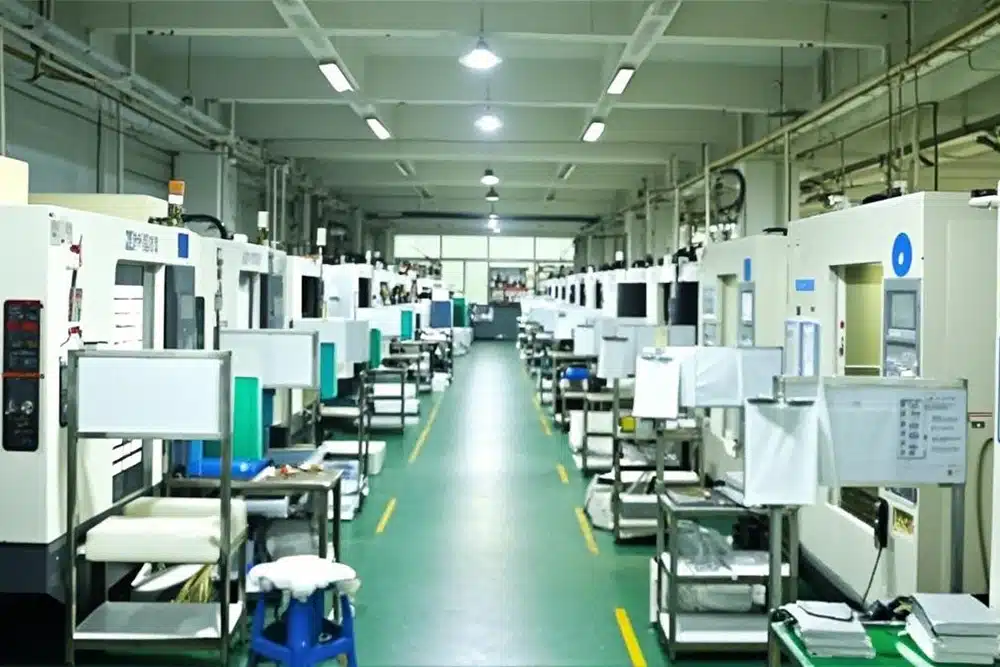
The qualified partner provides excellent design review support, in-house mold making, flexible silicone molding process such as compression molding, different logo customization methods such as silk screen printing, laser engraving, embossing and debossing, assembly, quality inspection and packaging service. Export requirements and clean production environments are also achieved through experience.
At Dongguan HT Silicone & Rubber Co., Ltd., we offer full OEM/ODM services and have in-house facilities that can help to streamline these aspects for our drinkware clients.
| Manufacturer Capability | Why It Matters for Drinkware Brands |
| Engineering review | Helps prevent fit, thickness, and installation problems |
| Material selection support | Matches silicone performance with product use and market needs |
| In-house mold capability | Improves tooling control and sample development efficiency |
| Silicone molding experience | Supports stable quality for custom molded bottle sleeves |
| Logo and finishing options | Gives brands more ways to create product identity |
| Sample development process | Confirms real fit, feel, logo, and color before mass production |
| Quality control system | Reduces risk of inconsistent size, color, hardness, or appearance |
| Packaging support | Helps prepare products for retail, wholesale, or ecommerce sales |
| Export experience | Supports communication, documentation, and delivery planning |
Conclusion — Custom Silicone Bottle Sleeves Should Be Planned as a Product System
Custom silicone bottle sleeves provide brands with an effective solution when it comes to grip, protection, comfort and brand identity on reusable bottles, tumblers and other drinkware.
Careful consideration of bottle type, sleeve coverage, material selection, Shore A hardness, wall thickness, texture, durability of logo, MOQ planning, sampling validation, quality control and appropriate packaging are essential to success. By viewing the sleeve as part of the entire customer experience, rather than an add-on, the results in terms of both performance and market reception are improved.
High-quality custom solutions can be created efficiently by brands, who can do so by preparing accurate specifications and enacting a business alliance with an experienced manufacturer.