
Custom silicone sleeves are used in a variety of industries, including drinkware, electronics, beauty stuffs and promotional products, and their surface finish with silicone sleeves is a crucial aspect of their look and function. It includes logo application techniques such as embossed or debossed designs, silk screen printing, laser engraving, and surface texturing, as well as matte or glossy finishes and coatings that affect performance, durability, and cleaning, and help customers identify the brand.
While visual appeal is important in a digital mockup, the best surface finishing for silicone sleeves is ultimately determined by the product’s actual application, the desired brand image, physical characteristics, durability requirements, cleaning protocols and production methods. Unfortunately, many buyers think that the choice of logo is something that can be settled after the mold has been created, but this is not true for features such as embossed logos or debossed logos or custom textures, as these will incur additional delays and cost if the logo is changed once the mold is ready.
What Does Surface Finishing Mean for Silicone Sleeves?
Surface finishing refers to the last treatment that is visible and felt on the silicone sleeve, which determines the visual and tactile properties of the sleeve for everyday use. This means how the logo is presented, surface texture, colour effects, matte or glossy finishes and any post molding operations such as printing or coating. Our silicone surface finishing services include silk screen printing, spray coating, laser engraving, and more.
Finishing may be included in the mold design for structural components, or as additional post processing operations. The decisions that are made have a great deal of influence on how well users are able to hold or grip the product, how comfortable the product is, how easy the product is to clean, best longevity, and how premium the product is perceived.
| Finishing Element | What It Means |
| Logo Method | Embossed, debossed, printed, engraved, or molded logo |
| Surface Texture | Smooth, matte, glossy, ribbed, dotted, soft-touch, or anti-slip pattern |
| Color Effect | Pantone color, translucent silicone, multi-color design, or contrast logo |
| Post-Processing | Printing, laser engraving, spray coating, or oil finishing |
| Functional Impact | Grip, cleaning, wear resistance, comfort, and user experience |
| Brand Impact | Visual identity, retail appearance, and product differentiation |
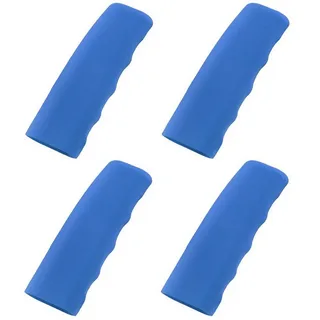
Quick Comparison of Silicone Sleeve Finishing Options
Silicone sleeve finishing should be determined by factors such as durability, cosmetic appearance, cost, tooling, and product and environment considerations. Working with an experienced custom silicone sleeve manufacturer early in the process ensures these decisions are optimized for both function and brand impact.
Brands that are creating drinkware sleeves, electronics covers, or promotional silicone accessories should consider custom silicone sleeves with logo and surface finishing should be planned before mold development so the final product can match both functional and branding requirements.
| Finishing Option | Best For | Main Advantage | Key Consideration |
| Embossed Logo | Durable raised branding | Integrated into the silicone surface | Must be planned in the mold |
| Debossed Logo | Subtle recessed branding | Clean and premium appearance | Fine details need mold precision |
| Silk Screen Printing | Simple logos, icons, text | Cost-effective for flat or suitable surfaces | Ink adhesion and wear should be tested |
| Laser Engraving | Precise markings or text | Clean and controlled detail | Material color and finish affect result |
| Molded Texture | Anti-slip grip and design identity | Improves function and appearance | Texture depth affects comfort and cleaning |
| Spray Coating / Oil Finish | Soft-touch or enhanced surface feel | Improves tactile experience | Durability and compatibility must be tested |
| Multi-Color Silicone | Strong visual differentiation | Creates unique brand appearance | More complex process and cost planning |
Embossed Logos on Silicone Sleeves
Embossed logos are one of the longest-lasting silicone sleeve branding options available because the logo is not just applied to the surface of the silicone sleeve, but is part of the sleeve itself.
The embossed logo is designed using a very precise mold cavity to be embossed and stand out from the rest of the sleeve. It is suitable in particular for brand marks, icons, and simple text and provides a tactile element that gives the product a high-end appearance whilst improving the durability of the fabric even when it is stretched or washed frequently. This requires strong in-house mold manufacturing capabilities to execute accurately.
| Embossed Logo Factor | Buyer Consideration |
| Logo Height | Too high may affect comfort or cleaning |
| Logo Size | Large logos need enough flat or stable surface area |
| Logo Detail | Fine lines may not reproduce clearly if too small |
| Mold Design | Logo must be built into the mold before tooling |
| Surface Location | Curved or tapered sleeves may affect logo appearance |
| Durability | Strong because the logo is part of the molded silicone |
| Sample Approval | Real samples should be checked before mass production |
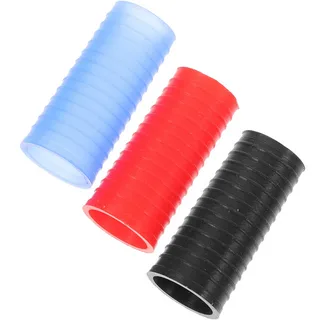
Debossed Logos on Silicone Sleeves
Debossed logos are a subtle texture that forms a recessed logo in the silicone sleeve surface, which is often preferred for a clean, minimal and elegant look.
This recessed effect is done on the mold during the molding process with engraving the logo design into the mold. Well suited for brands looking for a simple touch of grace and finesse, it is an important consideration as to how deep it is if it will become an eyesore when it comes to cleaning and using it in everyday life.
| Debossed Logo Factor | Buyer Consideration |
| Recess Depth | Deeper logos may be more visible but harder to clean |
| Detail Level | Very fine details may not mold clearly |
| Brand Style | Works well for subtle or premium designs |
| Mold Requirement | Must be considered during tooling |
| Cleaning | Recessed areas should be practical for daily use |
| Surface Finish | Matte or soft-touch surfaces may change visual contrast |
| Sample Check | Confirm real logo visibility before mass production |
Silk Screen Printing for Silicone Sleeves
Silicone silk screen printing for silicone sleeves is a great option for applying logos, icons, text and simple graphics to the surface of the product, with a flexibility of colors and level of complexity.
However, due to silicone’s low surface energy, the necessary conditions for silk screen printing silicone are to use compatible inks, surface preparation for printing and testing for adhesion, particularly when it is stretched, washed or handled frequently like sleeves are.
| Printing Factor | Buyer Consideration |
| Ink Compatibility | Silicone surface may require suitable ink and preparation |
| Surface Texture | Rough textures can affect print clarity |
| Logo Placement | Flatter areas usually print more consistently |
| Color Contrast | Printed color should be visible on silicone base color |
| Stretching | Printed areas may experience stress during installation |
| Wear Resistance | Rubbing and washing tests are important |
| Sample Testing | Real samples should be tested before approval |
Laser Engraving on Silicone Sleeves
This silicone sleeve laser engraving process removes or changes the surface layer of the silicone in a highly precise manner, producing permanent markings without the need for adhering to the surface.
Depending on the silicone formulation, base colour, and the existing surface finish, results differ and will require process testing, depending on the desired contrast and readability of logos, text or decorative features.
| Laser Engraving Factor | Buyer Consideration |
| Material Color | Contrast may vary by color |
| Surface Finish | Matte, glossy, or coated surfaces may engrave differently |
| Detail Level | Fine text must be tested for readability |
| Logo Size | Very small logos may not be clear |
| Durability | Does not rely on surface ink |
| Process Testing | Required before confirming production |
| Best Use | Precise logos, text, icons, and technical markings |
Molded Texture and Anti-Slip Surface Patterns
Molded texture is an effective and aesthetic finishing feature of silicone sleeves, which enhances the grip and adds to the concept of the product.
Typically, patterns are ribs, dots, grooves, geometric forms or a specific texture that is only used by a particular brand. The depth and style should balance a firm grip against comfort and convenience of use in a range of settings, such as wet hands, outdoor conditions, etc.
| Texture Type | Best For | Buyer Notes |
| Ribbed Texture | Bottle grip and sports products | Good anti-slip feel but depth should be comfortable |
| Dotted Texture | Grip and decorative surface | Easy to integrate into brand style |
| Grooved Texture | Directional grip | May collect dirt if too deep |
| Matte Texture | Soft appearance and hand feel | Common for premium consumer products |
| Geometric Pattern | Design identity and grip | Needs mold precision |
| Custom Brand Pattern | Unique product differentiation | Should be tested for comfort and cleaning |

Matte, Glossy and Soft-Touch Surface Effects
The surface effect of silicone sleeves can have a dramatic impact on user perception and interaction, ranging from modern aesthetics to tactile comfort.
Matte finishes can offer a modern, non-reflective appearance and feel, whereas glossy surfaces can create a shiny, clean look and potentially accentuate scratches. Soft touch or oil-based coatings can also enhance perceived quality but must be compatible and durable, in addition, for applications involving skin contact or repeated use.
| Surface Effect | Appearance / Feel | Buyer Consideration |
| Matte Finish | Soft, modern, less reflective | Good for premium consumer products |
| Glossy Finish | Bright and smooth | May show scratches or handling marks |
| Soft-Touch Finish | Smooth and premium hand feel | Durability and coating compatibility should be tested |
| Oil Finish | Enhanced feel and surface effect | May require extra processing and testing |
| Natural Silicone Surface | Simple and practical | Appearance depends on mold and material quality |
| Textured Matte Surface | Grip plus premium appearance | Balance texture depth with cleaning needs |
How Surface Finishing Affects Cost, MOQ and Lead Time
The selection of surface finishes can significantly affect the project’s costs, minimum order quantities and production timeline, as they relate to the complexity of the custom silicone molds, the amount of additional processing steps required and the quality assurance needs.
Embossed or debossed logos increase upfront tooling costs, but can decrease the need for post processing; printing or laser engraving increase per-piece operations and testing procedures. MOQ thresholds can also be influenced by complex effects, which is why it is important to discuss these thresholds early in the quoting process.
| Finishing Choice | Possible Cost / Lead Time Impact |
| Embossed / debossed logo | May increase mold complexity but reduces post-printing steps |
| Silk screen printing | Adds printing setup, ink testing, and inspection |
| Laser engraving | Adds processing time per piece |
| Spray coating / oil finish | Adds post-processing, drying, and durability testing |
| Complex molded texture | May increase mold design and tooling difficulty |
| Multi-color design | May increase process complexity and sampling time |
| Custom color matching | Requires material preparation and color approval |
| Retail packaging with logo | Adds packaging design, sourcing, and assembly time |
How to Choose the Right Finishing Method by Product Type
The ideal surface finishing of silicone sleeves is dependent on the product type, context of use, handling habits of the intended user, and positioning of the brand.
The combination of durability, grip, appearance and cost effectiveness differ depending on the application.
| Product Type | Recommended Finishing Options | Why |
| Silicone bottle sleeve | Embossed logo, texture, Pantone color, matte finish | Durable branding and better grip |
| Silicone cup sleeve | Debossed/embossed logo, texture, heat-friendly grip | Combines comfort and brand visibility |
| Electronics protective cover | Laser engraving, molded logo, matte texture | Clean appearance and precise marking |
| Beauty device sleeve | Soft-touch finish, subtle logo, smooth texture | Premium feel and user comfort |
| Pet product sleeve | Molded texture, durable logo, easy-clean surface | Grip, durability, and cleaning matter |
| Outdoor product sleeve | Texture, durable molded logo, weather-resistant finish | Handles wet or rough use conditions |
| Promotional sleeve | Printing or simple molded logo | Balances branding visibility and cost |
| Industrial grip | Texture, raised pattern, molded identification | Improves handling and function |
Quality Control for Silicone Sleeve Surface Finishing
In addition to visual finishes, silicone sleeve surface finishing is subjected to rigorous quality control with functional testing, which helps to ensure consistency between production batches and real-life performance.
Checks need to determine not only the aesthetic but also the practical aspects such as the adhesion, wear resistance and fit following any post-processing.
| Quality Check | Why It Matters |
| Logo clarity | Ensures branding is readable and consistent |
| Logo position | Prevents off-center or distorted appearance |
| Print adhesion | Reduces risk of peeling, fading, or rubbing off |
| Engraving contrast | Confirms logo visibility |
| Texture consistency | Maintains grip and appearance across batches |
| Color consistency | Protects brand color expectations |
| Surface defect inspection | Checks stains, scratches, bubbles, or uneven finish |
| Coating uniformity | Ensures stable touch feel and appearance |
| Wear testing | Helps evaluate daily-use durability |
| Packaging check | Prevents surface damage during shipping |
Common Mistakes Buyers Make With Silicone Sleeve Finishing
Even experienced sourcing teams can encounter challenges with silicone sleeve surface finishing decisions that lead to production issues or suboptimal end products.
Avoiding these common pitfalls helps streamline development and deliver better results.
| Mistake | Better Approach |
| Deciding logo method too late | Choose logo and finishing before mold development |
| Using very fine logo details | Simplify artwork for molding, printing, or engraving |
| Skipping print testing | Test adhesion, rubbing, washing, and stretching |
| Ignoring curved surfaces | Check logo distortion on real sleeve samples |
| Choosing texture only by appearance | Test grip, comfort, and cleaning |
| Approving color from screen images | Approve physical color samples |
| Ignoring coating durability | Test surface feel after handling and cleaning |
| Skipping sample approval | Confirm logo, texture, color, and finish before production |
What Buyers Should Prepare Before Requesting Surface Finishing Advice
Giving detailed information in the beginning enables manufacturers to make more precise suggestions based on the specifications of your silicone sleeve project.
Key information can be used to assess viability of various finishing options in an efficient manner.
| Information to Prepare | Why It Helps |
| Product drawing or sample | Helps evaluate sleeve shape and surface area |
| Logo vector file | Allows accurate embossing, debossing, printing, or engraving review |
| Logo size and placement | Helps prevent distortion on curved surfaces |
| Desired surface finish | Guides matte, glossy, soft-touch, or textured recommendations |
| Pantone color | Supports brand color matching |
| Use environment | Helps choose durable finishing for wet, outdoor, or daily use |
| Cleaning method | Affects printing, coating, and texture selection |
| Contact requirement | Helps review food-contact or skin-contact considerations |
| Quantity estimate | Helps evaluate process setup and cost |
| Packaging requirement | Helps prevent surface damage during packing and delivery |
How to Work With a Manufacturer on Logo and Surface Finishing
Hiring a silicone sleeve manufacturer is a complex process that requires reliability, since they must be able to include surface finishing in every step of the product development, from material selection to final quality control.
A qualified manufacturer supplies in-house expertise including embossing and textured surface design, multiple printing and engraving processes, coating options, sample development and full inspection protocols for effective OEM projects.
| Manufacturer Capability | Why It Matters for Surface Finishing |
| Mold design capability | Helps integrate embossed, debossed, and textured features correctly |
| Material selection support | Ensures silicone material works with the chosen finish |
| Printing capability | Supports printed logos and markings when suitable |
| Laser engraving capability | Allows precise non-ink marking options |
| Surface finishing experience | Helps evaluate matte, glossy, soft-touch, or coated effects |
| Sample development | Lets buyers confirm real logo, texture, and finish before production |
| Quality inspection | Checks logo clarity, adhesion, color, texture, and surface defects |
| Packaging support | Helps protect finished surfaces during shipping |
Conclusion — Surface Finishing Should Be Planned Before Tooling and Sampling
The silicone sleeve surface finishing process has a far-reaching impact on not only the appearance of the product, but also on grip, durability, user experience, and brand effectiveness, in countless applications. Each technique has its pros and cons, such as embossed logos, debossed logos, silk screen printing, laser engraving, custom textures, and special coatings, and they all come with their benefits and disadvantages, which you’ll need to take into account depending upon your product.
Successful projects regard surface finishing as an integral part of the early product engineering. Buyers get best results in terms of functionality, aesthetics, and durability by carefully assessing and comparing options, making the selection prior to mold growth, and approving physical samples. With some experience and expertise in manufacturing, a knowledgeable custom silicone sleeves manufacturer can also offer guidance in making these choices.