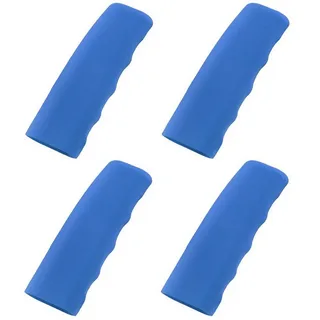

The decision to use an approach of silicone printing is not an entirely aesthetic one since it needs to take into account material compatibility, surface preparation, endurance strain, and scalability of production.
Silicone has the main printing techniques of silk screen printing, pad printing, and laser marking. Both are technically different in the way they are used to mark flat surfaces: silk screen diffuses ink through a mesh stencil onto the surface, pad printing is an ink transfer technique that relies on an etched plate being contacted with a flexible silicone pad and laser marking relies on using an etched plate being contacted with a short pillar of energy to alter the surface through carbonization or ablation, without an ink.
The difference in durability is very large as the very nature of silicone (low surface energy and the ability to flex) indicates that ink-based techniques are susceptible to peeling or degradation through wear, whereas laser marking is permanent because it imparts an actual behavioral change to the substance itself.
It is widely believed that all printing processes will have the same effect on silicone. As a matter of fact, silicone has low surface energy thus the control of adhesion becomes important. Any silicone printing technique is subject to the quality of surface preparation, ink compatibility, and realistic longevity anticipations.
Why Printing on Silicone Is Technically Challenging
Silicone rubber printing poses particular challenges that distinguish it over printing on a rigid material or metal. Our silicone surface finishing services address these challenges through expert surface preparation and proven printing techniques.
The surface energy of silicone is very low (usually 20-24 dynes/cm) and most inks cannot be readily wet by the surface and consequently, silicone ink does not adhes to surfaces readily. Ink would just lie on the surface but fail to adhere to it without proper pre-treatment.
Elastic deformation also creates an extra dimension: silicone components are flexed during operation, and in this case, ink layers on the printed circuit board can crack or delaminate unless the ink is designed to flex with the substrate.
Adhesion can further be reduced by the migration of oil that is contained within plasticizers or mold release agents, and any contamination present on the surface (dust, fingerprints or residues) will result in uneven printing.
Surface treatment Plasma etching or chemical primers is practically always necessary to increase surface energy to 38+ dynes/cm to ensure adherent bonding.
| Challenge | Impact |
| Low surface energy | Ink peeling risk |
| Elastic deformation | Crack or fade |
| Oil migration | Reduced adhesion |
| Surface contamination | Uneven printing |
The most frequent root cause of failures in the field, in my experience when supervising production runs, involves failure to implement silicone surface treatment or doing it inadequately before printing.
Silk Screen Printing on Silicone
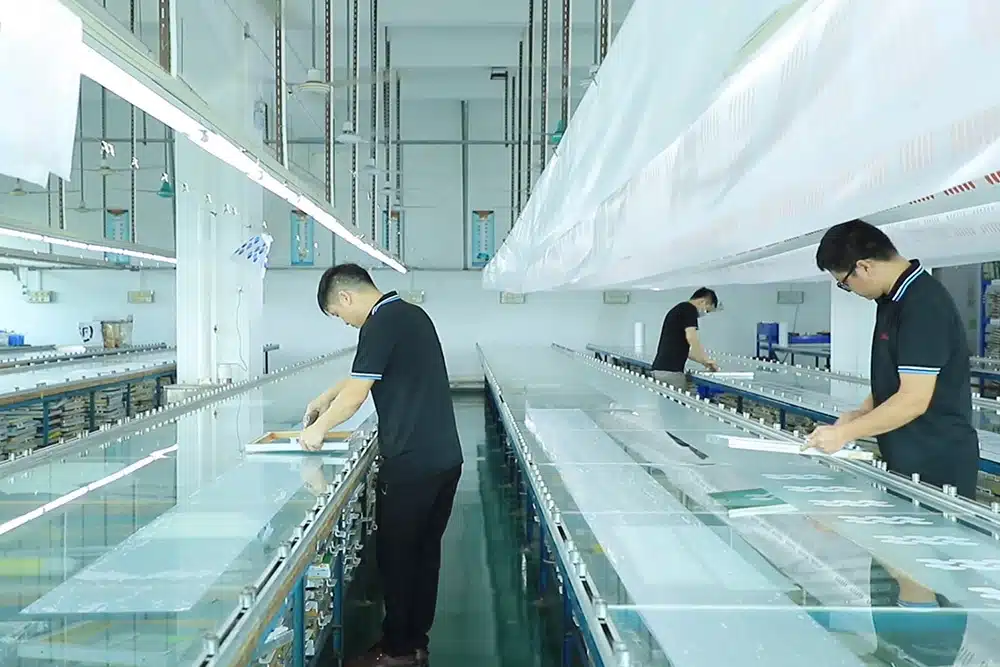
Silicone silk screen printing is always a favoured choice with silicone on large, flat surfaces, and solid graphics which are thick and bold.
It is done by squeezing ink through a fine mesh stencil onto the part. It is simple and can be done in large amounts and it is good at covering extensive surfaces in opaque colors.
Screen printing can usually be very competitive with other methods in order to produce cylindrical or wrap-around designs (such as printing Round Bottles or mats at 360 degrees).
It is, however, restricted on curvy or heavily contoured surfaces – the squeegee is not able to sustain the same amount of force and the thickness may become uneven or more transferrin will not be complete.
| Feature | Evaluation |
| Best for | Flat surfaces |
| Durability | Moderate |
| Color options | Wide |
| Setup cost | Medium |
| Production speed | High |

The ink thickness may also differ slightly over the print, which can be a problem with highly precise uses.
Pad Printing on Silicone
Silicone pad printing is the technique of choice where geometry becomes complicated e.g. curved mobile cases, ergonomically shaped grips, or a recessed section.
A sticky pad, made of soft silicon, clear, picks ink through an etched cliché (plate) and transfers it to the shape of the part. This is an indirect offset technique, which provides better resolution of fine details and copes with discontinuous surfaces much better than direct screen printing.
There is the option of multi-color work; but the colors must be cured separately and this makes throughput slow.
Two factors can be seen in ISIL compatibility: standard inks do not stick unless specifically formulated with silicone or subjected to appropriate curing (typically heat at 200-225o F 4-6 min).
| Feature | Evaluation |
| Best for | Curved surfaces |
| Detail resolution | High |
| Durability | Moderate |
| Setup complexity | Medium |
| Speed | Moderate |
Pad printing has proven to be an ideal process in production used in small to medium-run production where detail is more crucial than volume.
Laser Marking on Silicone
Laser marking removes all traces of ink which means it is the rule of thumb in its use where permanence is a requirement. This makes it a strong option alongside embossing and printing when branding custom logo silicone sleeves.
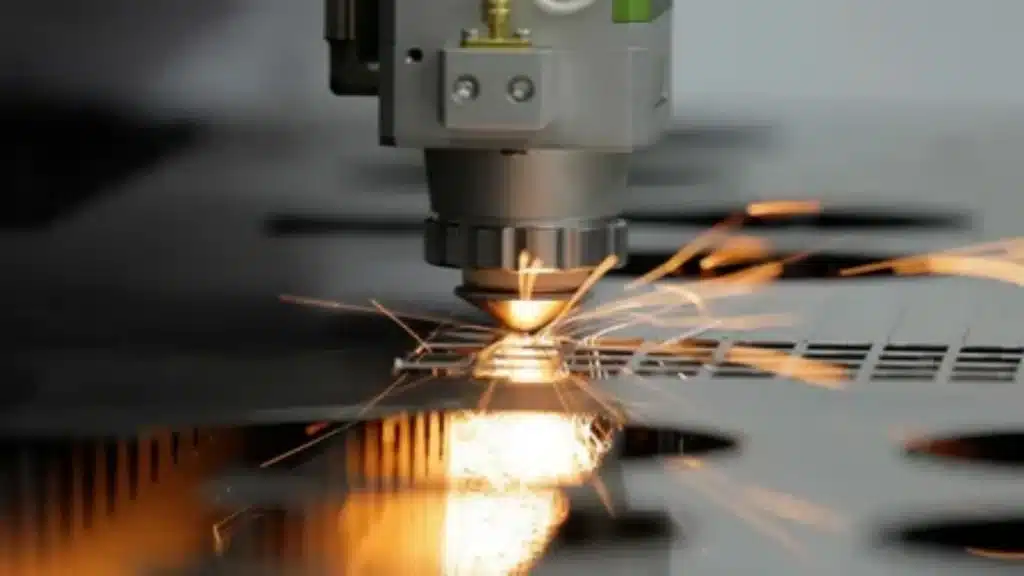
A focused laser beam (usually CO2 or fiber, sometimes UV to provide smaller marks) is used to carbonize, ablate or foam the silicone surface and produce high-contrast marks by physical or chemical alteration.
This causes abrasion, chemical, heat and environmental resistant markings that are much more resistant to the environment when compared to ink based ones.
Color choice is only limited- usually contrasting colors exposed through the underlying material or additive and it suits well with logos, serial numbers, barcodes or plain text.
Initial cost of setup and equipments is more, and maintenance involves no cost of consumable ink.
Regarding appearance variations between methods as in ink processes, the interaction of laser with different surface finishes when using silicone – matte and glossy bases can have an enormous impact on contrast.
| Feature | Evaluation |
| Best for | Logos, serial numbers |
| Durability | High |
| Color options | Limited |
| Setup cost | Higher |
| Environmental resistance | Strong |
Comparison Summary: Which Method to Choose?
Silicone printing methods do not lend universality, however based on the part geometry, durability requirements, volume, and cost, an appropriate choice will be made. For practical examples on sleeves, see our guide to silicone sleeve surface finishing options.
Screen-based and pad-based methods (ink based) have color flexibility, but have strict surface preparation and realistic durability requirements. Laser offers unrivalled permanence and poor multi colour ability.
| Criteria | Silk Screen | Pad Printing | Laser Marking |
| Durability | Medium | Medium | High |
| Color flexibility | High | High | Low |
| Surface flexibility | Low | High | High |
| Cost efficiency | Good for large runs | Moderate | Higher initial |
| Environmental resistance | Moderate | Moderate | Strong |
To be on the safe side, use silk screen in case of flat promotional mats or big logos on baby products. Pad printing is suitable on curved consumer electronics cases. Laser is preferred in industrial parts that require traceability in the harsh environment.
Always design and test in a real-use environment – the same product can work well in the laboratory, but fail when subjected to repeated flexing or exposure.
Common Printing Defects and How to Prevent Them
Silicone printing failures nearly always use failures at adhesion or processing variability.
Ink peeling is the top on the list, as is fading caused by UV or chemical exposure, misalignment caused by poor fixturing, smudging caused by incomplete curing, and color variation caused by batch variation.
| Defect | Root Cause | Prevention |
| Peeling | Poor surface prep | Plasma treatment or primer |
| Fading | Low ink quality | Proper curing + UV-resistant ink |
| Smudging | Inadequate drying | Controlled environment + heat cure |
| Misalignment | Fixture error | Tool precision + operator training |
The first step in prevention is to regularly treat the plasma or corona until it has >38 dynes/cm surface energy, after which proper curing procedures and cleanroom-grade handling are performed.
DFM Considerations for Printed Silicone Parts
Design for manufacturability (DFM) is a much greater factor in printed silicone than most admire. Partnering with an experienced custom silicone sleeve manufacturer helps optimize these DFM decisions early.
Whenever possible allocate flat areas to screen printing; no deep recesses in which pad transfer or laser focus becomes difficult. Apply plan ink early — plan ink that was too thick will crack during flex and too fine will lose transparency.
Always test compatibility before tooling lock-in: run small batches with whatever approach you have decided, expose them to accelerated aging (heat, flex, chemicals), and check their adhesion.
The design engineers and production teams work together at the early stages to develop products and end up catching 80 percent of the problems prior to production gaining mass.
Conclusion — Printing Is a Surface Engineering Decision
Finally, the choice of silicone printing technique is reduced to geometric limitations and real requirements in terms of durability. The same principles apply when adding logos to custom silicone molds.
Opponents of peeling can treat the surface much more than the printing process itself to increase its overall success later in life, though catch-up is unnecessary during its early years until it causes peeling.
Early prototyping and testing reduce the expensive nature of revisions, whilst project viability is maintained by balancing the initial cost with anticipated product life.Ultimately, print some ink on some silicon surface because it is a part of silicone surface engineering, not an addition. Such an attitude produces quality, production parts on a consistent basis.