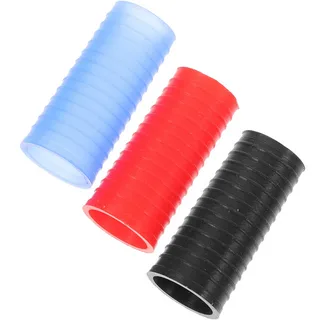

The majority of issues in custom silicone seal orders do not begin at the production line – they begin at an earlier stage when the technical requirements, alignment with suppliers, material choice, and validation criteria are not clearly stated.
In the opinion of many buyers, the process of ordering custom seals is primarily associated with the delivery of a drawing and the delivery of samples. As a matter of fact, the ability to order custom silicone seals successfully is based on how clear the whole project is defined, reviewed, validated and controlled prior to mass production. The best solution to this problem when placing any order of custom silicone seals is to minimize ambiguity in the early stages of design, in drawings, choice of material, tolerances, sampling requirements and communication with suppliers before those problems turn into production errors or field errors
Why Ordering Mistakes Usually Begin Before Production
Virtually all error of commission in the process of ordering custom silicone seal projects is caused well before a molded material is ever produced. The behavior of material, dimensional control and compression logic are very sensitive to custom silicone parts. Even minor misunderstandings during the initial phases may be propagated into sampling delays, fit problems, leakage in the field or even inconsistencies amongst repeat orders.
Seal ordering is a type of purchase that buyers make light of. Nevertheless, it is an interdisciplinary technical procedure, which involves the contribution of engineering, design, and manufacturing views. When these components do not match up at the outset, issues arise in the future where fixing them becomes costly and time consuming.
| Early Project Issue | How It Becomes a Bigger Problem Later |
| Incomplete drawing | Tooling confusion or part mismatch |
| Vague material requirement | Performance inconsistency or rework |
| Weak tolerance planning | Fit and sealing problems |
| No sample criteria | Endless revision loops |
| Poor supplier alignment | Delays and repeat-order instability |

Mistake 1: Sending Incomplete or Unclear Drawings
One of the most common issues when placing an order with custom silicone seals is unclear or incomplete drawings. The suppliers are not able to give correct quotes or viable reviews of tooling without full dimensions, critical tolerances or application context.
An effective drawing package must have both clear 2D views and 3D files where feasible. Functional notes, which outline operating temperature, pressure, media exposure, and assembly approach are equally important. These are useful as the supplier can evaluate manufacturability and propose viable enhancements prior to starting to tool.
| Drawing Problem | Likely Result | Better Approach |
| Missing dimensions | Quote and tooling uncertainty | Provide fully dimensioned drawing |
| No tolerance notes | Inconsistent expectations | Define critical tolerances clearly |
| No application context | Wrong design assumptions | Include operating condition notes |
| Geometry only, no functional detail | Weak manufacturability review | Add sealing and assembly context |
Mistake 2: Treating Silicone as One Generic Material
Sometimes it is not sufficient to simply mention silicone, when it comes to custom molded silicone seals. Each of the applications requires different levels of hardness, compression set resistance, temperature range, chemical compatibility, and service life requirements. A substance that does not perform in one set-up will not last long in a different set-up.
Material mismatch is a performance problem which manifests itself only after weeks or months of operation, resulting in expensive field failures or redesigns. Specification of the application need at the outset enables the supplier to give the most appropriate compound rather than reverting to a generic compound.
| Material Mistake | Likely Result | Better Approach |
| Generic “silicone” request only | Quote inconsistency and weak fit-for-use | Clarify application and performance needs |
| Hardness chosen without design review | Poor compression response | Match hardness to geometry and use case |
| No exposure review | Premature degradation | Review temperature and environment early |
| No recovery requirement defined | Weak long-term sealing force | Consider compression set expectations |

In describing the clarity of materials needed in challenging sealing applications, most of the teams find it helpful to review successful custom molded silicone seals solutions that have already solved similar technical issues.
Mistake 3: Ignoring Tolerances Until Problems Appear
Silicone seals are especially prone to dimensional change since sealing performance relies on uniform compression and interference fit. Defining tolerances or using the same tolerance to all features can usually result in either leakage or unnecessary manufacturing cost.
Unnecessarily stringent tolerances on non-functional components raise tooling and manufacturing costs without enhancing functionality. On the other hand, lax standards regarding sealing surfaces may reduce reliability. The trick lies in determining significant dimensions at the initial stage of design, defining critical tolerances, and balancing them with the needs in functions and production possibility.
| Tolerance Issue | Likely Result | Better Approach |
| No critical tolerance defined | Inconsistent sealing performance | Identify key sealing dimensions |
| Tight tolerance on non-critical feature | Higher cost without value | Prioritize function-critical dimensions |
| Loose tolerance on sealing area | Leakage or fit instability | Align tolerance with sealing function |
| No production-capability review | Repeat-order inconsistency | Review tolerance with supplier early |
Mistake 4: Approving Samples Without Clear Validation Standards
Most sample clearances are based on subjective judgment as in the case of looks okay. This strategy poses difficulties when the component goes into production since the expectations were not recorded in writing.
Good sample validation must include fit, compression, dimensional, appearance, and operating in simulated operating conditions.The isolation of design confirmation and production readiness also avoids problems of scaling in the future.
| Sample Approval Weakness | Likely Result | Better Approach |
| No approval checklist | Repeated confusion | Define approval items before sampling |
| Visual-only approval | Functional risk remains | Check fit, compression, and dimensions |
| Prototype treated as production-ready | Scale-up problems | Validate production readiness separately |
| No revision tracking | Approval confusion | Control version updates clearly |
Mistake 5: Choosing a Supplier Mainly by Price or Speed
When a supplier is chosen by simply choosing the lowest price or the quickest response, this may increase the overall project costs. The ability to handle the tooling, maintain discipline in quality control, and effective communication in technical terms have a far more significant influence on the final results.
A supplier that offers intelligent engineering response at the quoting phase will normally be reliable as compared to that one that responds fast. The early assessment of these factors will assist in preventing subsequent alterations in tooling, quality, or delays in deliveries.
| Supplier Selection Mistake | Likely Result | Better Approach |
| Lowest-price-only decision | Hidden quality and delay cost | Evaluate full project capability |
| Fast reply mistaken for technical strength | Weak engineering support | Review technical feedback quality |
| No tooling review | Mold and fit issues | Assess tooling capability early |
| No repeat-order assessment | Long-term instability | Check process consistency and QC |
Mistake 6: Overlooking Quality Control Until After Shipment
Silicone seal orders should be evaluated in terms of quality control at the quoting and sampling stage and not at the time of parts delivery.The dimensions, inspection points, consistency of cure, surface finish and stability between batches are critical aspects.
The lack of accepted inspection standards and process controls can lead to small differences that may add up and impact assembly or field performance. The expectations can be discussed prior to the release of purchase orders and this can assist in building a common understanding on what is acceptable quality.
| QC Oversight | Likely Result | Better Approach |
| No dimensional inspection plan | Fit inconsistency | Define critical inspection points |
| No cure/process control review | Elasticity variation | Ask how process stability is maintained |
| No appearance standard | Visual defect disputes | Align defect standards early |
| No batch consistency focus | Repeat-order problems | Review ongoing QC discipline to improve repeat-order consistency |
Mistake 7: Failing to Control Communication and Revision Changes
A typical cause of production faults in custom silicone seal projects is version confusion and loss of focus on communication. In the absence of clearly documented and approved in writing sample feedback, revisions, or approval decisions, old files might make it to the production floor.
A carefully defined revision control plan combined with assigning approval authority will ensure that there are no mismatched expectations and the chance of producing the incorrect version is minimized.
| Communication Problem | Likely Result | Better Approach |
| Unclear revision ownership | Wrong version enters production | Define approval responsibility |
| Scattered feedback across channels | Missed updates | Centralize technical decisions |
| No written confirmation of changes | Disputes and confusion | Confirm changes formally |
| No production-release checkpoint | Premature manufacturing | Use final approval gate before PO |
How to Avoid These Mistakes with a Better Ordering Process
The majority of problems during ordering custom silicone seals can be avoided with the help of a more organized approach to the process that is based on technical clarity and early alignment, supported by a better ordering process. The shift of technical definition, the choice of materials, tolerance planning, and validation as conscious and not as an after-thought process tends to provide easier first orders and more repeat-stable production.
| Better Process Step | Why It Helps |
| Clear drawing package | Reduces quote and tooling ambiguity |
| Defined material expectations | Improves application fit |
| Critical tolerance review | Protects function and cost balance |
| Structured sample approval | Reduces revision loops |
| Supplier capability assessment | Improves execution stability |
| Revision-control discipline | Prevents production mistakes |

A Practical Checklist Before Ordering Custom Silicone Seals
A checklist of simple items prior to placing a purchase order can bring the engineering, purchasing, and supplier groups into harmony and can also save a lot of avoidable errors.
| Checklist Item | Why It Should Be Confirmed |
| Final drawing or 3D file ready | Supports accurate quote and review |
| Application conditions defined | Guides material and design decisions |
| Material and hardness clarified | Reduces mismatch risk |
| Critical tolerances identified | Protects sealing performance |
| Sample approval criteria agreed | Speeds validation and reduces confusion |
| QC expectations reviewed | Improves repeat-order confidence |
| Supplier communication process clear | Reduces execution risk |
| Revision version control established | Prevents outdated production files |

Conclusion — Most Ordering Problems Are Preventable with Better Early Decisions
Errors with custom silicone seal orders are mostly avoidable when purchasers take the ambiguity out of their purchase at the very beginning and take the act of placing an order as a technical, manufacturing, and communication process, rather than a purchasing one. Improved drawings, improved validation, improved supplier review and improved revision control tend to create less bumpy projects and more reliable long-term performance.