
What Is Silicone Silk Screen Printing?
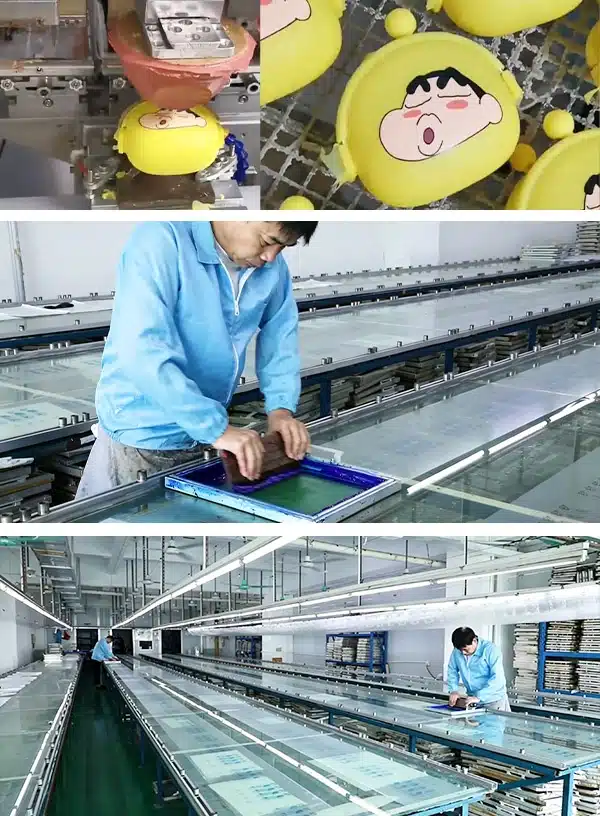
Silicone silk screen printing — also called silicone screen printing or silicone serigraphy — is a surface decoration process in which silicone-compatible ink is pushed through a fine mesh screen onto the surface of a molded silicone part using a squeegee blade.
Unlike standard screen printing used on fabric or plastic, printing on silicone rubber requires a completely different approach. Silicone is chemically inert and non-porous, which means conventional inks simply will not bond to its surface. To achieve a durable, flexible print, we use two-component silicone-based inks that are chemically compatible with the silicone substrate — creating a strong molecular bond rather than just sitting on top of the surface.
The process follows four key steps:
- Surface Preparation — The silicone part is cleaned and treated (using plasma treatment or a specialized primer) to improve ink adhesion.
- Screen Making — A custom screen is produced based on your artwork, with mesh count selected to match the level of detail and ink deposit required.
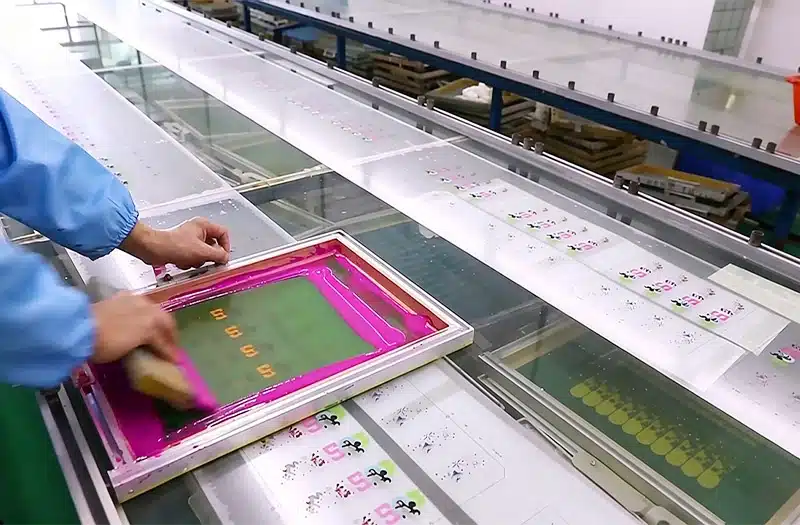
- Printing — Ink is applied through the screen onto the silicone surface using a controlled squeegee pass. Multi-color designs are printed in separate passes with precise registration.
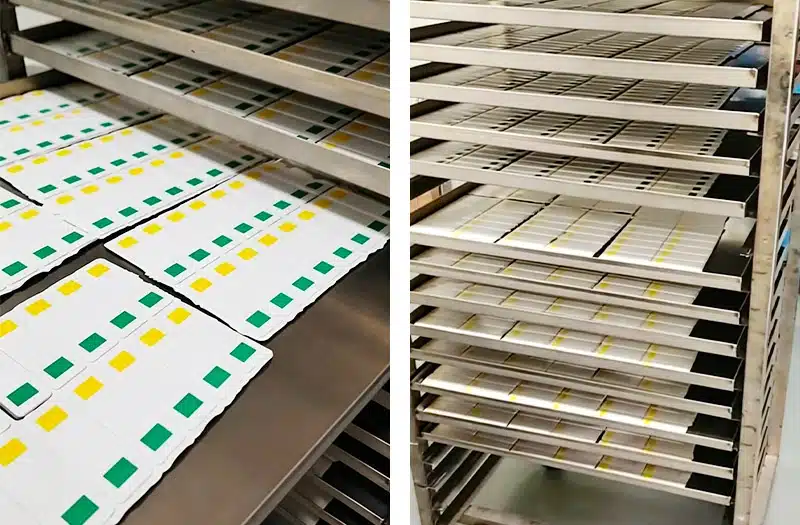
- Curing — The printed parts are heat-cured in an oven to fully cross-link the silicone ink with the substrate, ensuring durability and flexibility.
The result is a vivid, flexible, and abrasion-resistant graphic that moves with the silicone part — without cracking, peeling, or fading under normal use conditions.
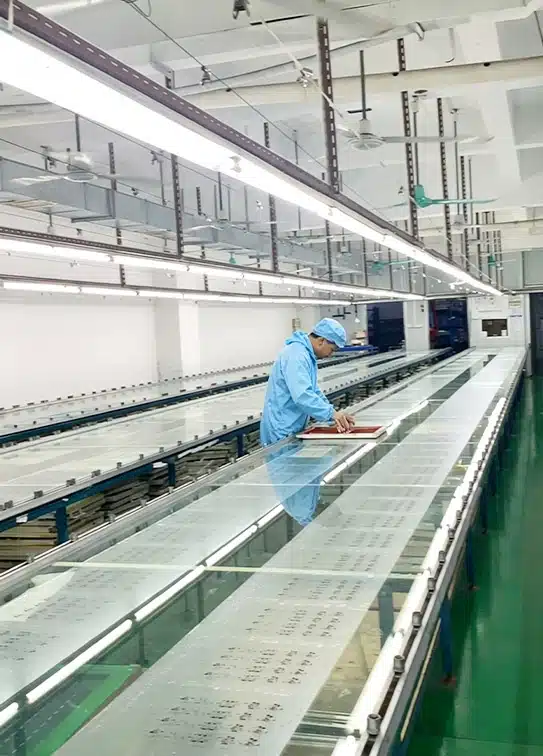
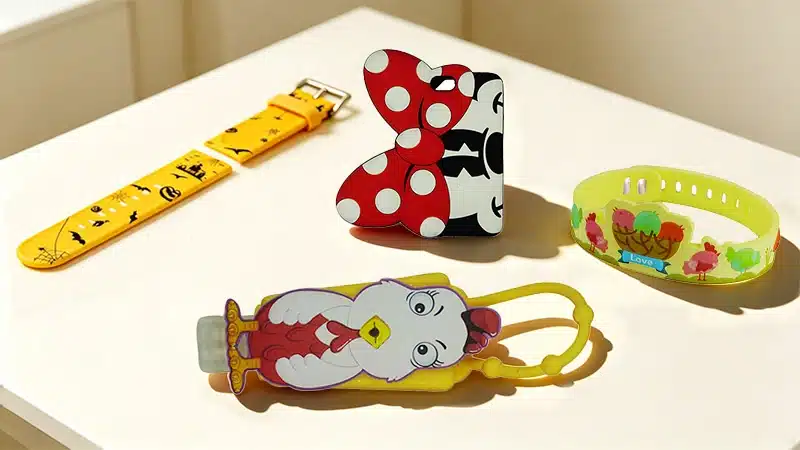
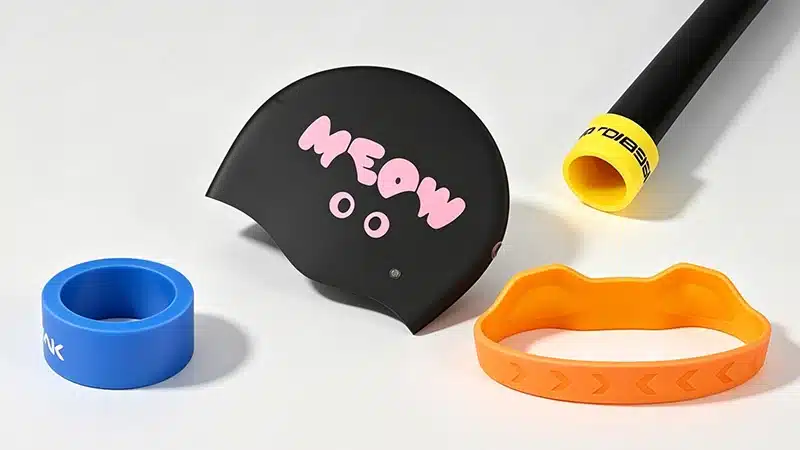
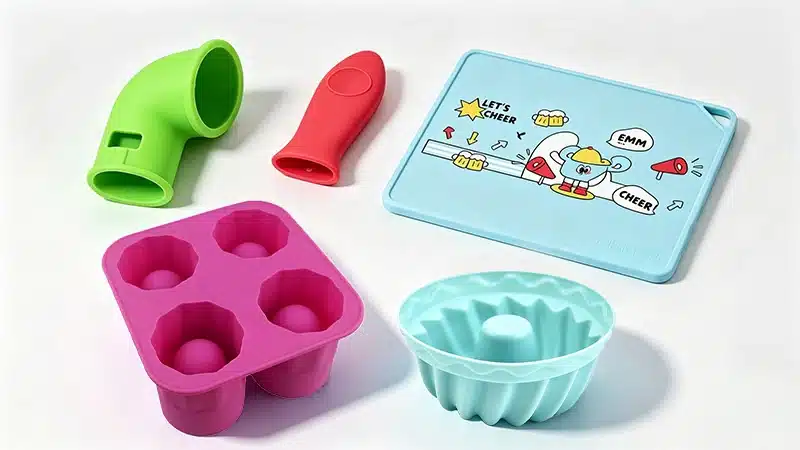
Typical Silicone Products We Screen Print
Our silicone screen printing service covers a wide range of molded silicone components across industries.
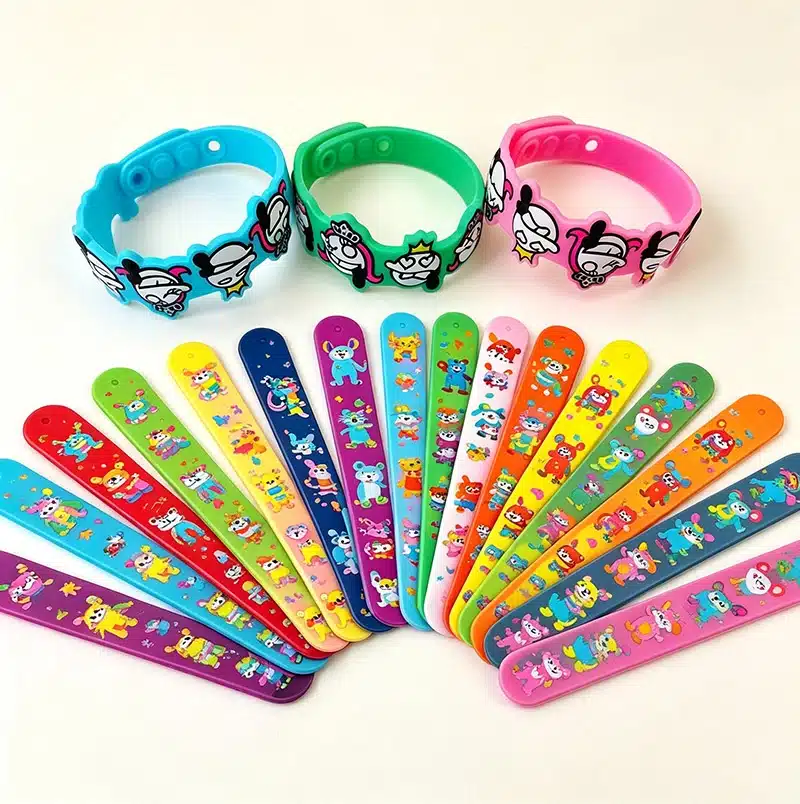
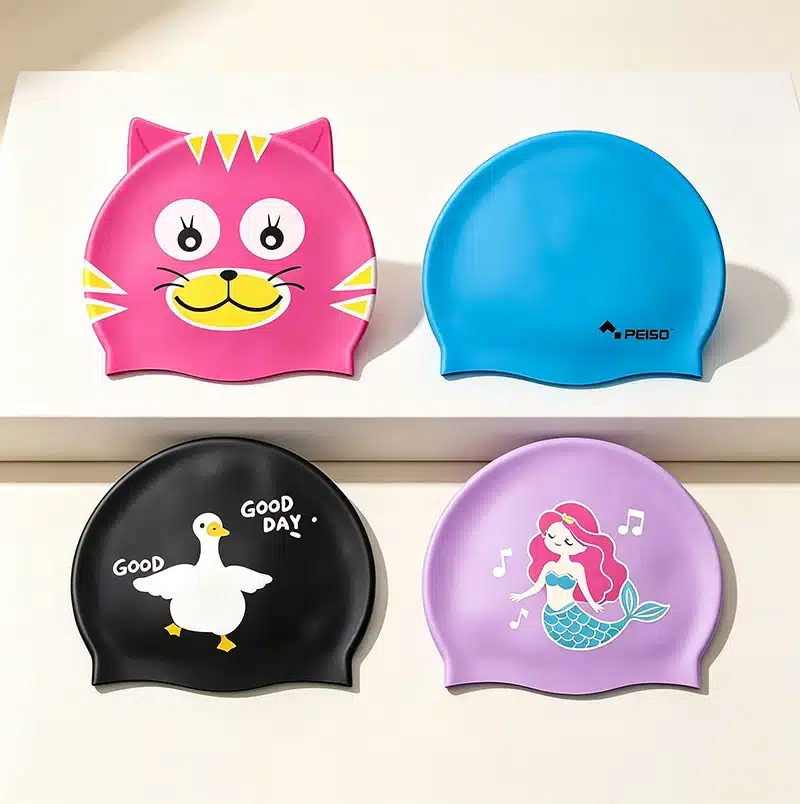
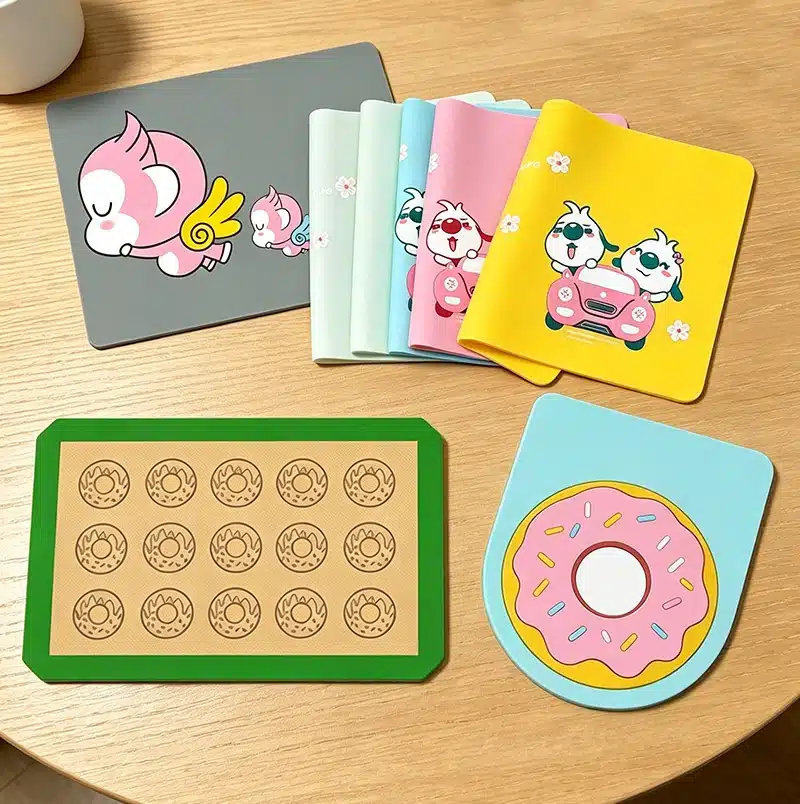
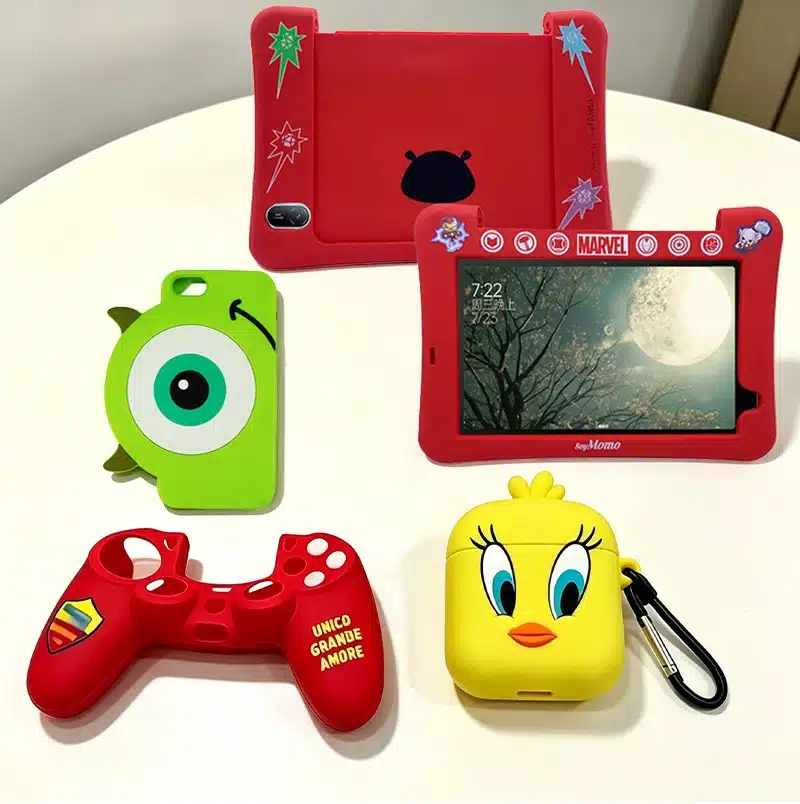
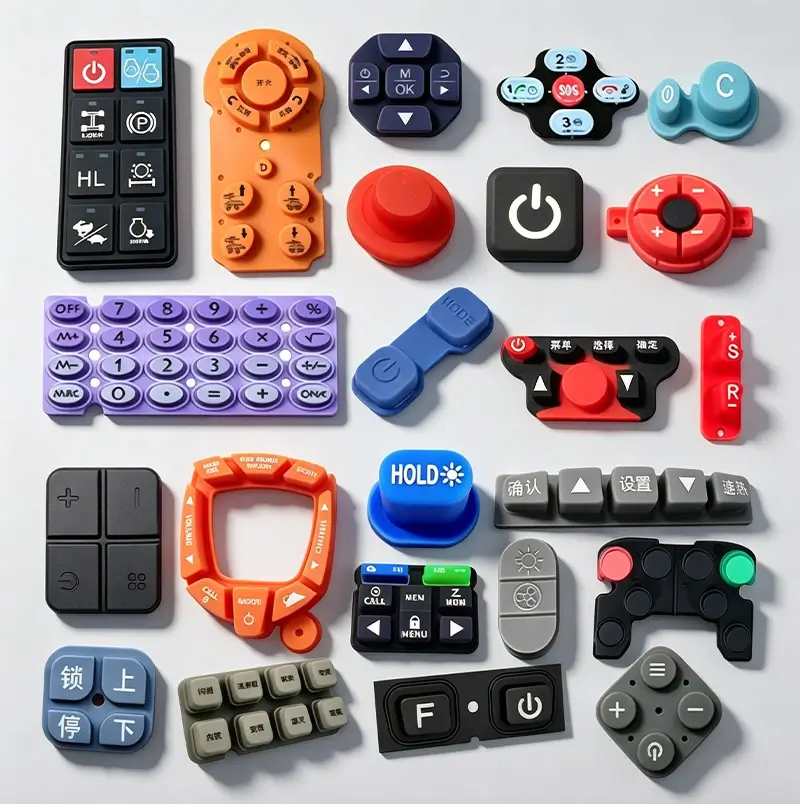
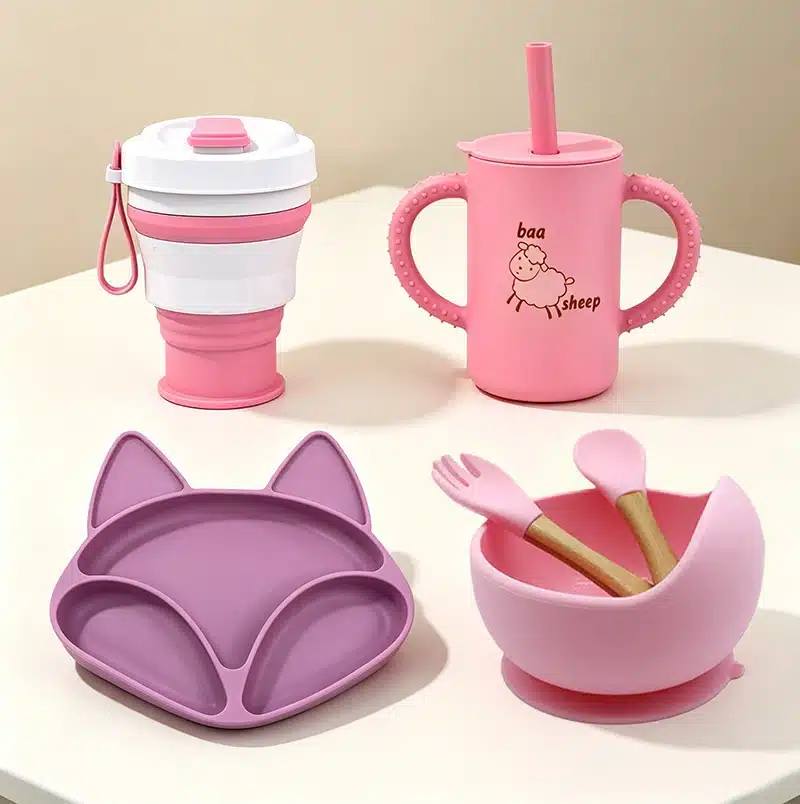
If your silicone product is not listed here, contact us — we work with a wide variety of part geometries and applications and can advise on the best printing approach for your specific product.
Our Silicone Screen Printing Process
Surface Preparation
Before any ink is applied, each silicone part is carefully cleaned to remove mold release agents, dust, or surface contaminants that could interfere with ink adhesion. Depending on the part geometry and ink system used, we apply either a silicone-specific primer or use plasma surface treatment to activate the silicone surface and maximize bonding strength between the ink and the substrate.
This step is critical. Skipping or under-performing surface preparation is the most common cause of print adhesion failures in silicone — and we take it seriously on every production run.
Artwork Review and Screen Making
Once your artwork file is approved (we accept AI, PDF, and EPS formats), our team performs a pre-press review to check for color separations, line weight suitability, and registration alignment across colors.
We produce custom screens in-house, selecting the appropriate mesh count based on your design requirements:
- Lower mesh count — for heavy ink deposits on bold, large-area graphics.
- Higher mesh count — for finer details, smaller text, and tighter registration on multi-color designs.
Pantone color matching is performed at this stage to ensure printed colors meet your brand standards.
Printing
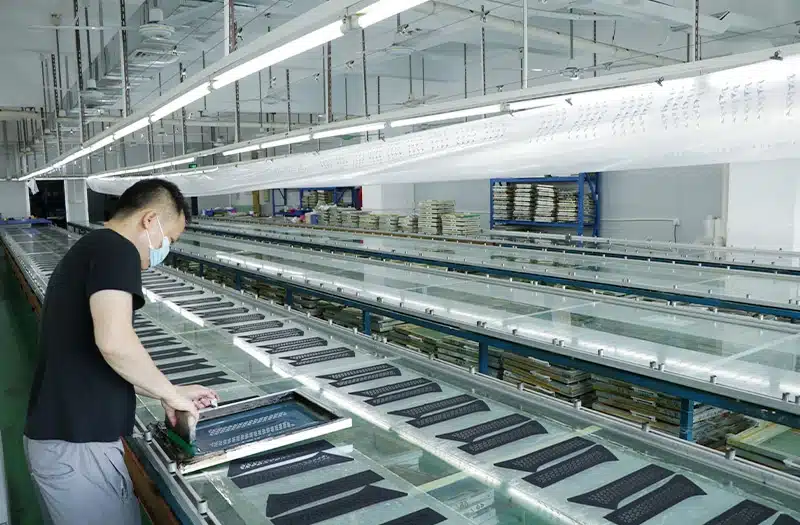
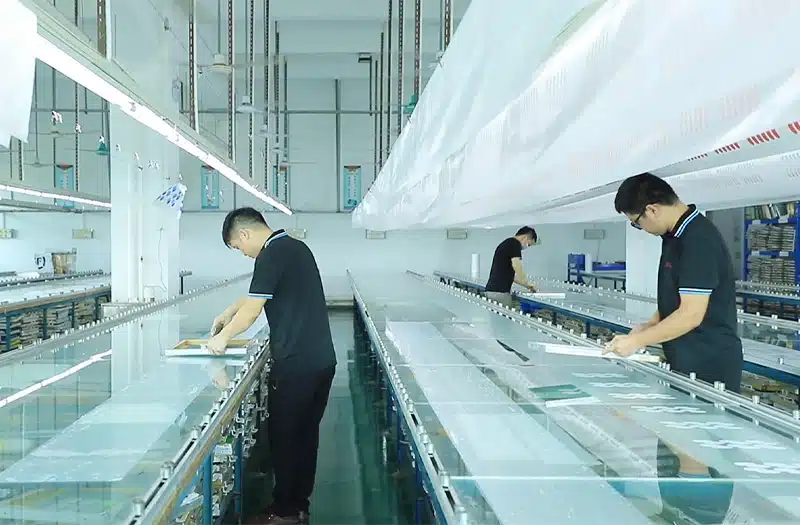
Parts are positioned and fixtured on the printing platform to ensure accurate, repeatable placement of the design. The screen is aligned to the part, and silicone-based ink is applied using a controlled squeegee pass.
For multi-color designs, each color is printed in sequence with intermediate curing between passes to maintain registration accuracy and prevent color bleeding. Our team monitors ink viscosity, squeegee pressure, and speed throughout the run to maintain consistent print quality across the entire production batch.
Curing
After printing, parts are transferred to a curing oven where they are heat-processed at a controlled temperature and duration. This curing step is essential: it triggers the cross-linking reaction between the silicone-based ink and the silicone substrate, creating a durable, flexible bond that resists peeling, cracking, and abrasion.
Curing parameters are validated for each ink system and part type to ensure full cure without affecting the dimensional or mechanical properties of the silicone part.
Quality Inspection
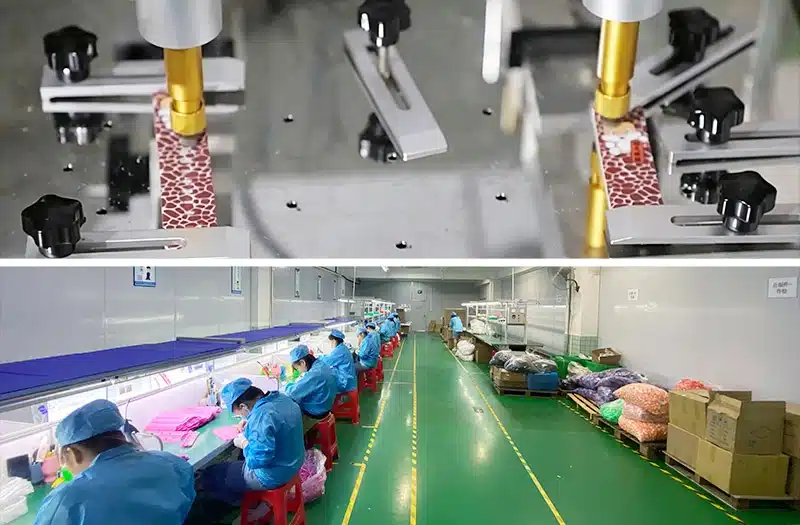
Every production batch undergoes quality inspection before shipment. Our standard checks include:
- Adhesion test — cross-hatch tape test to verify ink bonding strength.
- Abrasion resistance check — rubbing test to simulate real-world wear.
- Color inspection — visual and instrument-based color comparison against approved standard.
- Print registration — alignment verification for multi-color designs.
- Appearance inspection — check for smearing, pinholes, ink bleed, or incomplete coverage.
Inspection records are maintained for each order, and we can provide quality documentation upon request for customers with formal supplier qualification requirements.
Technical Capabilities
| Suitable Part Shapes | Flat surfaces, slightly curved surfaces, cylindrical 360° wraparound |
| Ink System | Two-component silicone-based inks (flexible, chemically compatible with silicone rubber) |
| Color Matching | Pantone color matching available; custom color mixing |
| Number of Colors | Single color to multi-color (printed in separate passes) |
| Print Durability | Abrasion resistant, flexible, weather resistant; suitable for consumer and industrial use |
| Surface Treatment | Plasma treatment or silicone primer (applied per part type and ink system) |
| Artwork Formats | AI, PDF, EPS (vector files preferred for best print quality) |
| Production Volume | Prototype samples to large-scale mass production |
| Substrate Compatibility | Solid silicone rubber (LSR and HTV/HCR), food-grade silicone, medical-grade silicone |
* Specific print area dimensions and tolerances depend on part geometry. Contact our engineering team for a project-specific assessment.
Industries We Serve
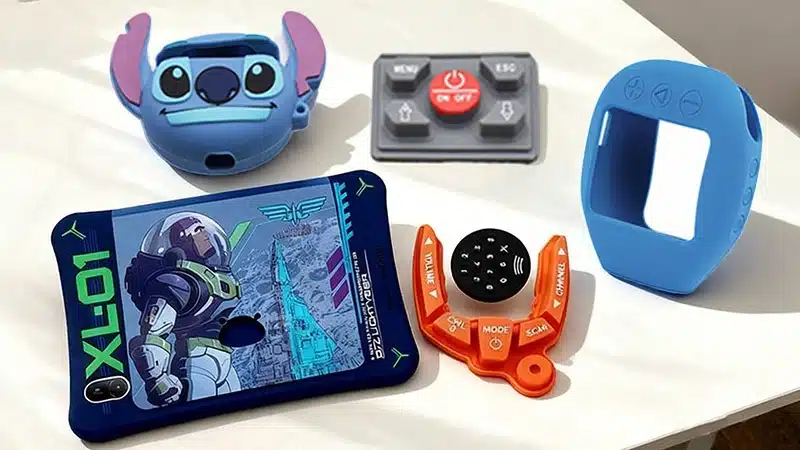
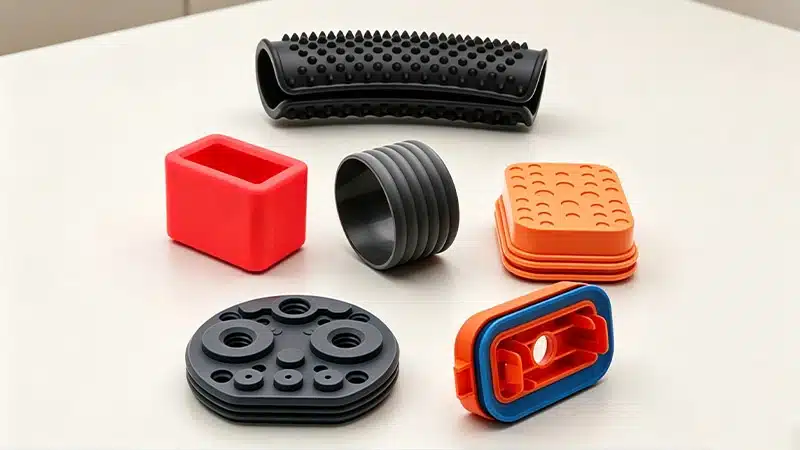
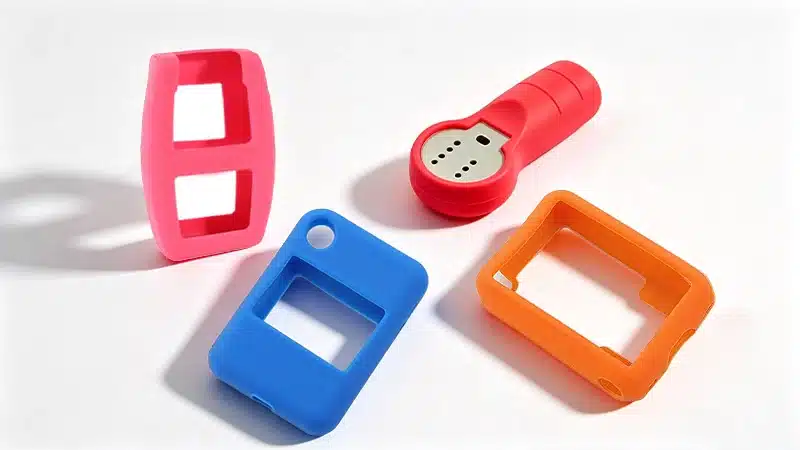
Why Work With HT Silicone?
Choosing a screen printing supplier is not just about print quality — it is about working with a partner who understands silicone from the material level up.
In-House Complete Capability
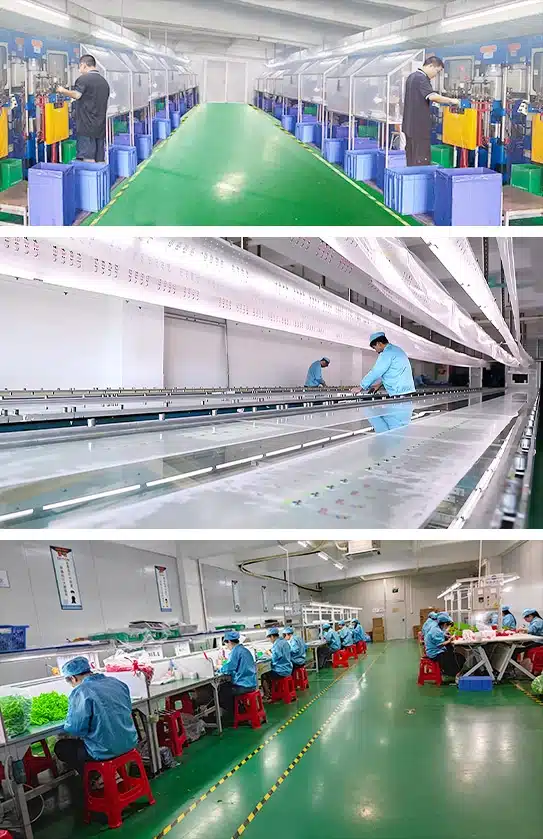
We design and build molds, compound and mold silicone parts, perform surface printing, and handle assembly and packaging — all under one roof. This means tighter quality control, shorter lead times, and clearer accountability.
Silicone Material Expertise
We work exclusively with silicone rubber. Our team understands how different silicone formulations, Shore hardness levels, and surface finishes affect print adhesion and appearance — and we factor this into every project from the start.
Engineering Support from Day One
Whether you have a fully engineered part ready for printing or are still in the concept stage, our engineers can advise on part design for printability, ink selection, color feasibility, and tolerance requirements.
Consistent Quality for International Brands
We work with consumer brands, industrial OEMs, and promotional product companies across North America, Europe, and Asia-Pacific. Our quality processes are built to meet the inspection and documentation requirements of international brand customers.
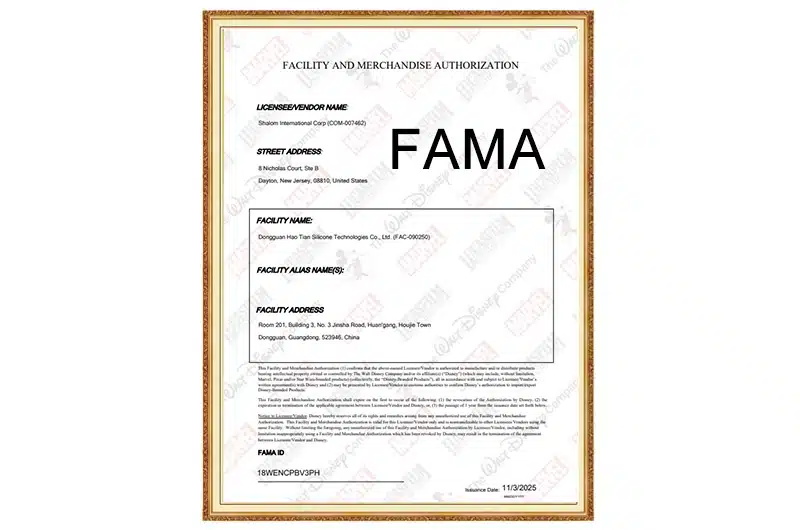 Disney FAMA
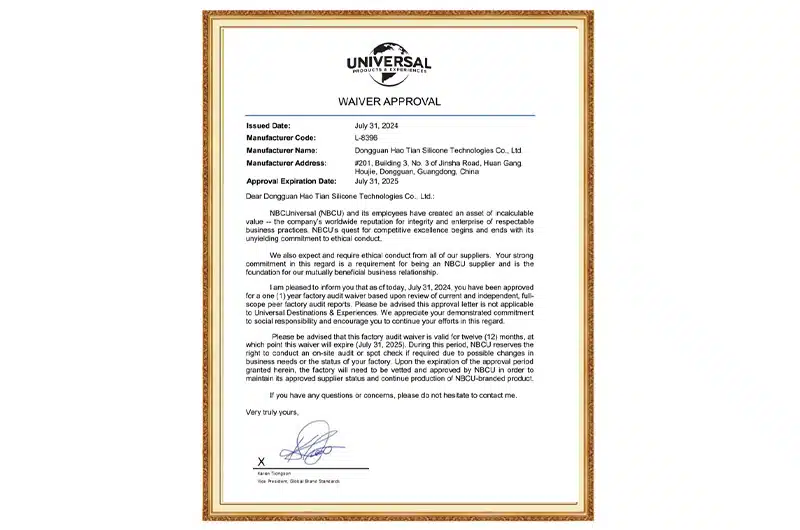 Universal Studios
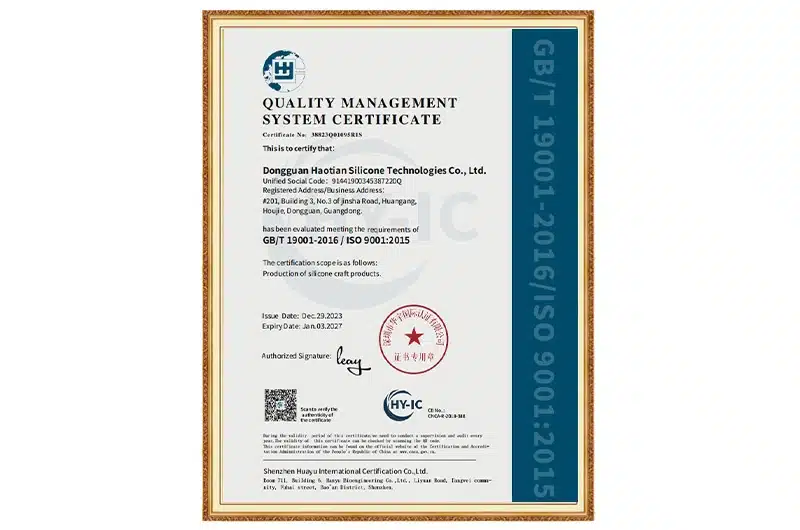 ISO 9001
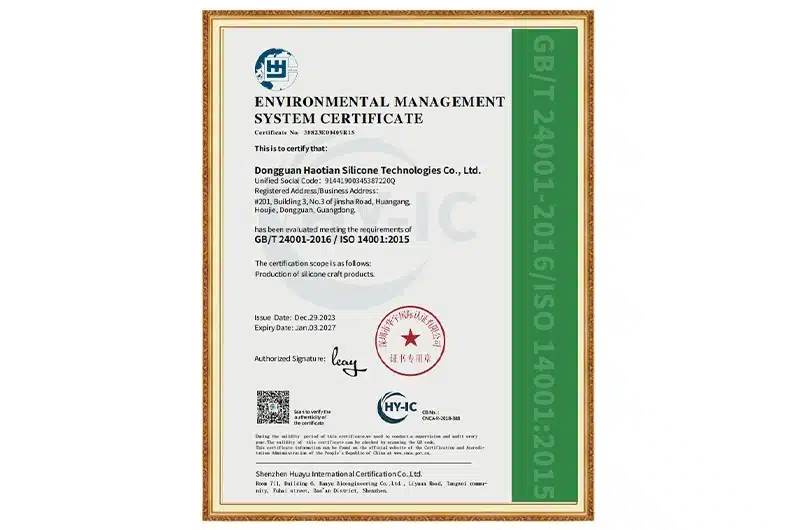 ISO 14001
 SMETA
SMETA
 BSCI
BSCI