Custom Silicone Mold Manufacturing for Precision Production
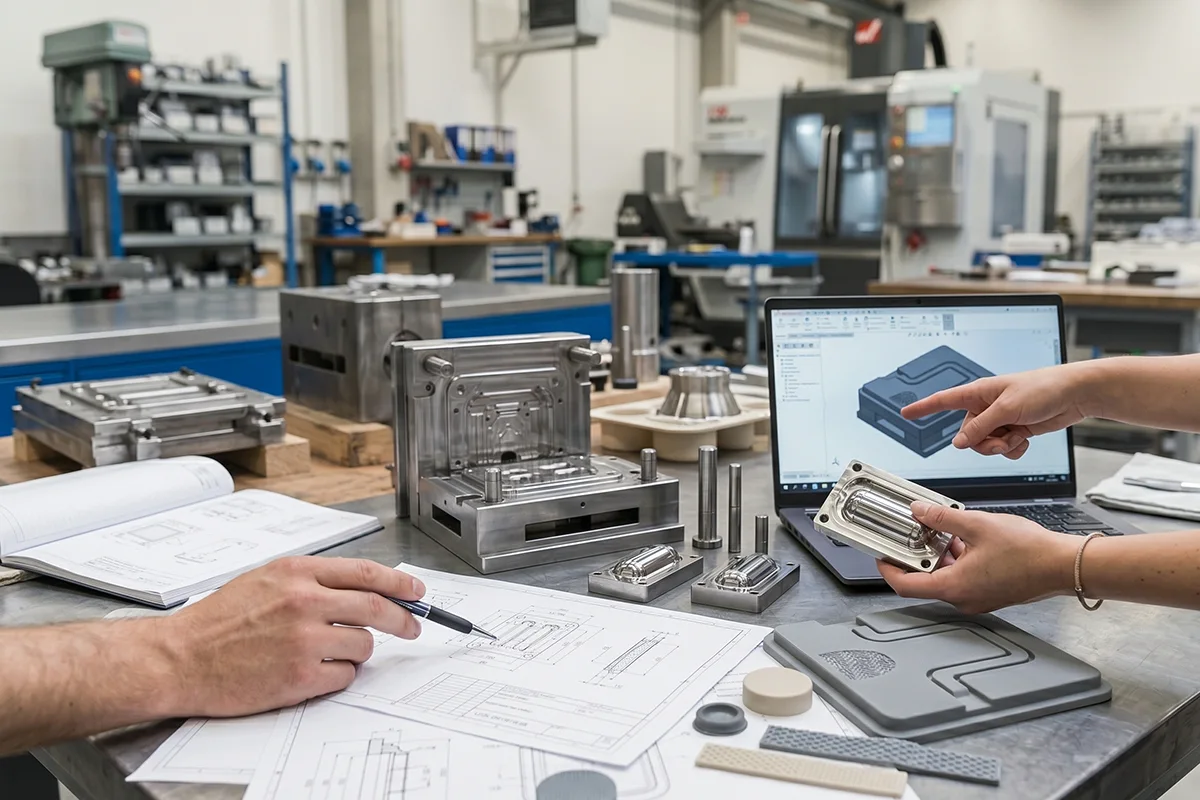
We design and manufacture custom silicone molds in-house — from single-cavity prototype tools to high-volume multi-cavity production molds. Our integrated tooling and molding process ensures tighter tolerances, faster lead times, and direct engineering support at every stage.
Silicone Mold Manufacturing Capabilities
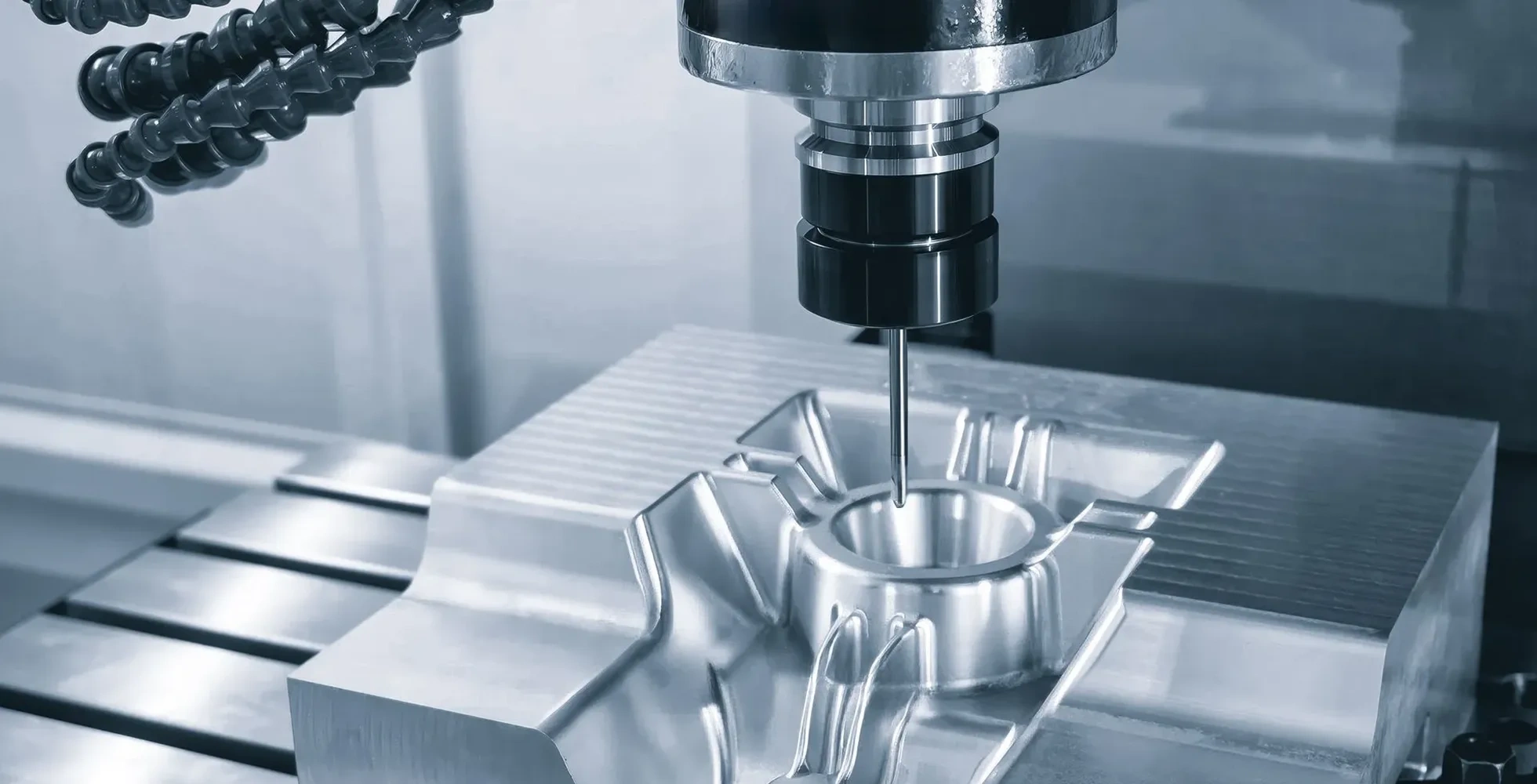
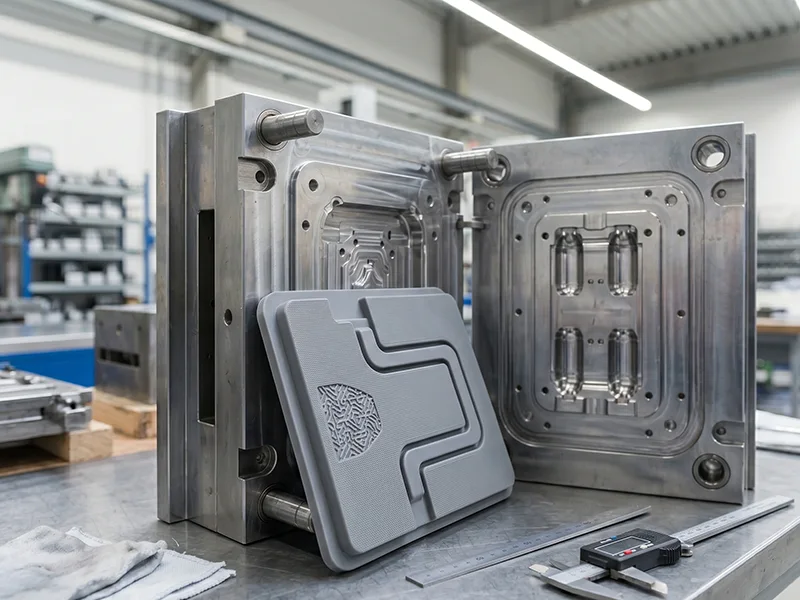
Our in-house tooling team handles the full mold development cycle — from design review and DFM analysis to CNC machining, fitting, trial sampling, and final approval. We work with P20, 718H, and S136 steel grades depending on the production volume and surface requirements of each project.
Whether you need a rapid prototype tool to validate a concept or a high-volume multi-cavity mold for mass production, we size and build the tooling to match your output targets, budget, and timeline — with full documentation and mold maintenance support included.
Because tooling and production are managed under the same roof, engineering changes are faster, trial runs happen on our own molding machines, and any adjustments are resolved without the delays of outsourcing.
- CNC-machined steel molds with tight dimensional tolerances
- Prototype tooling and rapid sample development
- Multi-cavity production molds for high-volume output
- DFM review and mold design optimization before cutting
- Full mold trial, inspection, and approval process
- Mold storage, maintenance, and lifetime management
Types of Silicone Molds We Manufacture
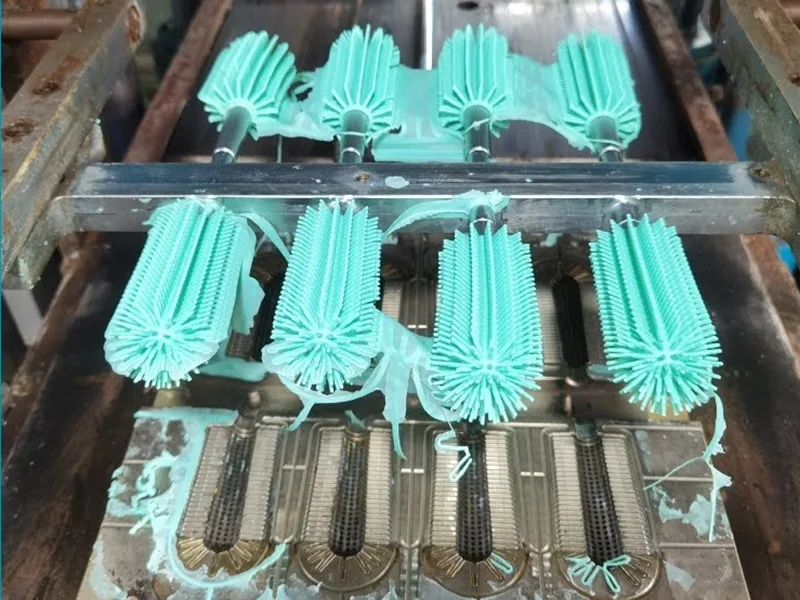
From single-cavity prototype tools to complex multi-cavity production molds, we manufacture tooling to match your project scale, geometry, and surface requirements.
Compression Molds
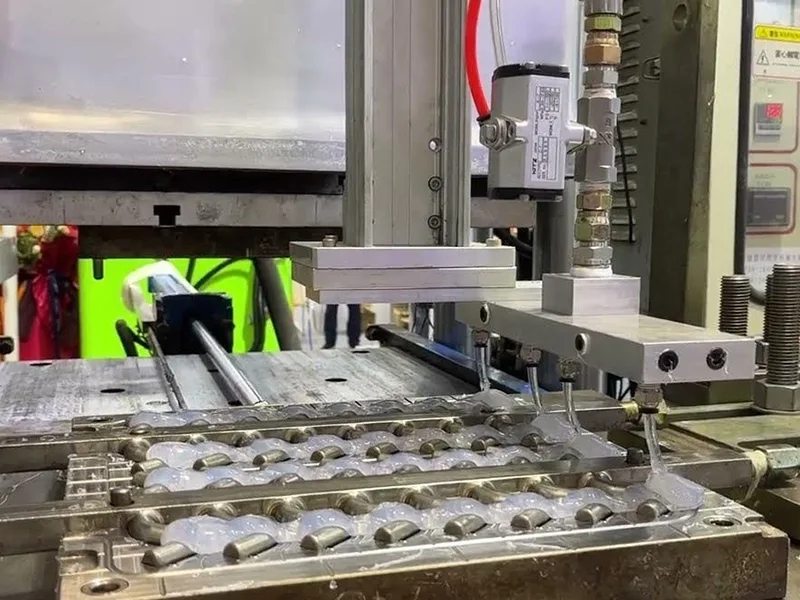
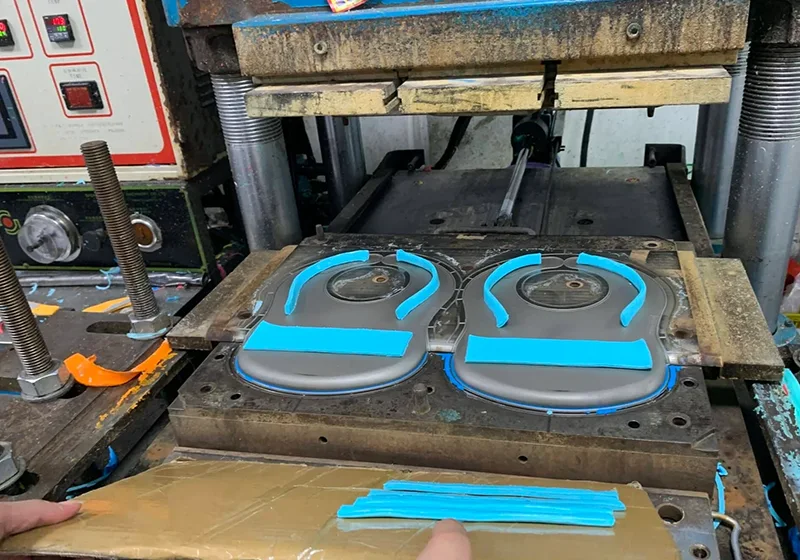
Compression molds are the most widely used tooling type for custom silicone parts. Solid silicone compound is placed directly into the open mold cavity, then pressed and cured under heat and pressure. This process suits a broad range of part geometries, shore hardnesses, and production volumes — from low-quantity prototype runs to high-volume mass production.
- Suitable for most solid silicone parts
- Cost-effective tooling investment
- Wide shore hardness range (20A–80A)
- Ideal for prototype and production volumes
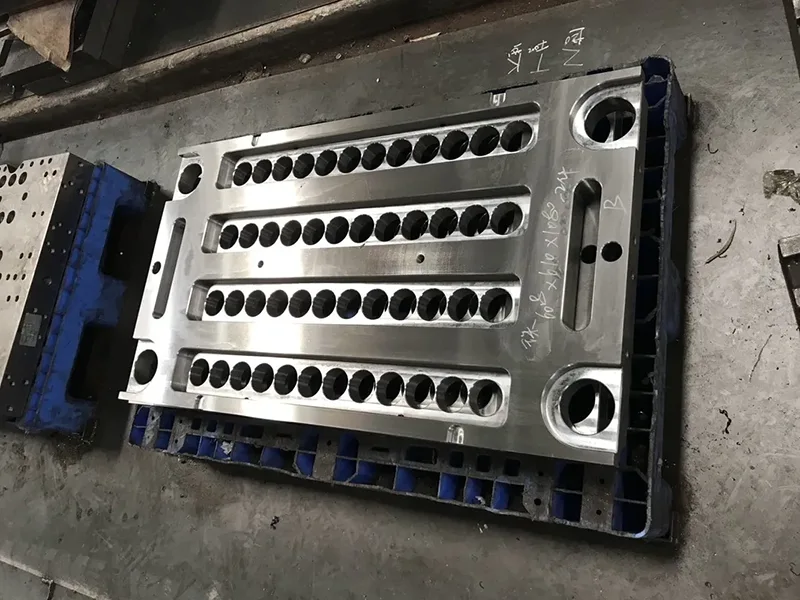
Multi-Cavity Molds
Multi-cavity molds allow multiple identical parts to be produced in a single press cycle, significantly reducing per-unit cost and increasing output efficiency. We design cavity layouts based on part size, material flow, and press capacity to ensure consistent quality across all cavities throughout the full production run.
- Higher output per press cycle
- Lower per-unit production cost
- Balanced cavity layout for part consistency
- Recommended for MOQ 5,000 units and above
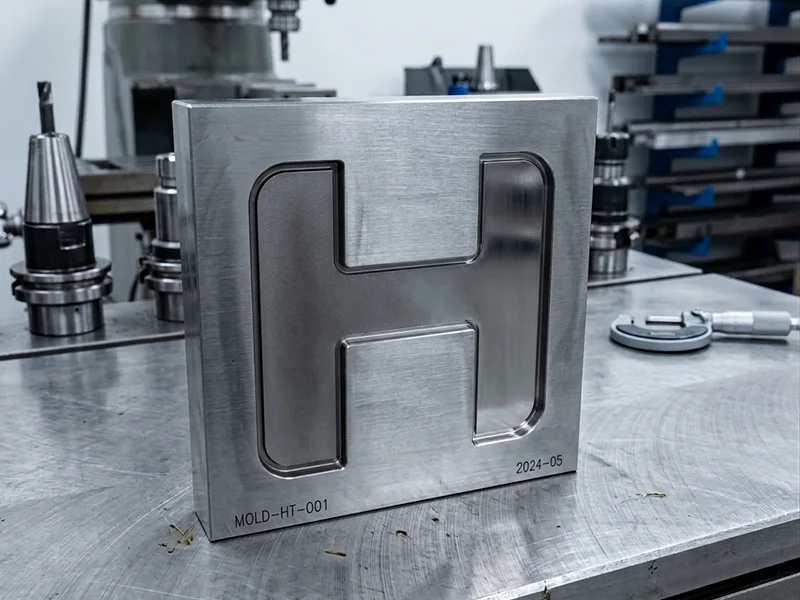
Custom Texture & Logo Molds
Surface detail and brand identity can be built directly into the mold cavity. We engrave custom textures, logos, part numbers, and tactile patterns into the steel using CNC machining and EDM processes. This eliminates secondary printing steps and produces permanent, wear-resistant surface features that hold up across thousands of production cycles.
- Logo and text engraving in-cavity
- Custom tactile and decorative textures
- CNC and EDM engraving processes
- Permanent, no secondary printing needed
Our Mold Manufacturing Process
Every mold we build follows a structured, engineering-led process — from the first drawing review to final production approval. Here is how a typical tooling project moves through our workshop.
-
01
Drawing Review & DFM Analysis
We begin by reviewing your 2D drawings, 3D files, or physical samples. Our engineers conduct a Design for Manufacturability (DFM) analysis to identify potential issues with wall thickness, draft angles, undercuts, and parting line placement before any steel is cut.
-
02
Mold Design & Engineering Confirmation
Based on DFM feedback and project requirements, our tooling engineers develop the mold design — including cavity layout, runner system, venting, ejection mechanism, and steel grade selection. We share the mold design for customer confirmation before proceeding.
-
03
Steel Procurement & Material Preparation
We source and prepare the appropriate steel grade for your mold — P20 for standard production tools, 718H for higher-volume or more demanding applications, and S136 stainless steel for projects requiring corrosion resistance or mirror-finish surfaces.
-
04
CNC Machining & EDM Processing
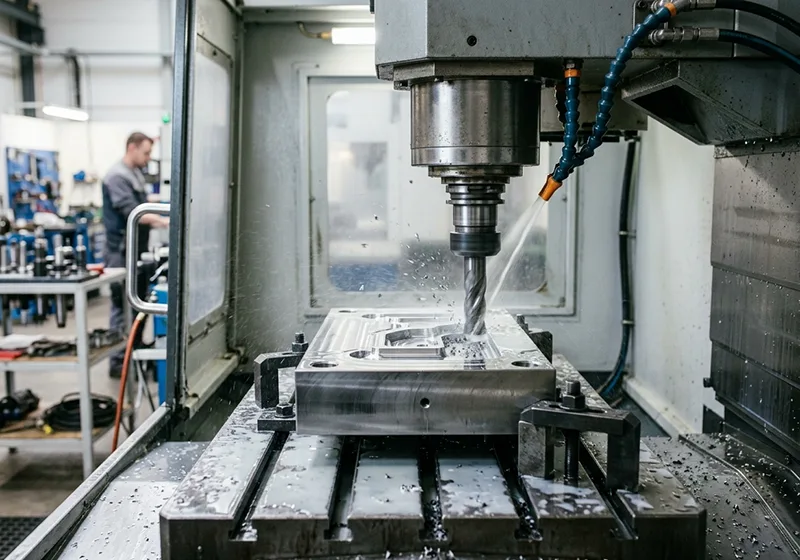
Mold cavities and cores are precision-machined using CNC milling centers. For fine details, sharp corners, deep ribs, and texture engraving, we use Electrical Discharge Machining (EDM) to achieve geometries that CNC tooling cannot reach.
-
05
Mold Fitting & Assembly
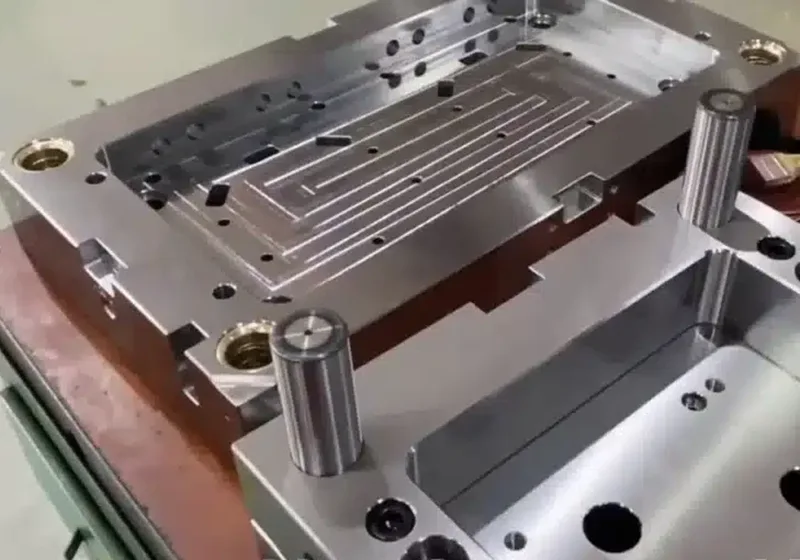
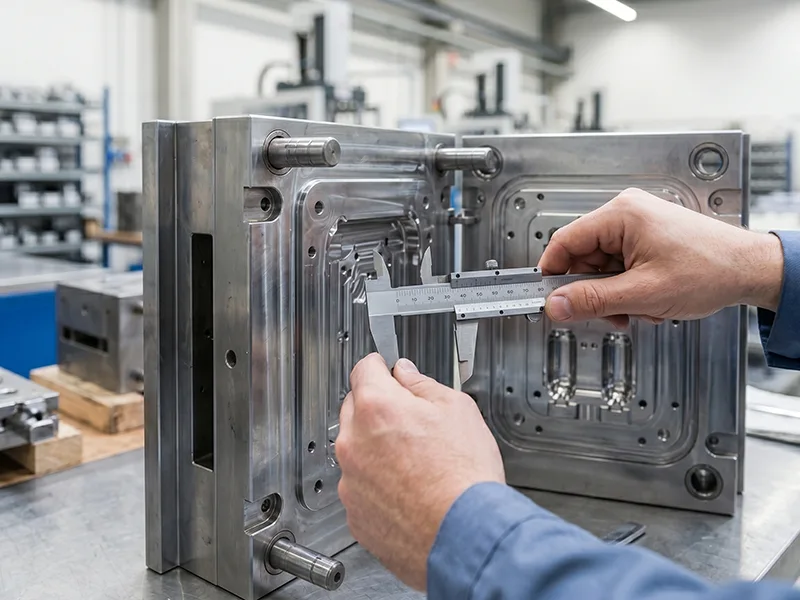
After machining, our toolmakers hand-fit and assemble all mold components — including cavity inserts, guide pins, ejector plates, and cooling channels. Parting surfaces are carefully matched and polished to the required finish level before the mold is assembled for trial.
-
06
Trial Sampling & Part Inspection
The assembled mold is mounted on one of our production presses for the first trial run. We produce initial samples and inspect them against your dimensional drawings and appearance standards. Any required adjustments — cavity corrections, surface polishing, venting improvements — are completed before the second trial.
-
07
Sample Approval & Production Handover
Once samples are approved — either by in-house QC or customer sign-off — the mold is formally handed over to the production team. Full mold documentation, including steel grade records, cavity dimensions, and processing parameters, is filed for reference throughout the mold's service life.
In-House Tooling Support for Better Project Control
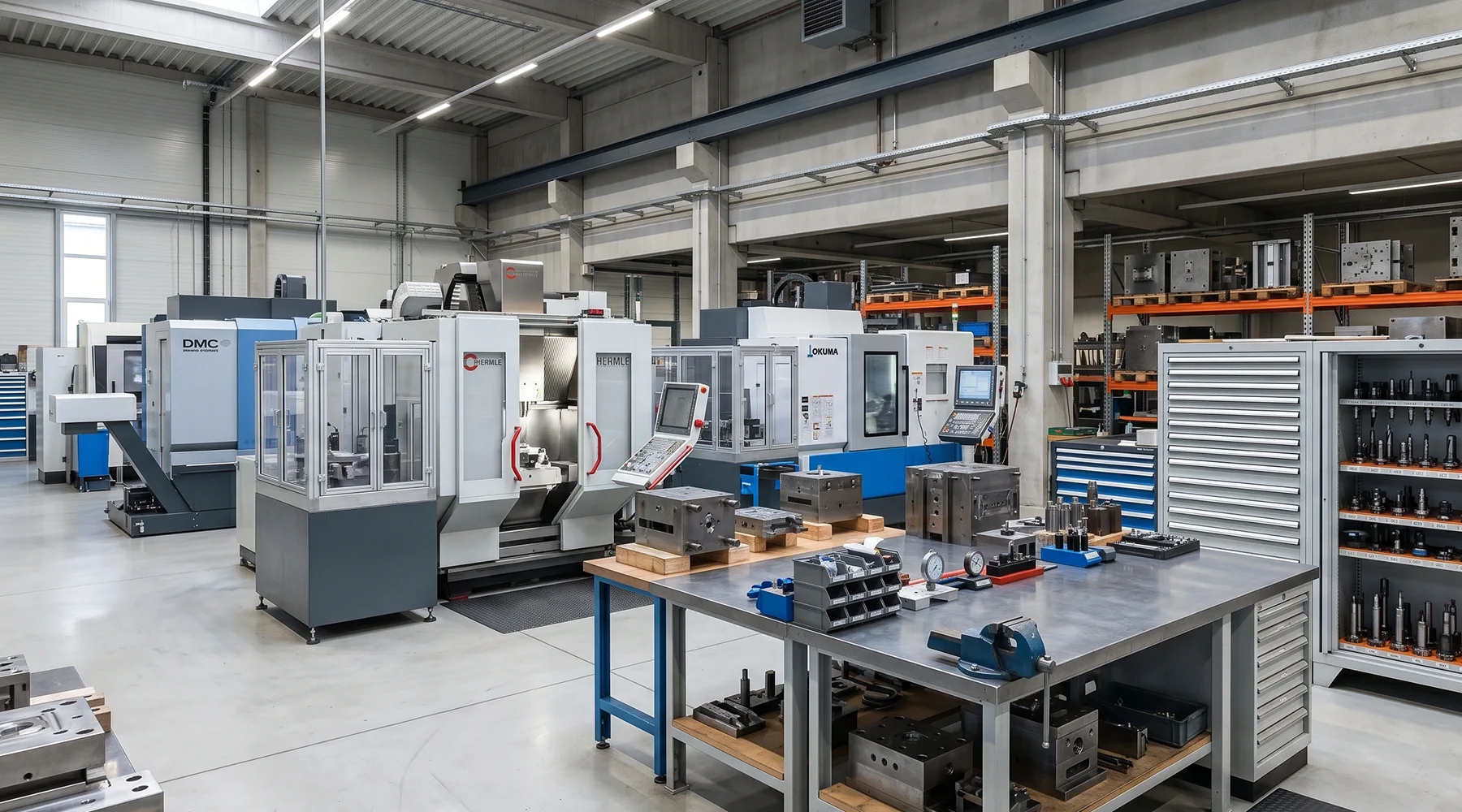
Unlike manufacturers who outsource tooling to third-party mold shops, we build and maintain all molds inside our own facility. Our dedicated tooling workshop is equipped with CNC machining centers, EDM machines, surface grinders, and a full fitting bench — giving our engineering team direct control over every stage of mold development.
This integration between tooling and production means that when a mold needs adjustment after a trial run, our toolmakers can respond immediately — on the same day in most cases. There is no waiting for a third-party shop to schedule a revision, no communication gaps, and no hidden delays.
For customers, this translates into faster sample turnaround, more predictable lead times, and a single point of contact for both tooling and production issues throughout the entire project lifecycle.
- All molds designed, built, and maintained in-house
- CNC machining centers and EDM equipment on-site
- Same-day mold adjustments during trial and production
- No outsourcing delays or third-party coordination
- Mold storage and lifecycle management included
- Direct engineer-to-engineer communication on tooling issues
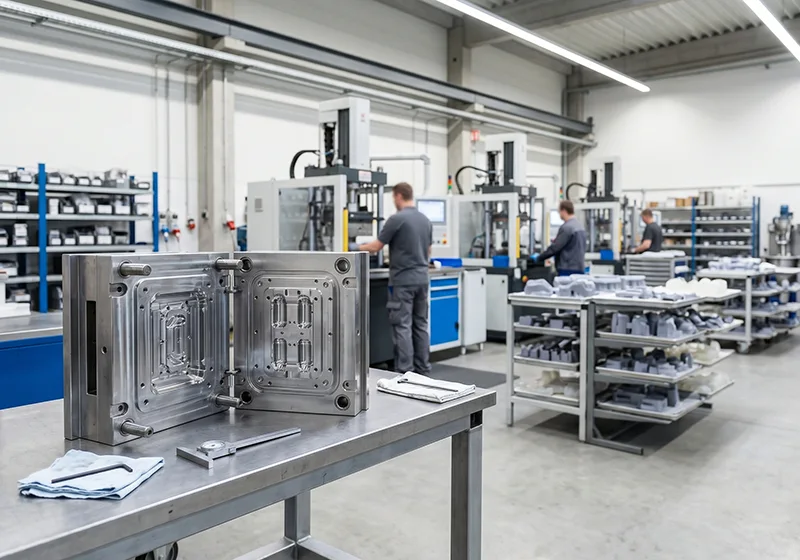
- Trial sampling run on our own production presses
Applications We Support
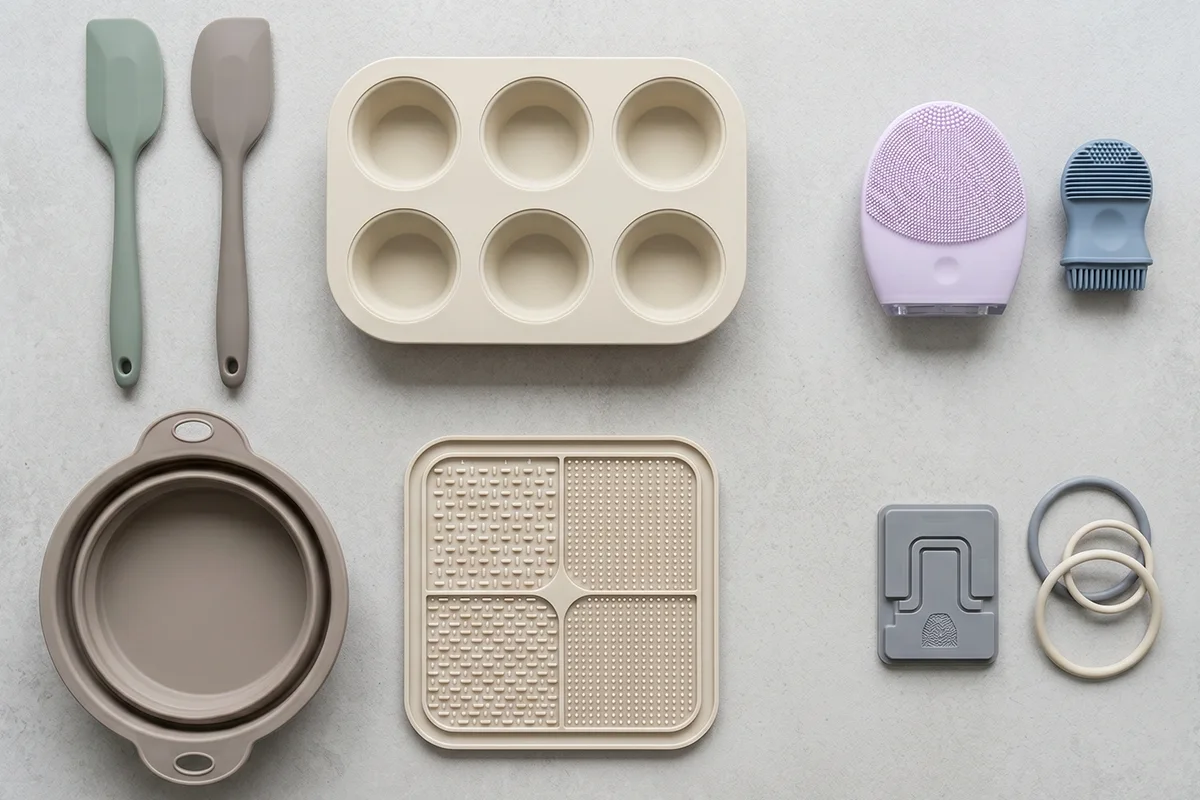
Our silicone mold manufacturing capabilities support a wide range of product categories and industries. Whether you are developing a new consumer product, an industrial component, or a medical-grade silicone part, we have the tooling experience and engineering resources to support your project from concept through production.
Facial brushes, massagers, applicators, sealing rings
Baking molds, spatulas, trivets, food-grade seals
Chew toys, feeding mats, grooming brushes, accessories
Gaskets, seals, grommets, vibration dampeners
Sealing components, dust covers, cable grommets
Medical-grade silicone parts, device seals, protective covers
Need a Reliable Silicone Mold Manufacturing Partner?
Whether you are starting a new product, scaling an existing line, or looking for a more reliable tooling partner, our engineering team is ready to review your project and provide a clear, no-obligation quotation.
Send us your drawing, 3D file, or sample — and we will come back with a detailed tooling assessment, lead time estimate, and pricing within 24–48 hours.
No commitment required · Response within 24–48 hours · NDA available on request