
Silicone sleeve quality control is a multi stage inspection process that is structured to ensure that custom silicone sleeves meet approved samples, technical drawings and real world performance requirements. Instead of relying on photos or a cursory inspection, a good silicone sleeve quality control will confirm material properties, fit, Shore A, size, look, logo quality, appearance consistency, edge finishing and package quality.
A good silicone sleeve quality control process should validate a real product in addition to surface appearance. There should be clear inspection standards for fit, hardness, dimensions, wall thickness, texture, logo, edge finishing and packaging. On other products such as bottle sleeves, tumbler boots, electronics cases, beauty products, pet products, and tool grips, the small things can make a big difference in the user experience, user perception, and returns. Many buyers think that the quality of their silicone sleeve can be determined by just looking at photos, but testing, measuring, checking with a durometer, testing on actual products, and comparing with approved samples need to be done to find problems before it’s shipped.
Why Quality Control Matters for Custom Silicone Sleeves
Custom silicone sleeves are often created to fit an item snugly, provide protection, offer grip or finish with a high-end feel and for these purposes, quality control is paramount. If it doesn’t fit well, is not the right hardness or has poor finishing, it can cause a loss of customer satisfaction, failure of the product or damage to the brand.
For brands ordering bottle sleeves, electronics covers, tumbler boots, or protective grips, custom silicone sleeves with quality control for approved samples, fit, hardness targets, company logo and packaging as applicable to the brand ordering bottle sleeves, electronics covers, tumbler boots, or protective grips.
Here are how some of the key buyer’s concerns manifest themselves as QC priorities:
| Buyer Concern | Why QC Matters |
| Sleeve fit | Prevents loose, tight, sliding, or rotating sleeves |
| Hardness and hand feel | Confirms approved flexibility, grip, and shape retention |
| Dimensions | Ensures sleeves match drawings and approved samples |
| Appearance | Reduces visible defects, stains, bubbles, and uneven surfaces |
| Logo quality | Protects brand clarity and product presentation |
| Texture consistency | Maintains grip and touch feel across batches |
| Edge finishing | Prevents rough edges, flash, rolling, or tearing |
| Packaging | Protects finished sleeves and supports retail/ecommerce readiness |
| Repeat orders | Helps maintain stable quality across production batches |
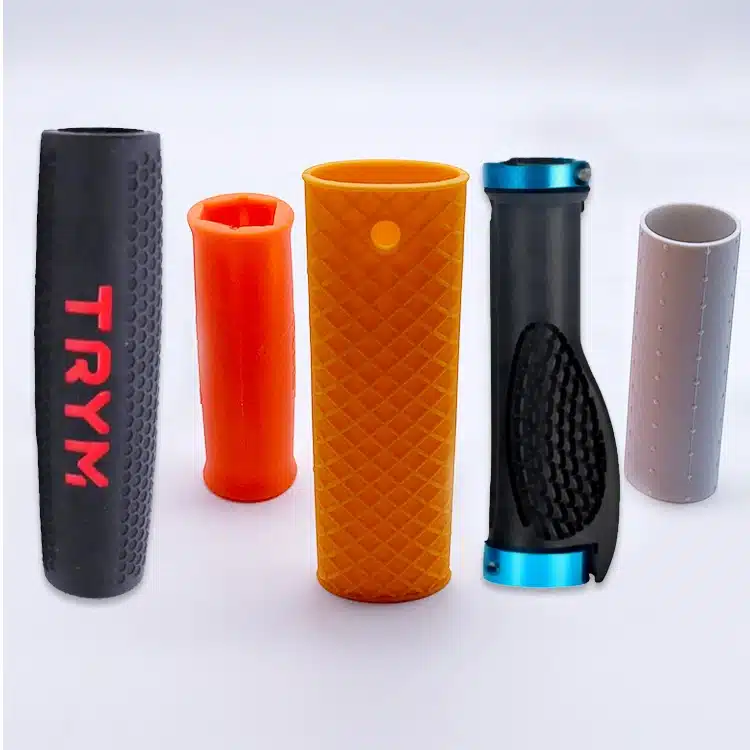
Main Quality Control Stages in Silicone Sleeve Manufacturing
Quality control during silicone sleeve manufacturing should be carried out during the whole production process and not only at the end of the manufacturing process. Such a proactive strategy will detect problems early and provide a uniform outcome.
Key stages include:
| QC Stage | What Is Checked | Why It Matters |
| Raw Material Inspection | Silicone grade, color material, batch information | Helps prevent wrong material or inconsistent formulation |
| Material Preparation Check | Weight, pigment, hardness target, mixing consistency | Supports stable molding and color consistency |
| Trial Sample Inspection | Fit, dimensions, hardness, logo, texture, appearance | Confirms the mold and process before mass production |
| In-Process Inspection | Molding defects, flash, deformation, color variation | Detects issues early during production |
| Trimming Inspection | Edges, flash removal, parting line appearance | Improves comfort and finished appearance |
| Surface Finishing Inspection | Printing, engraving, coating, matte/glossy finish | Confirms branding and finish quality |
| Final Inspection | Dimensions, fit, appearance, hardness, packaging | Confirms shipment readiness |
| Packaging Inspection | Labels, bags, boxes, cartons, inserts | Reduces delivery and retail/ecommerce problems |
Fit Testing: Does the Sleeve Work on the Real Product?
One of the most important quality control steps is the fit test step as the flexibility of silicone can make a sleeve look good when on its own, but not when used on the product.
Testing shall be conducted on actual samples of the product supplied by the client or on the production equivalent to verify:
| Fit Test Item | What to Check |
| Installation | Sleeve can be installed without tearing or excessive force |
| Retention | Sleeve stays secure during normal use |
| Sliding / rotation | Sleeve does not move easily on smooth surfaces |
| Edge stability | Edges do not roll, lift, or deform |
| Product tolerance | Sleeve fits within expected product dimension variation |
| Functional openings | Buttons, ports, sensors, screens, or handles remain usable |
| Real product testing | Sleeve is tested on the actual bottle, device, cup, or product |
| User handling | Fit remains stable during realistic grip and movement |
Shore A Hardness Testing: Does the Sleeve Feel and Perform as Approved?
Because the Shore A hardness test has a direct impact on how the silicone sleeve feels, installs, grips and retains its shape, it is one of the most basic tests used in the quality control of silicone sleeves.
Technicians use a durometer to determine hardness, and then compare the results with the approved sample and specified range. Typical tolerances are very low because if one user starts to experience something differently, it’s a major change.
| Hardness Issue | Possible Problem | QC Focus |
| Too soft | Sleeve may deform, roll, stretch too much, or feel weak | Check Shore A against approved sample |
| Too firm | Sleeve may be hard to install or uncomfortable | Confirm hardness before production release |
| Batch variation | Inconsistent hand feel between orders | Use material and hardness records |
| Wrong hardness for buttons | Covered buttons may feel poor on electronics sleeves | Test on real device |
| Wrong hardness for grip | Sleeve may feel slippery or unstable | Combine hardness test with grip testing |
| Hardness not documented | Production standard becomes unclear | Define acceptable hardness range |
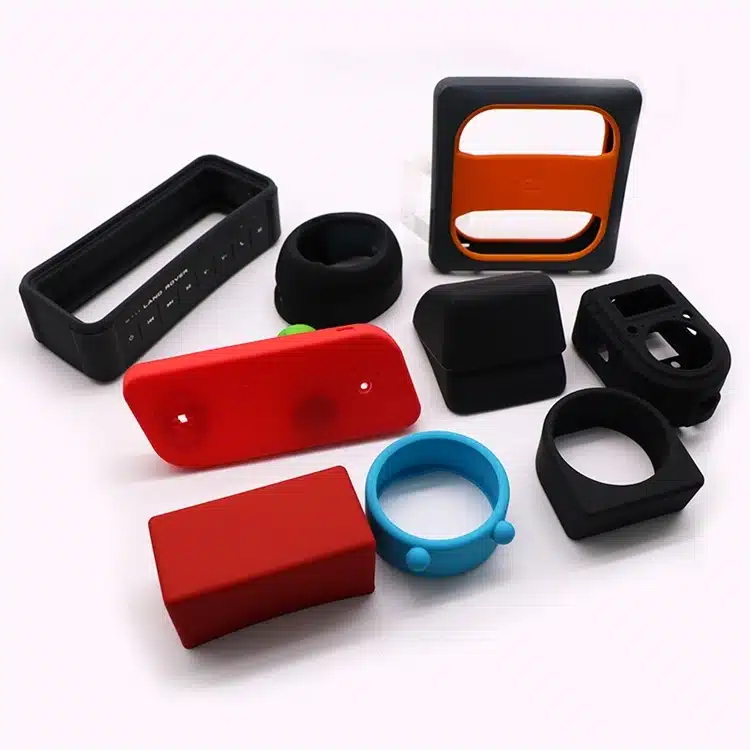
Dimensional Inspection and Wall Thickness Control
Dimensional inspection and a control of the sleeve wall thickness guarantees that the silicone sleeve conforms to the design requirements and is used consistently.
Critical measurements are taken with calibrated calipers, measuring tools or custom fixture and are checked against 2D drawings and approved samples. Shrinkage will occur during the curing process, which needs to be taken into consideration as well.
| Measurement Item | Why It Matters |
| Inner diameter / inner size | Controls product fit and retention |
| Sleeve height | Affects coverage, appearance, and protection |
| Wall thickness | Influences cushioning, grip, cost, and flexibility |
| Edge thickness | Helps prevent rolling, tearing, or weak edges |
| Opening size | Important for installation and product function |
| Cutout alignment | Critical for electronics covers and functional products |
| Base thickness | Important for bottle boots and tumbler protection |
| Overall dimensions | Ensures packaging and assembly compatibility |
| Tolerance range | Defines acceptable production variation |
Appearance Inspection: Surface, Color, Flash and Trimming
In silicone sleeve quality control, appearance inspection is a process that involves visual and tactile checks that affect initial impressions and retail readiness.
Under appropriate lighting conditions inspectors check for:
| Appearance Item | Common Issue | Inspection Focus |
| Surface cleanliness | Dust, stains, or contamination | Check before packaging |
| Bubbles / voids | Small holes or trapped air marks | Inspect visible and functional areas |
| Color consistency | Batch or piece-to-piece variation | Compare with approved color sample |
| Flow marks | Uneven surface appearance | Review molding parameters and sample standard |
| Flash | Excess material along parting lines | Define trimming acceptance standard |
| Rough edges | Poor user feel or lower retail value | Inspect trimming and edge finishing |
| Deformation | Shape does not match approved sample | Check molding and handling conditions |
| Texture consistency | Grip pattern or visual texture varies | Compare with approved sample |
Logo and Surface Finishing Inspection
Quality and durability of branding elements are assured through the process of Logo and Surface finishing Inspection.
Position, clarity, adhesion and interaction with texture are checked by inspectors, depending on the method applied (embossed, debossed, silk screen, laser engraving).
| Logo / Finish Item | What to Inspect |
| Embossed logo | Height, clarity, edge definition, and comfort |
| Debossed logo | Depth, readability, cleaning practicality |
| Printed logo | Adhesion, color, position, rubbing resistance |
| Laser engraving | Contrast, readability, position, consistency |
| Logo placement | Alignment and distortion on curved surfaces |
| Surface coating | Evenness, touch feel, durability, and compatibility |
| Matte / glossy finish | Consistency across batch |
| Texture near logo | Logo remains clear and does not conflict with grip |
| Packaging contact | Finished logo or coating is protected during shipping |
Durability-Related Tests for Silicone Sleeves
In silicone sleeve quality control, durability related tests are performed to simulate real use conditions and to ensure durability.
These tests are specific to the application and can consist of:
| Durability Test | When It Matters | What to Check |
| Stretch recovery test | Removable sleeves and bottle sleeves | Sleeve returns to shape after installation |
| Installation cycle test | Products installed repeatedly | No tearing, deformation, or edge damage |
| Edge rolling test | Bottle sleeves, cup sleeves, protective covers | Edges remain stable during use |
| Rubbing test | Printed logos or coated surfaces | Logo or finish does not wear too quickly |
| Cleaning test | Drinkware, kitchenware, pet products | Texture and surface remain practical to clean |
| Heat exposure test | Hot cup sleeves or kitchen products | Material and finish remain acceptable after heat exposure |
| UV/weather test | Outdoor products | Surface and color remain stable for intended use |
| Grip test | Anti-slip sleeves and handheld products | Sleeve remains comfortable and secure |
| Aging review | Long-term or high-use products | Material does not show early cracking or deformation |
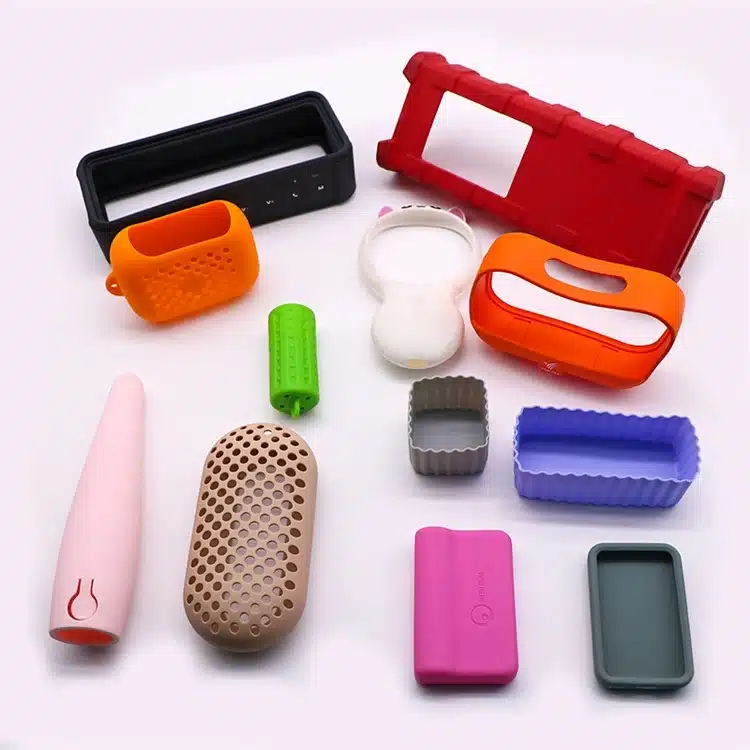
Packaging Inspection Before Shipment
Packaging inspection is an important stage in the quality control process for silicone sleeves as it can lead to surface damage, contamination or fulfillment problems.
| Packaging Check | Why It Matters |
| Individual bag or retail box | Protects sleeve surface and supports sales channel needs |
| Correct label / barcode | Prevents inventory and fulfillment errors |
| Color and SKU sorting | Avoids mixed-product mistakes |
| Instruction insert | Supports user installation or care guidance where needed |
| Carton quantity | Helps warehouse and shipment accuracy |
| Surface protection | Prevents scratches, dust, deformation, or coating damage |
| Packaging cleanliness | Important for drinkware, baby, pet, and personal care products |
| Carton strength | Reduces shipping damage risk |
| Final carton mark | Supports export, warehouse, and customer receiving checks |
Common Silicone Sleeve Defects and How QC Prevents Them
By collaborating closely with the customer in design review, optimizing the manufacturing process, and adhering to high-quality control standards, these common issues in custom silicone sleeve production can be minimized.
| Common Defect | Possible Cause | QC Prevention |
| Loose fit | Inner size too large or tolerance not controlled | Fit test and dimensional inspection |
| Tight fit | Inner size too small or hardness too firm | Installation test and hardness check |
| Wrong hardness | Material or mixing variation | Shore A hardness testing |
| Color variation | Pigment or batch inconsistency | Color comparison with approved sample |
| Bubbles / voids | Air trapping or molding process issues | Appearance inspection and process review |
| Excess flash | Mold fit or process control issue | Flash inspection and trimming standard |
| Rough edges | Poor deflashing or trimming | Edge finishing inspection |
| Unclear logo | Mold detail, printing, or engraving issue | Logo inspection and sample comparison |
| Texture inconsistency | Mold or process variation | Texture depth and appearance check |
| Packaging damage | Poor packing or surface protection | Packaging inspection before shipment |
What Buyers Should Confirm Before Mass Production
To prevent disputes with the buyer and ensure smooth manufacturing, buyers should lay down quality standards and inspection criteria before approving mass production.
| Item to Confirm | Why It Helps QC |
| Approved sample | Provides physical reference for mass production |
| Product drawing | Defines dimensions and technical notes |
| Critical dimensions | Helps focus inspection on fit and function |
| Tolerance range | Defines acceptable production variation |
| Shore A hardness range | Controls material feel and performance |
| Color standard | Prevents color disputes |
| Logo standard | Defines clarity, position, size, and durability |
| Surface finish standard | Controls matte, glossy, coated, or textured appearance |
| Edge/flash standard | Prevents rough edges and poor appearance |
| Packaging standard | Ensures products are shipped correctly |
| Inspection method | Clarifies how QC will be performed |
| Testing requirement | Supports application-specific durability or compliance needs |
How to Evaluate a Manufacturer’s Silicone Sleeve QC Capability
To determine the QC capability of a silicone sleeve manufacturer, one needs to check the manufacturer’s silicone raw material control procedure, the monitoring regime for the production process, the finishing process and the final inspection procedure.
A good Custom Silicone Sleeve manufacturer should have an in-house knowledge of material selection, compression molding, mold manufacture, surface finishing processes such as silk screen printing and laser engraving, hardness testing, and a clean packaging environment. They should also document all of their work and assist with approved sample comparisons during the process of production.
| Manufacturer QC Capability | Why It Matters |
| Raw material inspection | Reduces risk of wrong material, color, or hardness |
| Hardness testing | Confirms approved Shore A hardness in production |
| Dimensional inspection | Supports consistent fit and tolerance control |
| Fit testing | Confirms the sleeve works on the actual product |
| In-process inspection | Detects problems before the full batch is completed |
| Surface and appearance inspection | Reduces visible defects and customer complaints |
| Logo and finishing inspection | Protects brand presentation and durability expectations |
| Packaging inspection | Ensures products are ready for shipment, retail, or ecommerce |
| Approved sample comparison | Keeps mass production aligned with buyer-approved standards |
| QC documentation | Supports communication and repeat order consistency |
Conclusion — Good Silicone Sleeve QC Protects Fit, Function and Brand Value
Silicone sleeve quality control includes fit testing, Shore A hardness, dimensions, appearance, quality of the logo and finishing, durability and packaging and ensures that every batch will have consistent results to meet the buyer’s expectations and the end user’s needs.
Buyers set standards early, set approved samples as the standard, and have the standards checked at all production steps, so that the risks of defects, returns and inconsistent production quality can be minimized. A good manufacturer will discuss their inspection techniques openly, and work with you to ensure that they meet your needs.
The end result of all good QC practices is the assurance of product performance, user satisfaction and the reputation of your brand in a competitive marketplace.