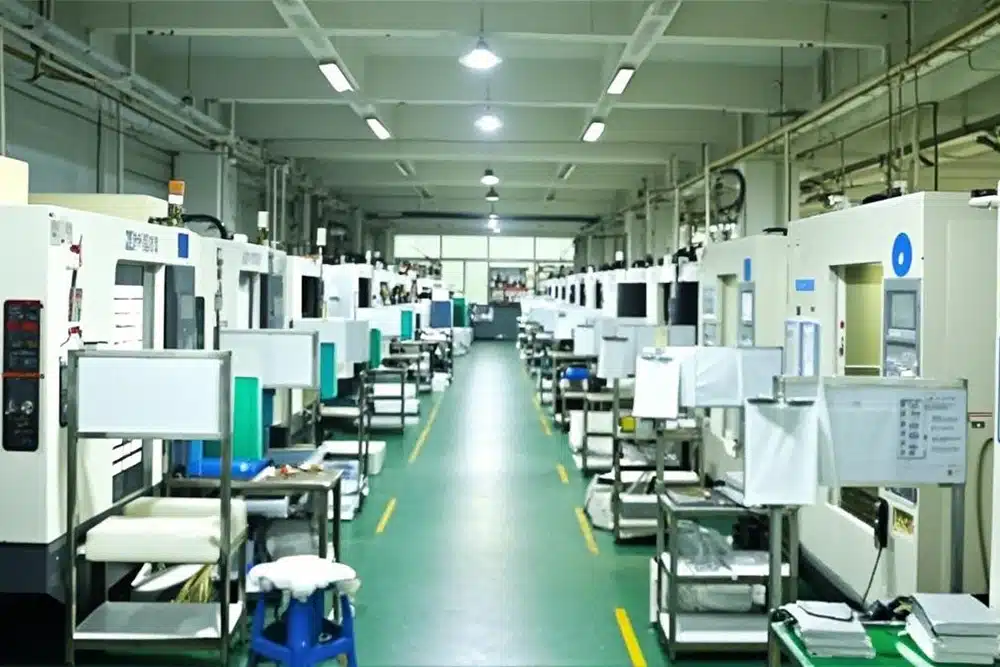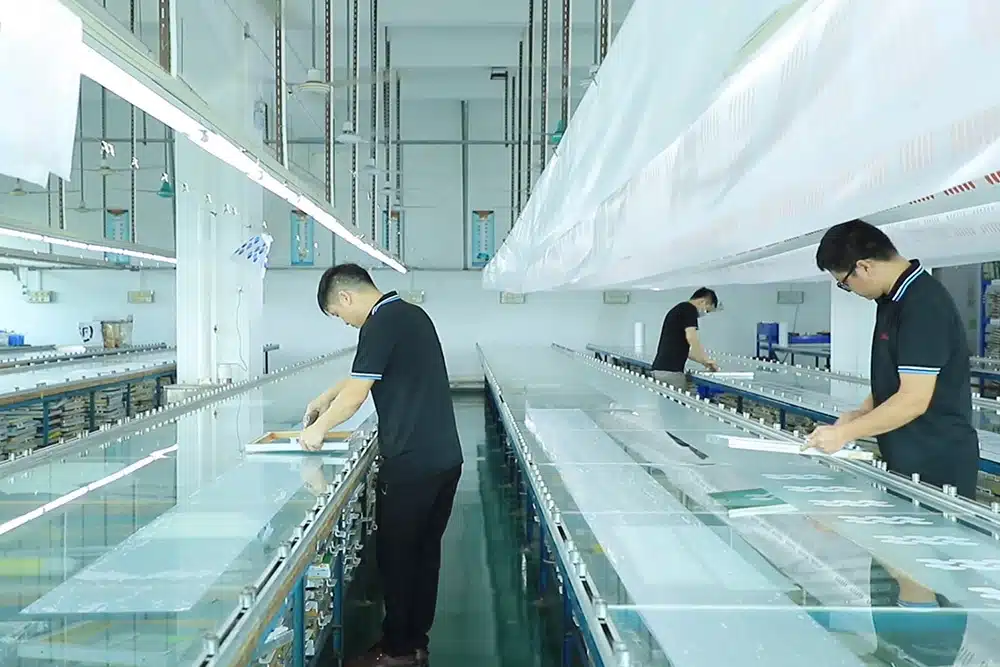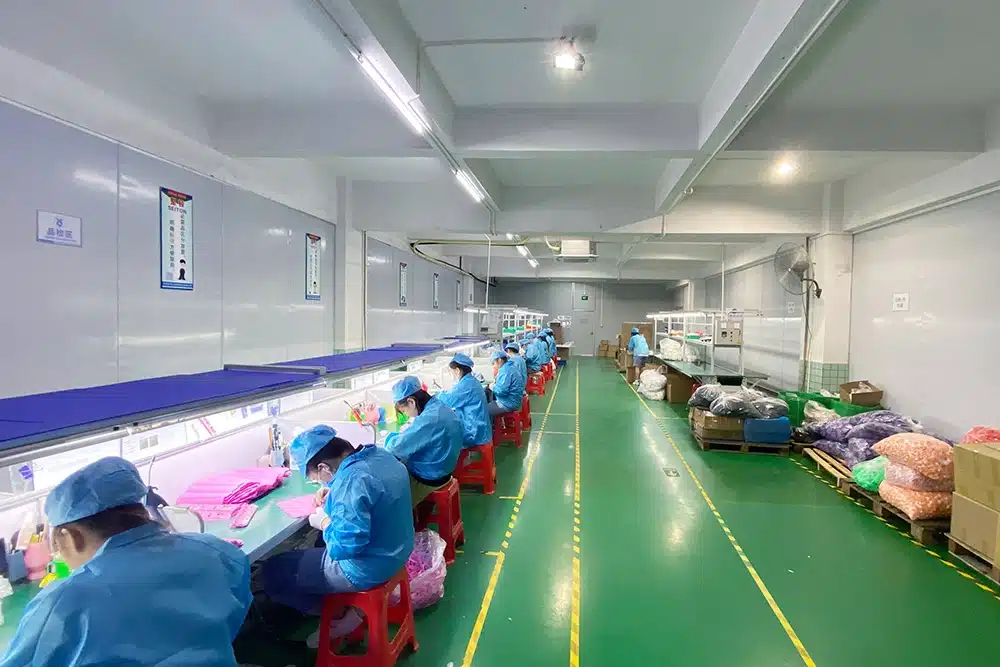

Manufacturers can prevent most silicone product quality problems before shipping by controlling the material selection, mold design, molding conditions, curing process, in-process inspection, final inspection, and traceability in the whole production process. A robust quality control system is essential to achieving this.
Bubbles or holes, flash or burr, inconsistent colour, dimensional accuracy, improper curing, surface issue, deformation or warpage, tearing or low tensile strength, contamination or dust, and packaging damage commonly cause quality problems in silicone products. These issues not only impact the look and performance of custom silicone products but can also result in customer returns, complaints and reputation damage in the kitchenware, baby, pet, personal care, and automotive markets.
The quality of silicone products is not only determined at the final inspection but also at material procurement, mold design, production planning, process control, worker training and outbound inspection. Buyers often think defective silicone parts are a result of poor employees or inferior materials, but the majority of quality issues are related to the entire production system, such as design review, mold design, curing, production environment, and inspection system.
A sound QC system assists manufacturers in avoiding prevent defective silicone parts by identifying risks early in material inspection, molding, curing, final inspection, and packaging.
What Causes Quality Issues in Silicone Products?
Defects in silicone products are generally caused by multiple factors. Knowing these causes will help develop effective prevention approaches for custom silicone product development.
Here are some of the main causes and their impact:
| Cause | How It Affects Silicone Product Quality |
| Material inconsistency | May cause hardness variation, color difference, weak performance, or poor curing |
| Poor mold design | Can lead to flash, burrs, deformation, or dimensional instability |
| Air entrapment | Creates bubbles, voids, or weak internal areas |
| Incorrect curing parameters | May result in sticky surfaces, weak strength, or product deformation |
| Poor color mixing | Causes visible color inconsistency across batches |
| Weak process monitoring | Allows defects to continue before they are detected |
| Contaminated environment | May cause dust, stains, or foreign particles on finished products |
| Incomplete inspection | Increases the risk of defective parts reaching customers |
By controlling these issues, via process control, manufacturers can decrease the rate of defects in silicone products.
Top 10 Common Quality Issues in Silicone Products
Here are the top 10 common quality issues in silicone products we have come across during our many years of OEM/ODM production. The descriptions below include the typical appearance, causes, consequences, and how to avoid them. Prevention and early detection during the production process is much better than end-of-line sorting.
| No. | Quality Issue | Common Cause | Prevention Method |
| 1 | Bubbles and voids | Air trapped in material or mold cavity | Improve venting, material preparation, and molding control |
| 2 | Excess flash in silicone molding or burrs | Poor mold fit, worn tooling, or excessive pressure | Maintain molds and control molding parameters |
| 3 | Color inconsistency | Poor pigment mixing or material batch variation | Standardize color matching and batch control |
| 4 | Dimensional variation | Mold wear, shrinkage, or unstable curing | Use dimensional inspection and process monitoring |
| 5 | Poor curing | Incorrect temperature, time, or material ratio | Validate curing parameters before mass production |
| 6 | Surface defects | Mold contamination, scratches, or poor release | Clean and maintain molds regularly |
| 7 | Deformation or warping | Uneven wall thickness or improper cooling | Optimize design and molding conditions |
| 8 | Tearing or low tensile strength | Wrong material hardness or poor curing | Select proper silicone grade and verify performance |
| 9 | Dust or contamination | Uncontrolled assembly or packaging environment | Use clean handling and dust-free packaging areas |
| 10 | Packaging damage | Poor stacking, compression, or handling | Use suitable packaging and shipment protection |
1. Bubbles and Voids
Bubbles (voids) are one of the most common defects in the silicone molding process, especially with complex part shapes, thick walls or air traps. These can be small bubbles on the surface or within the material and may only be detected when the part is cut.
They typically result from air becoming trapped during filling or inadequate air vents in the mold. Good silicone mold design with proper venting channels is one of the most effective preventive measures.Contributing factors include high-viscosity materials without degassing or fast injection in LSR molding.
Bubbles reduce part strength and affect sealing integrity or visual appeal in products.
Proper prevention includes well-designed venting channels in the mold, degassing or vacuum mixing of material, proper pressure and injection speed during molding and DFM (design for manufacturability) inspection of product geometry. Early prototypes can be visually inspected under good lighting to avoid this issue in large production runs.
2. Excess Flash or Burrs
Flash or burrs are thin, excess silicone on the mold parting lines or edges. A small amount of flash is common in compression molding, but too much is a sign of a problem.
Flash can occur due to improper mold alignment, wear on the mold, too much material, or high molding pressure. Even new and well-designed molds can develop problems with time.
Besides being wasteful of time and material for trimming, excessive flash can result in dimensional and edge quality issues, causing product variability.
Prevention of this problem includes maintaining accurate mold closing, periodic mold inspections and maintenance, controlling the amount of material and injection pressure, and agreeing on quality (acceptable and unacceptable) with the customer initially instead of relying on post-molding flash removal as the primary solution.
3. Color Inconsistency
Variability in color may present as variations in shade between parts within a batch or between batches. Proper silicone color matching processes are critical to maintaining consistency, especially for visible consumer products.This is especially important for consumer silicone products that are visible, like kitchen utensils, baby products or pet products.
This can be due to poor pigment wetting, batch-to-batch variability in raw materials, manual mixing errors, or color development issues due to curing conditions. Variations can also be detected by matching samples under alternative light sources.
Variable color affects brand quality and may cause rejection by quality-sensitive customers or consumers.
To avoid this, use a standard, customer-approved masterbatch formula, record the color information, check all pre-production samples, control the mixing process and regularly check the production parts against the approved colors.
4. Dimensional Variation
Dimensional variation is when silicone products are not produced to the desired size, despite silicone being flexible. This can be a significant issue for parts that must fit or mate with other parts.
Curing shrinkage, mold wear, variability in process conditions, and difficulties in measuring soft parts all play a role.
| Dimensional Risk | Possible Result |
| Incorrect shrinkage allowance | Parts may be too small or too large |
| Unstable curing | Dimensions may vary between batches |
| Worn mold cavity | Repeated parts may gradually lose accuracy |
| Unclear drawing tolerance | Supplier and buyer may judge dimensions differently |
| Poor measurement method | Flexible parts may be measured inconsistently |
To prevent, make sure that the molds are correctly compensated for shrinkage, and have regular dimensional checks using appropriate fixtures, with checks for process stability and clearly stated tolerance and measurement standards in technical drawings.
5. Poor Curing or Under-Curing
Poor curing can lead to silicone products that are tacky, weak, have an off-odor, or do not recover well from compression set. Undercured products can also yellow or age more rapidly.
This problem results from incorrect temperatures or time, incorrect material ratios (for two-part systems) or insufficient post-curing for select applications. Special care must be taken for thicker parts to allow heat to penetrate.
To avoid it, verify curing settings during mold setup, evaluate sample performance before mass production, continually monitor the temperature and cycle time in the press or oven, and perform suitable performance tests according to product use.
6. Surface Defects, Stains, and Mold Marks
Surface defects are scratches, mold marks, flow lines, oil stains or textures that impact appearance and hygiene. They are very obvious and can be the first impression of quality.
They are caused by unsanitary or damaged molds, release agent misuse, contamination, or improper mold polishing and maintenance.
Keeping molds clean, using proper surface treatment and polishing, careful use of release agents, and establishing cosmetic standards during in-process inspection ensure good surface quality.
7. Deformation or Warping
Twist, bend or distortion are signs of deformation or warping, which do not align with the design. It usually occurs during demolding or storage.
This is often due to uneven wall thickness, poor rib design, hot demolding, unsuitable cooling or high pressure when packaging.
Most distortion problems can be avoided by a DFM review prior to mold construction, designing parts for uniform thickness, controlling the curing and cooling process, and using appropriate packaging techniques.
8. Tearing, Weak Strength, or Poor Elastic Recovery
Tearing or weak tensile strength is seen when products tear during use or handling. Poor elastic recovery results in the material not recovering from being compressed.
The wrong grade hardness, poor material formulation, insufficient curing… Proper silicone material selection tailored to the application is fundamental to avoiding these mechanical issues.thin areas with stress points, or sharp corners are among the causes of these mechanical issues.
To avoid problems, select the appropriate grade of silicone for the application, evaluate the geometry for stress points, test the mechanical properties if they are specified, and ensure the process is properly cured.
9. Dust, Foreign Particles, or Contamination
Foreign particles (hair, dust, fabrics) in or on silicone products are particularly problematic for food, baby or cosmetic products. Contamination can also be in the form of machine oil stains.
This could be due to an unregulated manufacturing environment, operator hygiene issues, or lack of protection during manufacturing and packaging.
Contamination is avoided by using separate clean areas for assembly and packing, training operators to handle products like a cleanroom environment, material storage procedures, and final visual inspection before packaging.
10. Packaging-Related Damage
Packaging damage is caused after successful molding due to scratches, compression, or dirt during packaging, storage or transportation. Examples include compression marks and batch mixing.
This may be due to inappropriate inner packaging, high stacking height/weight, mixing of different colours or batches, or poor cartons.
This can be prevented by using the right anti-scratch bags or trays, pallet height control, batch segregation, strong cartons, and having proper packaging and traceability records.
How Quality Control Helps Prevent Silicone Product Defects
It’s cheaper and more efficient to prevent defects. Our real case studies show how proactive quality control has successfully prevented defective silicone parts in OEM projects.The silicone QC process includes checks at all steps to identify problems.
| QC Stage | What It Checks | Defects It Helps Prevent |
| Incoming material inspection | Material grade, hardness, color, cleanliness | Color variation, poor curing, weak performance |
| Mold trial | Tooling accuracy, venting, parting line, shrinkage | Flash, bubbles, deformation, dimensional issues |
| In-process inspection | Size, appearance, curing, molding stability | Batch defects and repeated process errors |
| Functional testing | Sealing, flexibility, strength, fit, elasticity | Product failure during actual use |
| Final inspection | Visual quality, dimensions, packing condition | Defective shipments and customer complaints |
| Batch traceability | Material batch, production date, operator, QC record | Unclear root cause and poor recall control |
How OEM Buyers Can Reduce Quality Risk Before Production
OEM buyers can help reduce quality problems with silicone products by specifying the product requirements.
| Buyer Preparation | Why It Helps Prevent Defects |
| 3D CAD file | Allows engineers to review structure and manufacturability |
| 2D drawing | Defines dimensions, tolerances, and inspection criteria |
| Material hardness requirement | Helps select suitable silicone for performance needs |
| Color sample or Pantone reference | Reduces color mismatch risk |
| Product application description | Helps evaluate strength, flexibility, heat, or safety needs |
| Functional requirement | Clarifies how the part must perform during use |
| Packaging requirement | Prevents deformation, scratches, or contamination during shipment |
| Approved pre-production sample | Creates a clear quality reference for mass production |
When Should a Silicone Product Quality Issue Be Solved?
It’s best to solve silicone product quality problems early in the development process, not when defects are discovered in mass production.
| Stage | Main Quality Focus |
| Product design | Avoid risky geometry, weak areas, or unclear requirements |
| Mold design | Plan venting, parting line, shrinkage, and demolding |
| Sampling | Confirm appearance, size, color, hardness, and function |
| Pilot run | Check process stability before mass production |
| Mass production | Monitor consistency and detect batch variation |
| Final inspection | Confirm finished goods meet approved standards |
Conclusion — Silicone Quality Issues Are Preventable With the Right QC System
Issues with product quality like bubbles, flash, color mismatch, warpage, curing and contamination in silicone products are not random events. They’re indications of something wrong with the material control, mold engineering, process monitoring, inspection or packaging. The best way to mitigate risk for OEM and ODM projects is to focus on quality at each step of the manufacturing process, starting from design review to shipping.
By working with manufacturers that prioritise prevention via systematic controls rather than final inspections, buyers can expect consistent quality. At HT Silicone we maintain strict adherence to international quality standards throughout the entire production process.reduced defects and improved product performance. Time spent at the beginning on communication, sample procurement and process understanding saves time and money over the long run.