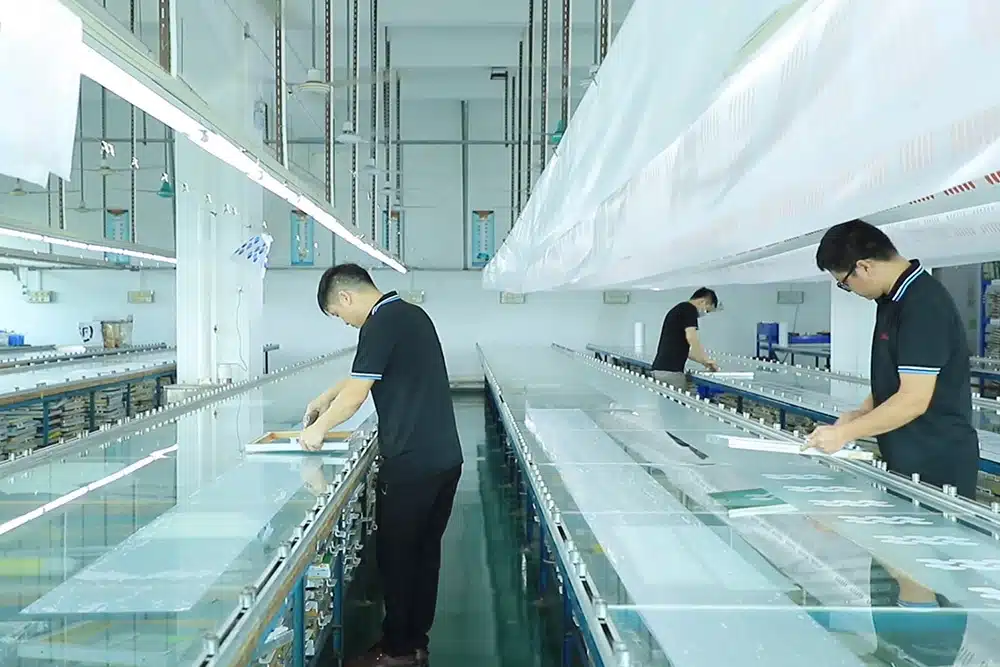

Custom silicone seals quality control does not only involve inspection of the finished parts but control of the material, dimensions, curing, surface quality and consistency of the process to ensure sealing performance does not change between sample approval and mass production.
Sealing components are very sensitive to even the slightest changes. Even a minor change in dimension, non-uniform curing, or undesired flash may have a direct negative effect on compression set, groove fit and long-term sealing force. Silicone seal quality is a major visual inspection problem that remains to be addressed by many teams. As a matter of fact, disciplined control over the whole production process is what determines proper sealing performance.
Quality control of custom silicone seals can be reliably achieved by using a combination of material checks, dimensional checks, process checks, and practical checks rather than by final visual checks.
Why Quality Control Matters More for Silicone Seals Than Many Buyers Expect
Silicone seals are not mere molded parts that have purely cosmetic needs but are functional engineering components. Their functionality depends on accurate contact with compressed mating surfaces, temperature variations, and even chemical exposures.
Even minor changes in dimensions can modify compression ratios and sealing force, whereas curing can modify elasticity and recovery behavior. These problems are usually concealed at the start of acceptance and may show up later as leakage, poor fit between batches, or field failures.
Lack of quality control often leads to expensive repeat-order instability. Proper quality control should thus be a proactive risk-preventive mechanism rather than a last pass/fail check before delivery.
| QC Risk Area | Why It Matters for Silicone Seals |
| Dimensional variation | Affects fit, compression, and sealing force |
| Material inconsistency | Changes durability and recovery behavior |
| Cure inconsistency | Influences elasticity and long-term performance |
| Flash and surface defects | Can affect sealing surfaces and assembly fit |
| Batch variation | Reduces repeat-order stability |
| Weak inspection discipline | Increases hidden defect risk |
Start with Critical Quality Characteristics, Not Generic Inspection
Quality control of custom silicone seals should be based on determining the features that in reality affect sealing performance, instead of using the same inspection level on all features.
All dimensions are not equal. Surfaces, critical cross-sections, groove-fit tolerances, and recovery-related properties are of greater importance since they dictate directly whether or not the seal will be effective.
A properly designed QC plan will distinguish between critical, major and minor characteristics. This congruence between consumers and the manufacturers ought to occur prior to the production. A common practice in generic inspection that lacks functional priorities is a waste of resources and yet may not identify the risks which are most important.
| Quality Characteristic | Why It Should Be Prioritized |
| Critical sealing dimensions | Directly affect fit and sealing behavior |
| Cross-section consistency | Influences contact pressure and compression |
| Flash on sealing edges | Can create leakage or assembly issues |
| Material / hardness consistency | Supports repeat performance |
| Surface quality on functional areas | Affects sealing contact and stability |
| Appearance on non-functional areas | Usually lower priority than function |
Dimensional Tolerances Are the Foundation of Functional Seal Quality
The seal dimensional tolerances are much more critical than in most non-functional molded parts since the slightest deviation can alter the compatibility of the seal with its groove and mating parts.
The actual sealing function should be defined as the critical dimensions and not simply drawing convenience. Excessively loose tolerances on sealing features may result in leakage, or an unstable fit and excessively tight tolerances on non-critical areas may just add costs without benefit.
The silicone molding process, material shrinkage behavior and special applications requirements need to be considered in tolerance planning. The most significant part of the inspection should be devoted to those dimensions which really affect assembly and reliability of sealing in the long term.
| Tolerance Issue | Practical Quality Impact |
| Loose tolerance on sealing feature | Leakage risk or unstable fit |
| Tight tolerance on non-critical feature | Higher cost without functional gain |
| No critical-dimension prioritization | Weak inspection focus |
| Poor tolerance-process alignment | Inconsistent production outcomes |
| Functional tolerance review | Better balance of quality and cost |
In silicone seal process manufacturing that is quality oriented, the skilled teams establish tolerances to the process capability and functional specifications early in the project.
What Tests Matter Most in Custom Silicone Seal Projects
Custom silicone seal testing should not only be based on appearance but also should be able to test the behavior of the material and their functional consistency.
The most applicable tests depend on the application, yet there are always a few categories that will assist in decision-making: dimensional checks, hardness checks, visual checks, compression/recovery checks, material property checks, and functional fits checks. When long-term performance is important, a dimensional inspection is seldom adequate.
Silicone seals testing is most effective when it resembles the actual risks of the application rather than a mechanical checklist.
| Test Category | What It Helps Verify |
| Dimensional inspection | Part size, cross-section, and fit consistency |
| Hardness check | Basic material consistency |
| Visual defect inspection | Flash, voids, contamination, and surface flaws |
| Compression / recovery-related evaluation | Functional behavior under load |
| Material verification | Consistency against approved input expectations |
| Functional fit check | Real assembly performance in the intended application |
Inspection Methods Should Match the Part, the Risk, and the Production Stage
The inspection methods of the silicone seal must be dependent on the geometry of the part, its criticality and its manufacturing stage. The purpose of the incoming, in-process and final inspection are different.
Initial setup is verified by first-article inspection, but stable in-process control cannot be substituted. Planning of practical inspection takes into consideration the seal size, complexity and functional risk level. Certain checks are practical to test setups and others are useful to maintain the batch monitoring.
| Inspection Stage | Main Purpose |
| Incoming material check | Confirms production starts from approved inputs |
| First-article inspection | Verifies setup and initial conformity |
| In-process inspection | Detects drift before large-volume defects occur |
| Final inspection | Screens completed lots before shipment |
| Pre-shipment review | Supports shipment consistency and documentation alignment |
| Repeat-order comparison | Confirms stability against approved baseline |
Process Control Often Prevents More Defects Than Final Inspection
Good quality control of custom silicone seals concentrates on eliminating variation in the production process and not just detecting faults at the end.
Final seal quality depends upon curing consistency, mold condition, tooling alignment, and operator discipline. Weak upstream process control cannot be completely offset by final inspection. The predictable conditions of processes minimise scrap, rework and batch-to-batch variation – particularly when repeat OEM projects require consistency.
| Process Control Area | Why It Matters |
| Material handling consistency | Supports stable molding behavior |
| Cure control | Influences elasticity and durability |
| Mold condition | Affects shape, flash, and repeatability |
| Setup consistency | Reduces variation between runs |
| In-process monitoring | Detects drift before defects spread |
| Change-control discipline | Protects approved production conditions |
Common Defects and What They Mean for Seal Performance
Silicone seals are not all impacted by defects. There are certain visual problems which are predominantly cosmetic and those which directly affect sealing performance.
Flash on sealing edges, dimensional drift, surface defects in contact areas, voids, and contamination have various risks. Defect classification that is transparent to both buyer and supplier can be used to avoid unwarranted disputes and to aid uniform production choices.
| Common Defect | Potential Effect on Seal Quality |
| Excessive flash | Fit issues, sealing-edge risk, extra trimming burden |
| Dimensional drift | Inconsistent compression and leakage risk |
| Surface defect on sealing area | Poor contact stability |
| Void or incomplete molding | Structural and functional weakness |
| Contamination | Quality, appearance, or assembly risk |
| Inconsistent parting-line condition | Variation in fit and finish |
Why Repeat-Order Consistency Is the Real Test of a QC System
One granted shipment is not evidence of long-term supplier performance. The real test of a good QC system is repeat-order quality control of silicone seals.
Customers ought to consider predictability in dimensions, material behavior, quality of cure, and levels of defects across various production runs. Good systems ensure that the approved baseline is not affected by slow drift and that they have traceability which can help in quick resolution of problems when necessary.
| Repeat-Order QC Factor | Why It Matters |
| Stable dimensions | Protects assembly and sealing performance |
| Consistent material behavior | Supports predictable durability |
| Reproducible cure outcome | Maintains elasticity and recovery |
| Controlled defect level | Reduces incoming quality burden |
| Traceable lot control | Helps solve problems faster if needed |
Common Quality Control Mistakes in Custom Silicone Seal Projects
There are a number of common errors that undermine silicone seal project quality.
They consist of using visual appearance as a main criterion, even weighting of inspection dimensions, only final inspection, negligence of cure consistency, not defining the severity of defects, acceptance of first articles without repeat-order checks, and regarding QC as the responsibility of the supplier.
| Common QC Mistake | Likely Result |
| Appearance-first inspection mindset | Missed functional risks |
| No critical-dimension prioritization | Weak QC focus |
| Final inspection only | Process drift goes undetected |
| Poor cure control awareness | Inconsistent performance over time |
| No defect classification alignment | More disputes and weaker decisions |
| No repeat-order QC baseline | Long-term instability |
A Practical QC Checklist for Custom Silicone Seal Projects
An organized checklist will assist engineering, sourcing and manufacturing team to work on the same page of expectation before production can be scaled.
The best QC systems are associated to functional risk as opposed to generic documentation.
Checklist Item
- Important sealing dimensions found.
- Application congruent tolerance priorities.
- Clear expectations of material and hardness.
- Visual-defect criteria defined
- Control points agreed in-process.
- Scopes of final inspection verified.
- Repeat-order baseline documented
- Understanding traceability and lot control.
The verification and verification of each item should be documented to facilitate risk-based quality assurance.
Conclusion — Good Seal Quality Comes from Controlled Processes, Not End-of-Line Sorting Alone
Stable quality management of tailor-made silicone seals is achieved by knowing what really influences the performance of seals and managing them during the manufacturing process. The best QC systems establish compromises between critical tolerances, practical testing, inspection discipline, process control, and defect interpretation and repeat-order consistency in such a manner that the approved seal is stable in the lo