
The production of some medical device and health products can be done using silicone compression molding, particularly those parts that need flexibility, sealing, cushioning, protection, insulation, or repeated compression. Nevertheless, silicone components used in medicine require a greater degree of control over suitability, cleanliness, dimensional stability, curing stability, and quality assurance than consumer silicone items.
A lot of consumers expect that using silicone will automatically produce a part that is medical grade silicone. The medical suitability, in fact, is determined by the grade of silicone to be used, the purpose of application, regulatory measures, manufacturing conditions, testing, and supplier quality measures. and supplier quality measures.
In medical-related applications, only silicone compression molding is suitable when the material, design, manufacturing process, controls over cleanliness, inspection standards, and documentation are in line with the intended use and risk of the device.
The production of medical devices using silicone compression molding involves much more than inoculating silicone into a mold – they also demand controlled choice of the material, cleanliness in handling, predictable molding variables, dimensional reliability and quality records.
Why Silicone Is Used in Medical Device Components
In medical and health care products, silicone is frequently chosen for medical device components due to its potential to provide flexibility, softness, resistance to temperature, compression recovery, sealing capability, and stability of the material in the long run. Various silicone grades have various applications and not all silicone materials could be used in medicine. The choice of materials always depends on usage, body-contact degree, sterilization requirements, mechanical performance, hardness, color and regulatory concerns.
Medical silicone compression molding may be an option to healthcare product developers when the component needs to be controlled elastic, seal performance, dimensional stability and repeatable production quality. Compression molding can keep these demands on a large number of mid-to-high volume parts where shape and elasticity are critical.
Suitable Medical and Healthcare Silicone Parts for Compression Molding
Compression molding is typically appropriate in medical and healthcare components that are practical in geometry, consistent thickness, sealing faces, cushioning or protective. The choice is based on the complexity of parts, tolerance, material grade, cleanliness, volume of production, and the risk of application. Injection molding can sometimes be a better choice to use when very high-volume, very small, or highly complex precision components are needed.
| Part Type | Main Function | Why Compression Molding May Fit |
| Silicone gaskets | Sealing between device surfaces | Supports compression and repeat sealing |
| Silicone seals | Fluid, air, dust, or moisture control | Flexible and customizable |
| Silicone pads | Cushioning and contact protection | Good softness and compression recovery |
| Medical device covers | Protection and insulation | Durable and flexible custom fit |
| Healthcare wearable parts | Skin-contact comfort and flexibility | Soft touch and stable shape |
| Respiratory or mask components | Cushioning and sealing support | Requires controlled material and fit |
| Silicone valves | Controlled flexibility and sealing | Needs precise geometry and hardness |
| Protective caps and plugs | Contamination or dust protection | Easy custom shape and flexible use |

Key Benefits of Silicone Compression Molding for Medical Parts
Compression molding value should be considered on the basis of the finished component functionality and not just the cost of production.
| Benefit | Why It Matters for Medical Components | Practical Example |
| Flexibility | Helps parts fit, seal, bend, or cushion | Wearable pads, device seals |
| Compression recovery | Supports repeated sealing or cushioning | Gaskets, mask cushions |
| Thermal stability | Helps with heat exposure or certain cleaning processes | Device covers, protective pads |
| Custom geometry | Allows application-specific part shapes | OEM silicone components |
| Soft touch | Improves comfort in contact areas | Healthcare wearable parts |
| Dimensional consistency | Supports assembly and device fit | Seals, valves, covers |
| Material versatility | Allows selection based on use conditions | General healthcare or medical-grade silicone |
Material Selection: Medical Grade Is Not a Generic Term
Medical grade silicone is not to be regarded as a mere marketing term. The choice of material is determined by the use, type of contact, length of exposure, sterilization or cleaning process, mechanical demand and regulatory standards. Before production, buyers should verify material data, test requirements, certifications and intended use. In non-implantable healthcare accessories, the requirements could vary compared to parts of the medical devices that are in contact with patients or fluids.
| Material Selection Factor | Why It Matters |
| Intended application | Determines risk level and material requirement |
| Contact type | Skin contact, device contact, fluid path, or no contact |
| Exposure duration | Affects material and testing expectations |
| Hardness | Influences sealing, comfort, and assembly |
| Tear resistance | Important for flexible or wearable components |
| Compression set | Critical for seals and gaskets |
| Sterilization or cleaning method | May affect material stability |
| Color and additives | Must be reviewed for compatibility and compliance |

Design Considerations for Medical Silicone Compression Molded Parts
Silicone components used in medical related applications must be designed to be functional, manufacturable, inspectable and cleanable. Performance is influenced by wall thickness, radii, draft angles, parting lines, sealing surfaces and tolerance planning. Critical surfaces must not contain any undue flash, sharp edges, or hard-to-clean elements. Design must facilitate re-molding and regular inspection.
| Design Factor | Medical Manufacturing Concern | Recommended Focus |
| Wall thickness | Affects curing and dimensional stability | Keep thickness balanced |
| Radius design | Reduces tearing and stress concentration | Avoid sharp internal corners |
| Parting line | May affect sealing or comfort | Keep away from critical contact areas |
| Flash control | Important for safety, fit, and cleanliness | Define trimming standards |
| Surface texture | Affects comfort and cleaning | Match texture to function |
| Tolerance planning | Supports assembly and fit | Define critical dimensions clearly |
| Demolding direction | Reduces tearing and deformation | Review draft and release method |
Clean Handling and Production Environment
The production of silicone related to the medical industry demands greater attention to cleanliness compared to the usual production of silicone products. Clean handling will minimize dust, particles, contamination, stains, and packaging related quality problems. The type of product needed, and the needs of the customers defines the production environment required; not all parts of the medical product need the same cleanroom grade. The buyers have to specify cleanliness requirements prior to quotation and sampling.
| Clean Production Factor | Why It Matters |
| Raw material storage | Reduces contamination risk |
| Mold cleaning | Prevents surface defects and residue |
| Operator handling | Reduces dust, fingerprints, and particles |
| Production environment | Supports cleaner finished parts |
| Post-molding inspection | Identifies stains, marks, and contamination |
| Packaging control | Protects parts during storage and shipment |
| Documentation | Supports traceability and buyer audits |
Process Control: Temperature, Pressure, and Curing Stability
Silicone components that deal with medical issues need to have consistent process parameters since variable curing or molding may lead to hardness, size, surface, and performance. Temperature, pressure, curing time, material weight, venting and demolding should be controlled and recorded where necessary. Poor curing can result in soft areas, dimensional change, smell issues, or unpredictable mechanical action. The buyer product risk level and quality requirements should be aligned with the process validation.
| Process Parameter | Quality Impact | Control Focus |
| Mold temperature | Affects cure and surface quality | Maintain stable heat distribution |
| Pressure | Affects filling and flash | Balance filling with flash control |
| Curing time | Affects hardness and resilience | Validate based on material and thickness |
| Material weight | Affects short fill and flash | Control per molding cycle |
| Venting | Affects bubbles and voids | Keep vents clean and well-designed |
| Demolding timing | Affects deformation and tearing | Release parts after sufficient cure |
| Process records | Supports repeatability | Record settings for repeat orders |
Quality Control and Documentation Requirements
Medical-related silicone parts have to be controlled in quality prior to mass production. Inspection can involve material inspection, first-article inspection, dimensional inspection, visual inspection, hardness inspection, functional fit inspection, cleanliness inspection and batch inspection records. The documentation requirements can be different depending on the application and buyer requirements. The supplier quality systems are supposed to facilitate traceability and repeat production.
| QC / Documentation Item | Purpose |
| Material data review | Confirms material suitability |
| First-article inspection | Validates tooling and process setup |
| Dimensional inspection | Confirms assembly fit |
| Visual inspection | Checks flash, bubbles, marks, and contamination |
| Hardness testing | Confirms material consistency |
| Functional testing | Confirms sealing, cushioning, or fit |
| Batch traceability | Supports quality follow-up |
| Inspection reports | Documents production quality |
| Packaging inspection | Ensures clean and protected shipment |
Regulatory and Compliance Considerations
Medical device compliance depends on the final product, region, intended use, contact type, and regulatory classification. A silicone molding supplier may provide manufacturing support, material documentation, and inspection records, but the device owner is usually responsible for final product compliance and regulatory approval. Buyers should confirm requirements such as biocompatibility testing, material declarations, traceability, cleanliness level, sterilization compatibility, and documentation before production.
| Compliance Topic | What Buyers Should Clarify |
| Intended use | Product category and risk level |
| Contact type | Skin, mucosal, fluid path, device contact, or non-contact |
| Market region | Different regions may require different documentation |
| Biocompatibility testing | Whether testing is required for the final application |
| Sterilization method | Whether silicone must withstand the selected process |
| Traceability | Lot, material, and production record requirements |
| Supplier documentation | Material data, inspection reports, certificates if available |
| Final device approval | Responsibility of the device owner or legal manufacturer |
When Compression Molding May Not Be the Best Choice
Many silicone medical and healthcare components can be compression molded, however, compression molding is not always the optimal process. Liquid silicone injection molding could be used or some other process would be necessary to create very small and highly detailed, thin-wall, ultra-high-volume, or extremely tight-tolerance medical components. Part design, part tolerance, production quantity, regulatory, and functional risk should be used to make the decision. Tooling should be done after a process review.
| Situation | Possible Better Option | Reason |
| Very small complex geometry | Injection molding | Better flow control and detail reproduction |
| Ultra-high-volume production | Injection molding | Faster cycle efficiency |
| Very thin-wall component | Injection molding or redesign | Compression molding may have filling limits |
| Extremely tight tolerance | Process and tool review required | Silicone flexibility affects measurement |
| High-risk patient-contact part | Special process and validation review | Requires stricter controls and documentation |
Supplier Evaluation Checklist for Medical Silicone Projects
Buyers should evaluate technical capability, quality control, documentation readiness, and batch traceability, not only price.
| Supplier Evaluation Question | Why It Matters |
| Can the supplier support suitable silicone material selection? | Reduces material mismatch risk |
| Does the supplier understand medical-related cleanliness needs? | Helps control contamination |
| Are molding parameters controlled and recorded? | Supports repeat production |
| Can the supplier provide first-article inspection? | Validates tooling and process |
| Are visual and dimensional standards clearly defined? | Reduces quality disputes |
| Can batch traceability be supported if required? | Helps quality follow-up |
| Is packaging controlled for clean shipment? | Protects finished parts |
| Can the supplier support prototype-to-production review? | Reduces scale-up risk |
Common Mistakes in Medical Silicone Compression Molding Projects
There are a number of general pitfalls that might influence the results of a project:
- All silicone is assumed to be medical.
- Selecting material without determining purpose.
- Considering medical-related components as general consumer silicone products.
- Negligence of cleanliness and packaging.
- Creating sealing surfaces without taking into account parting lines or flash.
- Creating unrealistic tolerances of flexible silicone parts.
- Tooling started prior to documenting requirements.
- Acceptance of samples without functional/fit testing.
- Comparison of suppliers based on unit price only.
Conclusion — Medical Silicone Parts Require Controlled Manufacturing
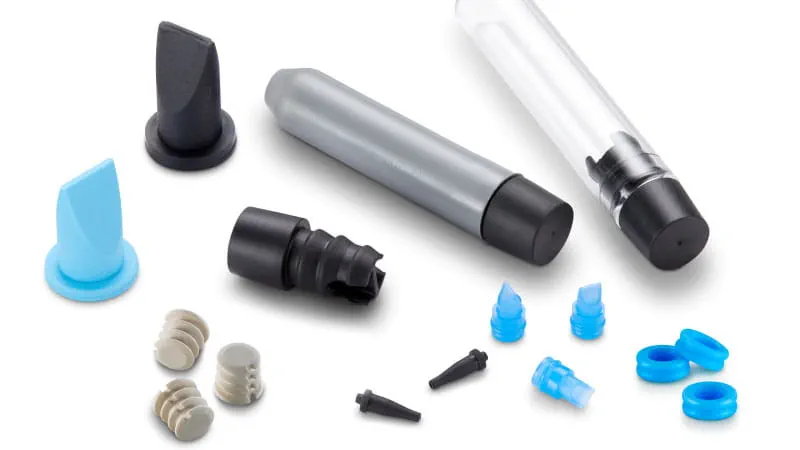
The chosen medical and healthcare silicone components can be effectively manufactured by silicone compression molding in the cases when flexibility, sealing, cushioning, and geometry stability are needed. Nonetheless, medical-oriented projects require a thorough review of the materials, cleanliness in handling, molding parameters, quality assurance, and a documentation that is aligned with the intended use of the final product.
The effective production of custom medical silicone parts requires the close working relationship between the developers of a particular device and seasoned suppliers, who comprehend these needs. Teams can minimize risks and ensure reliability in silicone medical device production by developing a combination of material selection, design, process control, and quality systems early on.