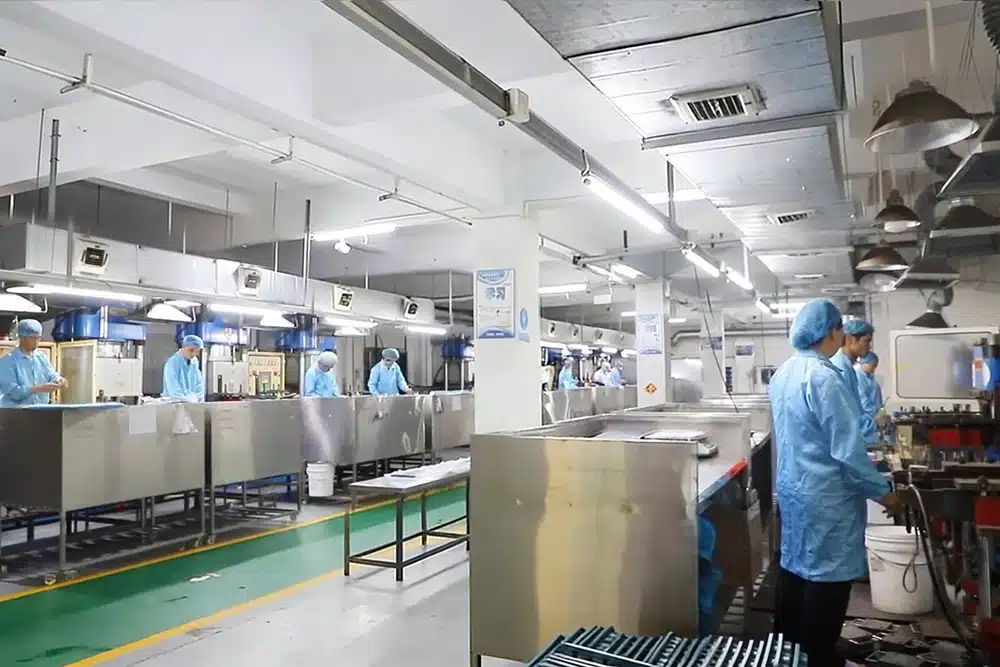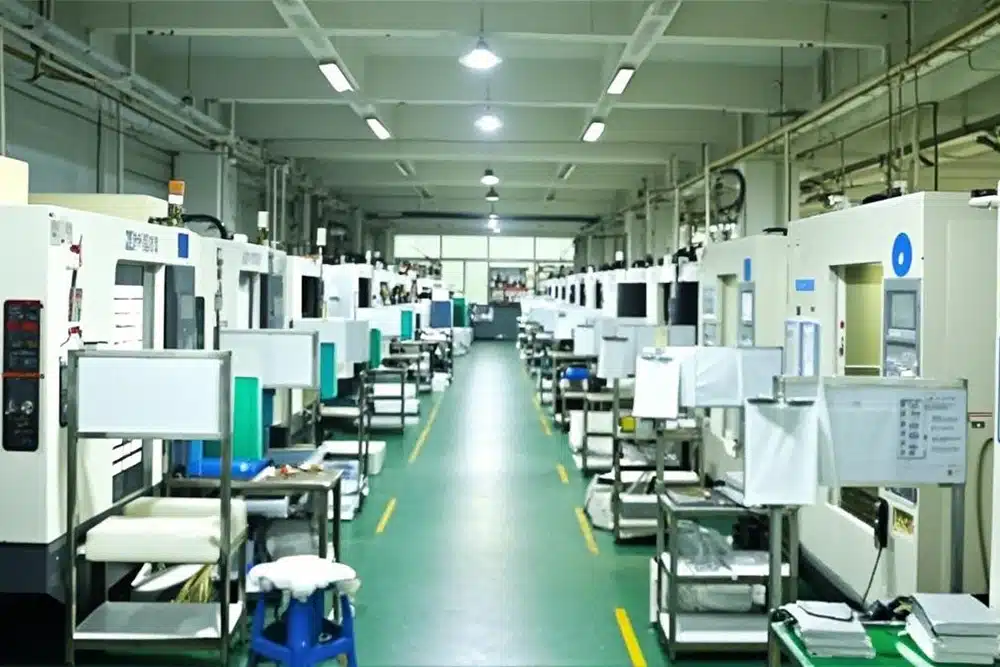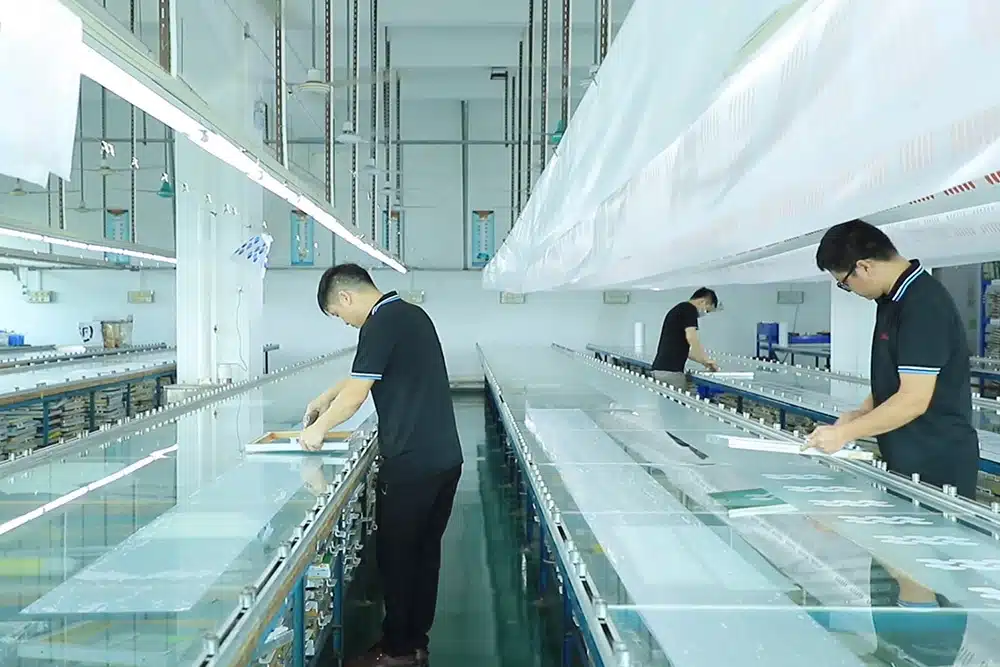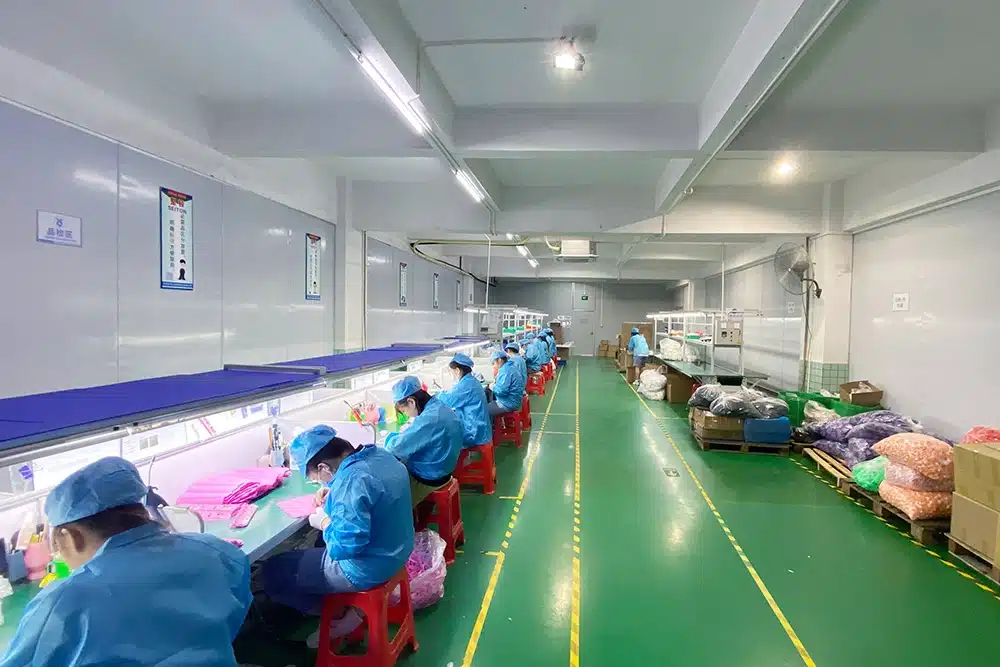

The custom silicone production is shifting towards higher automation, smarter control of the process, and more integrated production systems. Process intelligence, rather than shaping capability, is becoming more and more linked to future competitiveness. It is also believed that innovation in silicon manufacturing revolves primarily around new materials, whereas much of the current innovation is occurring in the areas of automation, process control and production intelligence.
The largest upcoming change in the custom silicone industry could be not so much about material advancements but rather about the smartness of the production system design, tracking, and optimization.
Why Silicone Manufacturing Is Moving Toward Smart Production
The production of silicone is moving to smart production due to the increasing requirement of quality, reduced tolerances, and intricate geometries that demand more than manual control of production to achieve consistent outcomes at scale.
A number of convergent forces are driving this change:
- Increasing Quality Requirements: Customers in the medical, automotive and consumer electronics industries are now requiring close to zero defect rates and complete traceability.
- Stress on Repeatability: Small batch changes which once had been tolerated now lead to rejection in controlled industries.
- Shorter Lead Times: The OEMs want prototype production to be faster.
- Increased Production Complexity: Multi-material overmolding, tight tolerances and assemblies composed of hybrids add process variables.
- Labor Issue: Precision jobs that require repetitive work are more challenging to acquire and maintain skilled operators.
| Industry Driver | Why It Pushes Smart Production |
| Higher Quality Expectations | More control needed |
| Production Efficiency Pressure | Automation opportunity |
| Product Complexity | Process precision demand |
| Labor Challenges | Smart manufacturing value |
| Data-Driven Quality Trends | Digital monitoring growth |
These reasons underlie why progressive manufacturers view automation and data systems as strategic infrastructure, and not optional upgrades.
Trend 1 — Greater Automation in Silicone Production
Increased automation in silicone manufacturing is more about decreasing variability in the process and increasing consistency more than just pursuing greater output rates.
Material feeding, mold loading, part ejection and secondary operations are now automated and performed with repeatable precision. Using robotic handling helps eliminate the human touch with sensitive silicone components and ensures fewer contaminations and other surface flaws. Automated preparation of the material guarantees a steady batch-to-batch durometer and cure properties.
| Automation Area | Potential Impact |
| Material Handling | Process consistency |
| Automated Molding Support | Cycle stability |
| Robotic Part Handling | Efficiency |
| Automated Trimming / Secondary Ops | Quality + labor reduction |
| Integrated Production Cells | Scalability |
In reality, automation in silicone manufacturing can provide its most significant benefits by use of stability. Even with long run times or night shifts, a properly installed robotic cell is capable of keeping the process windows tighter than the most accomplished operators. This is of direct benefit to buyers who require custom silicone components that are reliable in thousands of units.
Trend 2 — Data-Driven Process Control and Smart Monitoring
The necessity to have data-driven process control is present due to the inability to measure something accurately to be able to improve or reliably repeat it in silicone molding.
Today, systems constantly monitor important parameters such as the temperature of the mold, injection pressure, cure time, and material viscosity in real-time. The sensors direct the data into centralized systems which alert anomalies prior to the generation of out-of-spec components. Historical data allows predictive changes in the long run, which minimizes scrap and stabilizes production.
| Smart Production Capability | Potential Value |
| Real-Time Monitoring | Stability |
| Process Data Tracking | Repeatability |
| Predictive Control | Defect reduction |
| Digital Parameter Management | Process optimization |
The visibility of data is entering into the manufacturability of quality. Now engineers are able to view full process histories of each batch, making internal improvement and customer audits feasible.
Trend 3 — Intelligent Quality Control Systems
In silicone manufacturing is changing inspection to involve intelligent quality control systems that focus on preventing instead of detecting downstream.
Automated vision systems check parts against flash, voids, dimensional accuracy and surface finish right after demolding. Electronic quality control reports are used to substitute paper documentation, which establishes irrevocable traceable records. Monitoring of the processes in progress and statistical process control (SPC) intercepts the trends before it turns into defects.
| Quality Trend | Manufacturing Benefit |
| Automated Inspection | Faster detection |
| Digital QC Systems | Traceability |
| In-Process Monitoring | Defect prevention |
| Data-Driven SPC | Variation control |
Quality is shifting up the process to process control. This minimizes the need to rely on end of life inspection and minimizes the validation cycles of new silicone manufacturing programs.
Trend 4 — Smarter Tooling and Faster Development Cycles
Digital simulation-enabled smarter tooling is reducing development times and enhancing first-article success rates in custom silicone work.
Material behavior, shrinkage, and possible defects are now predicted by finiteness element analysis and mold-flow simulation, prior to cutting steel. Libraries of digital tooling and rapid iteration platforms enable quicker design changes. The optimal design of tools will include real time pressure and temperature sensors in the cavity.
| Development Trend | Impact |
| Digital Simulation | Risk reduction |
| Smarter Tool Design | Better manufacturability |
| Faster Prototyping | Development speed |
| Data-Assisted Tool Optimization | Production stability |
These functions speed up product development, assisting OEMs in introducing new designs to the market with fewer tooling changes.
Trend 5 — Integration of Smart Manufacturing and Industry 4.0 Concepts
The conceptualization of Industry 4.0 in silicon manufacturing is applied in practice with a view to connectivity and visibility, instead of revolutionary transformations.
Interconnected machines help to communicate real-time status throughout the production floor. The centralized dashboards will give the production visibility to the operators and managers. The entire digital traceability connects raw material lots, process settings and finished parts. Although complete smart factory applications are still selective, the advantages of connectivity can be incrementally felt.
| Smart Manufacturing Element | Potential Influence |
| Connected Machines | Process coordination |
| Production Data Integration | Visibility |
| Digital Traceability | Quality assurance |
| Smart Factory Systems | Long-term competitiveness |
The focus is on the actual issues solution – lessening down-time, enhancing scheduling, and aiding in regulation compliance.
How Automation May Change Quality, Cost and Lead Time
Silicon manufacturing automation provides quantifiable quality stability and lead time benefits, but is sensitive to effects on cost and scalability by part geometry, volume, and complexity.
The analysis is balanced with gains and practical considerations.
| Manufacturing Area | Potential Automation Effect |
| Quality Stability | Positive |
| Lead Time | Often improved |
| Labor Dependence | Reduced |
| Capital Cost | May increase initially |
| Production Scalability | Often stronger |
Automation usually enhances quality and time delivery performance. Nonetheless, it might not prove to be cost-effective when the volumes are very low or when the parts are highly customized, one-offs. Most effective implementations are a combination of automation with proven process engineering, as opposed to replacing it.
What These Trends Mean for OEM Buyers and Product Developers
Custom silicone projects supplier evaluation, is changing to look beyond the traditional considerations of tooling cost and unit price to digital and automation.
Sourcing decisions that are future-oriented are also becoming particularly sensitive to how a manufacturer can provide the same quality of products using smart processes.
| Supplier Capability | Future Relevance |
| Automation Level | Production stability |
| Process Monitoring | Quality confidence |
| Digital Traceability | Risk reduction |
| Smart QC Systems | Consistency |
Early evaluation of these capabilities by buyers can decrease long-term supply chain risk and increase the success rate of new product introductions.
Common Misconceptions About Automation in Silicone Manufacturing
There are a number of myths regarding automation and smart production:
- Automation merely decreases the workforce – The real truth is that its usefulness is usually regularity and data gathering.
- Smart production is always cost-effective – The initial investment and integration costs can be compensated by savings, particularly at middle volumes.
- Process engineering knowledge is eliminated by automation — Intelligent systems in combination with skilled engineers are the best.
- Digitalization is important when the factory is very large – Even middle-sized operations can be served with specific monitoring and automation cells.
- The old model of manufacturing does not fit in the production of the future – Hybrid techniques that selectively use automation can often be the most effective in producing a custom silicone application.
Challenges and Limits of Smart Silicone Manufacturing
Though the trend towards smarter production is evident, there are still some reality issues that manufacturers and buyers need to consider.
| Challenge | Why It Matters |
| Investment Cost | Adoption barrier |
| Process Complexity | Implementation challenge |
| System Integration | Scalability issue |
| Not All Processes Automate Equally | Practical limitation |
Some low volume, high mix or highly specialized silicone processes might be left to a skilled manual operation as long as it is still possible. Effective adopters transition to automation gradually instead of trying to do it wholesale.
Conclusion — The Future of Silicone Manufacturing Is Increasingly Intelligent
The future of custom silicone manufacturing will probably be determined not so much by individual production improvements but by the ability of automation, process information, and intelligent systems to collaborate intelligently. Automation is as stable and intelligent as it is efficient. When buyers and manufacturers are aware of these changes early, they will be in a better position to make informed decisions regarding technology road maps, suppliers partnerships, and product development strategies in the long term.
The industry can provide a more reliable, traceable, and scalable silicone components, which are what the engineered products of tomorrow will need, by concentrating on practical process intelligence, as opposed to hype.
By focusing on practical process intelligence rather than hype, the industry can deliver more reliable, traceable, and scalable silicone components — exactly what tomorrow’s engineered products will require.