
Silicone material additives are materials that are added to silicone formulations to modify performance, processing, appearance, safety or cost. Examples of common additives are reinforcing filler, pigments, curing agents, flame retardants, processing aids, and special functional additives.
A large number of buyers believe that silicone performance is solely reliant on the base silicone grade. As a matter of fact, the additives and formulation decisions may have a very strong effect on the behavior of the final silicone product in the real-life environment and in bulk production.
Silicone additives are not just an addition of extra elements to a product, but they are rather part of the toolkit to modify the strength, flexibility, color, processing behavior, safety profile, and long-term performance of a silicone product. The well-designed silicone formulation incorporates the additives to ensure the intended functionality of the product without affecting the safety, manufacturing stability, or long-term reliability.
Why Silicone Material Additives Matter in Manufacturing
Silicone additives are important since they can have a direct influence on how a silicone product performs, cures, looks, ages, and behaves during production.
The additives in custom silicone manufacturing are used to enhance strength, tear resistance, heat resistance, flame resistance, color stability or processing behavior. Meanwhile, they can affect odor, hardness, transparency, elasticity, smoothness of the surface, and regulatory compliance. The formulation should be associated with the particular application instead of being picked at random.
It is always at the sampling stage that the additives should be considered, long before mass production. Consistency in manufacturing relies on constant formulation control at the batches.
| Additive-Related Factor | Possible Product Impact |
| Reinforcement | Improves tear strength, tensile strength, or durability |
| Pigment system | Affects color accuracy and batch consistency |
| Curing system | Influences curing speed, odor, and final material properties |
| Flame retardant | Improves fire resistance but may affect flexibility or appearance |
| Processing aid | Improves molding behavior but may affect surface finish |
| Functional additive | Adds properties such as conductivity, antimicrobial function, or UV resistance |
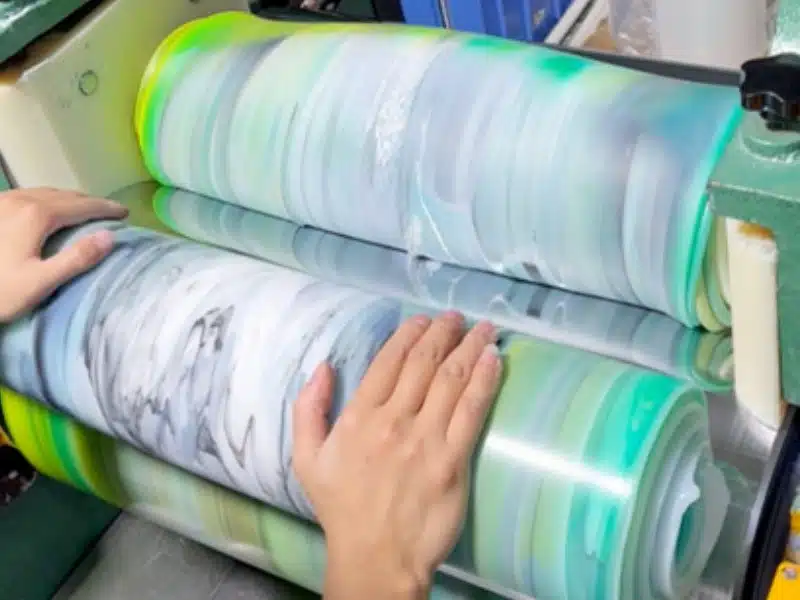
Common Types of Silicone Additives
Different silicone additives have different uses, and hence should be seen in terms of their functions rather than in terms of one general category.
These are the large categories in silicone production:
- Strengthening fillers – increase mechanical strength.
- Non-reinforcing fillers – modify cost, hardness, or flow.
- Pigments and color masterbatch – give color and visual identity.
- Curing agents / catalysts – facilitate cross linking.
- Flame retardants – enhance fire safety.
- Adding processing aids – increase mold release and flow.
- Softening agents (where applicable) – adjust hardness and feel
- Functional additives – provide conductivity, thermal properties, UV stability or antimicrobial properties.
| Additive Type | Main Purpose | Common Product Relevance |
| Reinforcing fillers | Improve strength and tear resistance | Seals, gaskets, wear-resistant parts |
| Non-reinforcing fillers | Adjust cost, hardness, or processing | General molded silicone products |
| Pigments | Add color and visual identity | Consumer products, branded items |
| Curing agents | Support crosslinking | Compression molded and heat-cured products |
| Flame retardants | Improve fire resistance | Electronics, industrial components |
| Processing aids | Improve flow and release | Complex molded parts |
| Softening agents | Adjust softness or hand feel | Wearables, baby products, soft-touch items |
| Functional additives | Add special performance | Conductive, thermal, UV-resistant products |
Fillers in Silicone: Reinforcing vs Non-Reinforcing
Some of the most significant silicone additives are fillers, which have the ability to modify strength, durability, hardness, processing behavior, and cost structure.
The reinforcing fillers (like fumed silica) are found to have great improvement in tensile strength, tear strength, and mechanical durability. Non-reinforcing fillers are used to modify hardness, volume or cost. Specialized fillers are the thermal and conductive fillers.
Nevertheless, fillers should be loaded not too little or too much, as it can decrease the flexibility, transparency, or surface quality. To product teams that make comparisons of various filler systems or specialty formulations, the knowledge of silicone material selection can be used to relate additive choices with product functionality, molding process, hardness, and long-term performance requirements.
| Filler Category | Main Function | Possible Trade-Off |
| Reinforcing filler | Improves tear and tensile strength | May affect flow or softness |
| Non-reinforcing filler | Adjusts hardness, cost, or processing | May reduce elasticity if overused |
| Thermal filler | Improves heat transfer | May increase stiffness |
| Conductive filler | Adds electrical conductivity | May affect color, cost, or flexibility |
| Color-related filler | Supports opacity or appearance | May affect transparency or surface finish |
Pigments and Color Additives: More Than Appearance
Color additives are not merely aesthetic choices, but can have an impact on brand consistency, production repeatability, surface quality and compliance requirements.
Pigments and color masterbatch define the ultimate appearance, yet also influences the consistency of color matches between production runs. Silicones that are bright, have a translucent quality or are very light in color tend to need a closer control of the pigments. Pigments should be compatible to the selected curing system, and to be safe to target market. The approval of colors should be with production-like samples and not digital references.
| Color Requirement | Manufacturing Consideration |
| Bright color | May require stronger pigment control |
| Transparent or translucent | Requires careful filler and pigment selection |
| Brand-matched color | Needs color sample approval and batch control |
| Food-contact product color | Requires suitable pigment system and documentation |
| Multi-color silicone | Requires process compatibility and mold control |
Curing Agents and Catalysts: How They Affect Final Properties
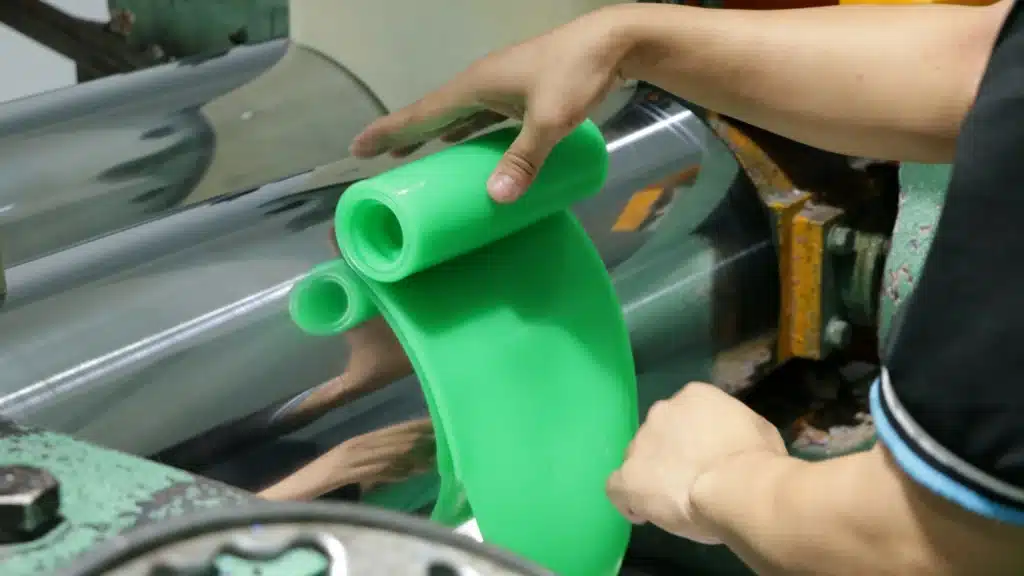
The process of curing defines how silicone transforms into a raw material into a finished elastic product, thus it has a direct influence on processing and performance.
The crosslinked network which provides silicone with its elasticity is formed by different curing agents. The speed of cure, odor, mechanical properties and the stability of the process all depend on the system that is chosen. Surface tackiness, poor strength, dimensional inconsistency, or residual odor can all be caused by improper curing. The thicker sections might require the adjustment of formulation or post-curing to achieve the full crosslinking and low volatile content.
| Curing-Related Factor | Why It Matters |
| Cure speed | Affects cycle time and production efficiency |
| Cure temperature | Must match material and mold process |
| Part thickness | Influences whether full curing is achieved |
| Odor control | Important for baby, kitchenware, and personal care products |
| Dimensional stability | Supports repeatable production and assembly fit |
Flame Retardants, Conductive Additives, and Specialty Functions
Specialty additives must be only used when the application really needs them due to their ability to modify cost, processing behavior, appearance and mechanical performance.
Electronics and industrial components are typical with flame retardants. Conductive additives aid keypads, sensors or EMI shielding. These fillers can be thermally conductive and assist in heat-dissipation parts. UV stabilizers are applied to outdoor products, whereas antimicrobial additives are applied only in case of testing confirming the claim. Each specialty additive is to be validated by application specific performance testing.
| Specialty Additive | Intended Function | Common Application |
| Flame retardant | Improves resistance to ignition | Electronics, industrial parts |
| Conductive additive | Allows electrical conductivity | Keypads, sensors, EMI-related parts |
| Thermally conductive filler | Helps transfer heat | Thermal pads, electronic components |
| UV stabilizer | Improves outdoor aging resistance | Outdoor silicone parts |
| Antimicrobial additive | Supports microbial control claims | Selected personal care or hygiene products |
Do Silicone Products Use Plasticizers?
Plasticizers are typically linked to certain plastics, but silicone softness is usually managed through formulation, polymer structure, filler balance and hardness design as opposed to traditional plasticizer logic.
Most silicone rubber, in contrast to PVC, does not depend on phthalate-type plasticizers. The softness is realized mainly by the choice of the proper base silicone grade and the modification of the entire formulation. In case of safety-sensitive products like baby items or kitchenware, buyers are always advised to request complete material documentation and related test reports.
| Buyer Concern | Practical Explanation |
| “Does silicone contain plasticizers?” | Silicone softness is generally controlled differently from many plastics |
| “Is soft silicone safe?” | Safety depends on grade, formulation, testing, and target application |
| “Can silicone be made softer?” | Yes, through hardness selection and formulation design |
| “Will additives affect odor?” | Some formulation choices can influence odor and post-curing needs |
How Additives Affect Compliance, Odor, and Surface Finishing
Additives should not only be considered in terms of performance, but also in terms of safety, odor, regulatory documentation, and surface finishing compatibility.
The food-contact, skin-contact, baby and medical applications need particular documentation. Some curing systems or additives may add volatile content and odor should post-curing be omitted. Surface treatments: printing, spraying, coating or laser engraving, are most effective when the underlying formulation is conducive to adhesion and heat response. Early testing eliminates subsequent production problems.
| Requirement | Additive-Related Risk |
| Food-contact suitability | Pigment or additive system must match compliance needs |
| Low odor | Curing system and post-curing may need control |
| Surface printing | Surface energy and formulation may affect adhesion |
| Spray coating | Material cleanliness and compatibility matter |
| Laser engraving | Heat response and color contrast may affect results |
| Color stability | Pigments and fillers must remain consistent across batches |
Common Mistakes When Choosing Silicone Additives
The majority of the problems of additive nature occur when the performance, appearance, compliance, and manufacturing behavior are considered individually rather than as a single formulation system. Common mistakes include:
- The introduction of fillers with the sole aim of lowering the cost without focusing on the effects of such fillers on elasticity or durability.
- Using digital sources to choose color rather than using physical samples of production.
- Disregarding curing behavior in the design of molds and part thickness.
- Adding flame retardants or other conductive additives without verifying necessity.
- The assumption that the material of soft silicone is an identical material in all suppliers is inaccurate.
- Leaving out the need to check how additives impact secondary processes such as printing or laser engraving
- Omission of compliance documentation of pigments or specialty additives.
- Transfers to mass production with unvalidated production-like samples.
Conclusion — Additives Should Support Function, Safety, and Manufacturing Stability
Additives in Silicone material are a critical factor in the appearance, feel, functioning, curing, and aging of a product. Nevertheless, additive selection must never be linked to fictional product needs but instead it ought to be used as a general upgrade.
A stable silicone formulation maintains balance between mechanical performance, processing stability, compliance, odor control, surface compatibility, and reproducible production quality. Knowledge of the interactions between fillers, pigments, curing agents, and other additives can enable product engineers and sourcing teams to make better choices, which reduce risk and maximize results in custom silicone products.